Launched in 2021, Grime was a first-time game from designer/director Yarden Weissbrot and developer Clover Bite. It was a Metroidvania Souls-like in the vein of Hollow Knight and carved out a niche following thanks to its critical success and rewarding gameplay. Now Clover Bite is back with Grime II, taking on board lessons learned and some of the criticisms the first game received.
A Surreal Awakening
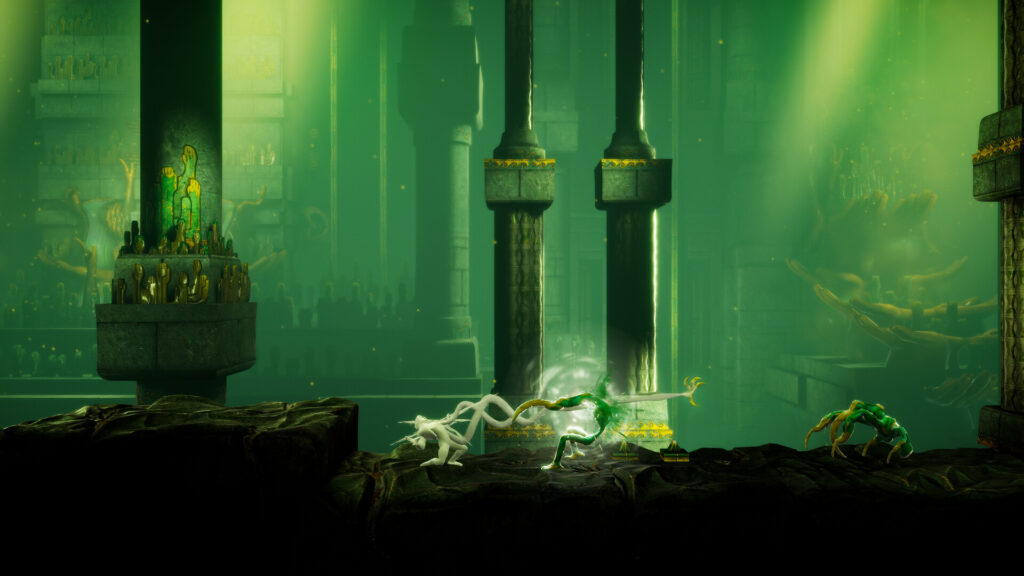
I didn’t play the original Grime, so I’ll be evaluating how the sequel works on its own. Which is kind of lucky, as Grime II is more of a thematic sequel rather than a story one. You are lulled into consciousness by a being called ’The Rippler of Waves’, and your body is made of interlocking hands emerging from an oily puddle. ’Awaken, feast, and hatch, little egg’ are your only instructions.
Already, I was completely confused by these esoteric concepts and the story. Looking back to the original Grime, there was an opening with similar themes, except that whereas Grime had a rock-and-stone motif, Grime II was about painting (oil in particular) and hands. Lots of hands.
Very quickly, though, a more recognisable plot emerges to guide the player. Your character meets up with a ragtag group of rebels. We learn that a monster named Goel once ravaged the land, and this group wants to finally take him down. You join up and help them prepare, eventually leading you all over the world.
Refining the Formula
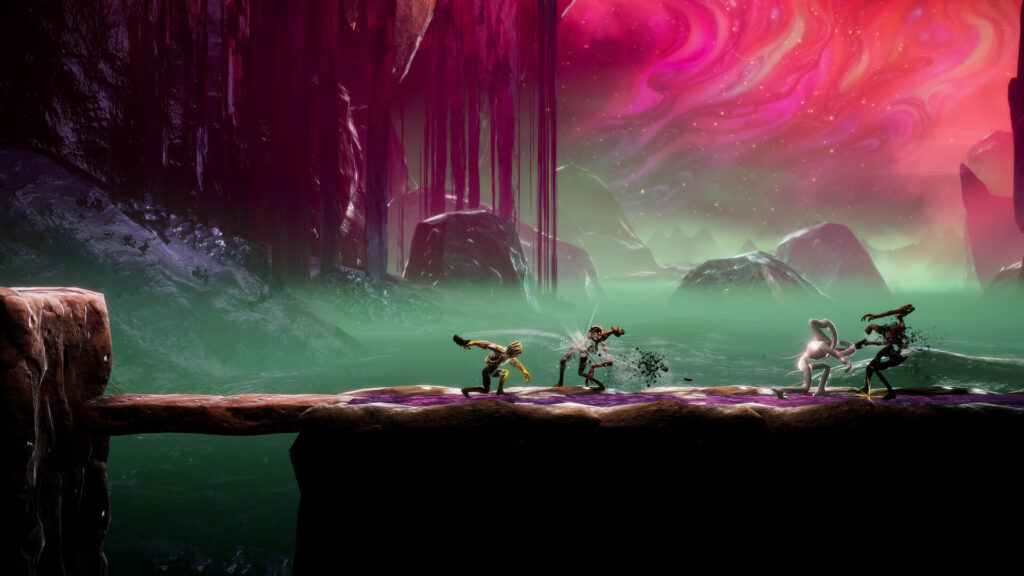
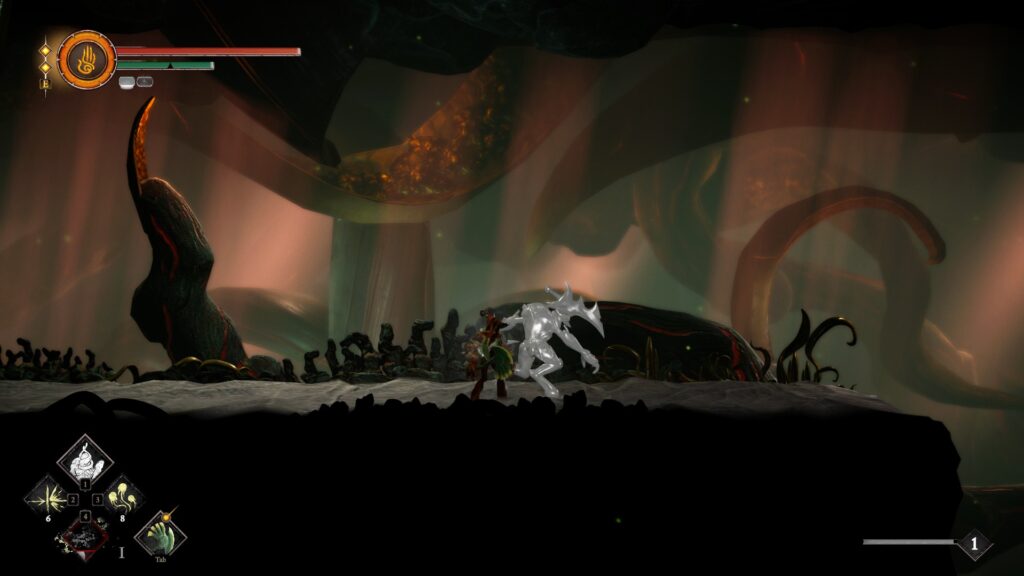
Grime II, much like its predecessor, is a hybrid 2.5D Metroidvania/Souls-like. Meaning, while you have the usual explorative platforming gameplay, you have weighty combat and must manage your resources and be mindful of stat growth. One of the main criticisms of the first Grime was an over-reliance on the parry mechanic. While a parry does still remain in Grime II, a lot more options have been given to the player.
Your dash can now damage the attacker at the right moments, and the environment can be used as a weapon. New to the series was a grapple mechanic, which involves you holding the right stick at the required angle, and a tendril would shoot out of you. This can be used to hit enemies in a weakened state and some mobility options.
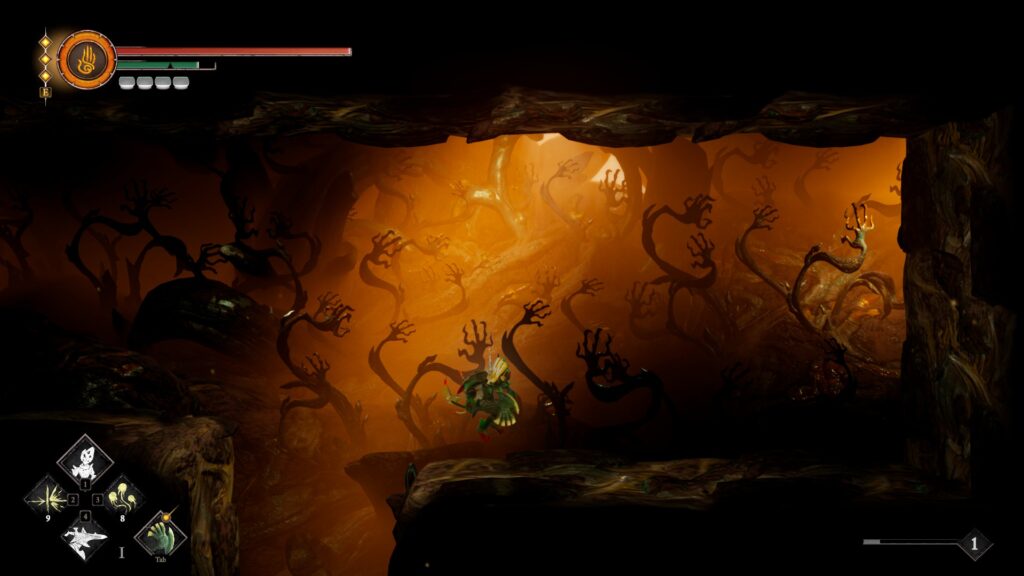
You also have multiple resources to manage. Health and Stamina (focus) as usual. Mana (or paint) and a ’breath’ gauge. You can spend a full breath gauge to heal, and this is recharged by defeating and damaging enemies. All combat encounters drop fragments, which build up to ability points that you spend on attributes for levelling up. You can also find currency and upgrade materials you spend at merchants and blacksmiths to upgrade or acquire new gear.
Evolving the Fight
You have multiple attributes to level up, which affect your health, stamina, and damage output. Weapons also scale with certain attributes, and later weapons cannot be equipped without the required stat allocation. Speaking of weapons, there are around thirty to find and collect, each with various speeds and attack values. Armour, too, has different boosts to abilities. You also get a cosmetic slot, so if you liked the look of a certain armour, you can overwrite your character’s visuals.
There is also a ’mold’ mechanic, parry or defeat an enemy, and you will create a mould of the creature. This is a one-time-use item that creates a copy of the enemy for a single attack or parry. Defeat enough of one type of enemy, and you will fill a prey meter. This unlocks a permanent mold which you can summon at the cost of paint. You can also find item molds that have limited uses and are recharged at save points.
A Painted World
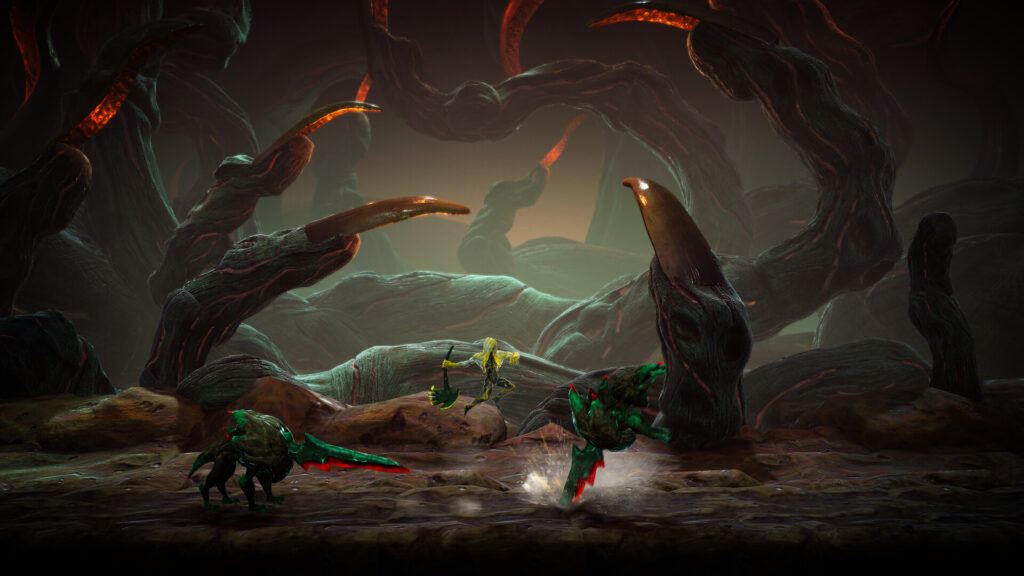
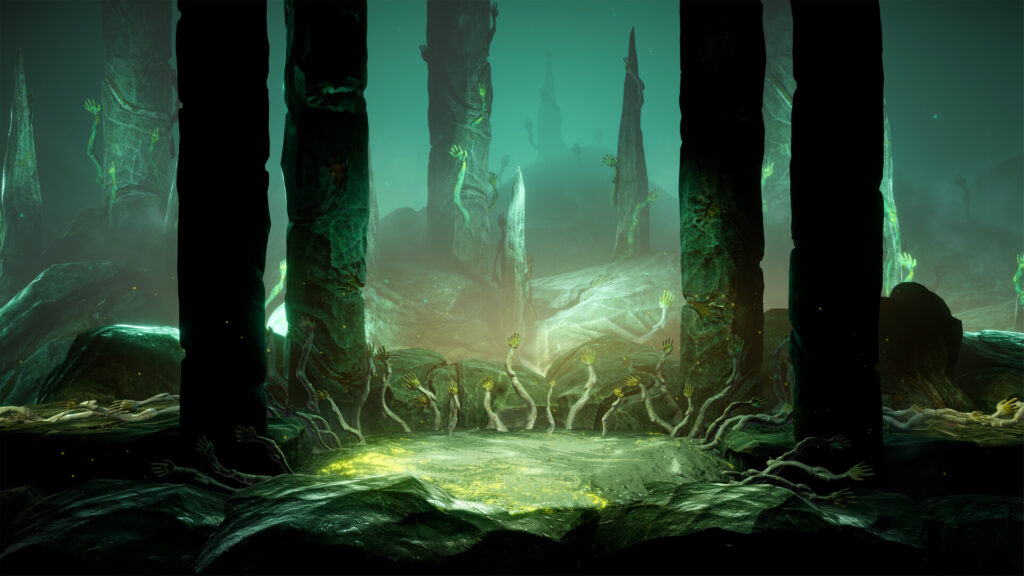
The world of Grime II is just as bizarre as its plot. You begin your journey in ’the Temple of Hands’ and travel through areas like ’Mudfalls’ and ’the Faceless Mountains’, each presented in its own striking way. The temple is a mix of yellow and greens; the mudfalls are littered with little waterfalls that look like oil paintings. There is a distinct feeling of the different stages and creation of the arts. This is also true of the enemy types in each area. Firstly, we are attacked by hand or finger-themed creatures. Later on, rough rock creatures, enemies crafted from swords. There’s even a town later populated by sentient fine crockery.
Exploring the world, we don’t fill out the map automatically; each area has two sigils you must find. The first will give you the map of the area, and the second will allow fast travel between save points. You are not completely blind in the area, though, as wisps of light will direct you to sigils when you are close enough. Likewise, for the save points, or surrogates as the game calls them. These are signposted by many hands sprouting from the ground like roots.
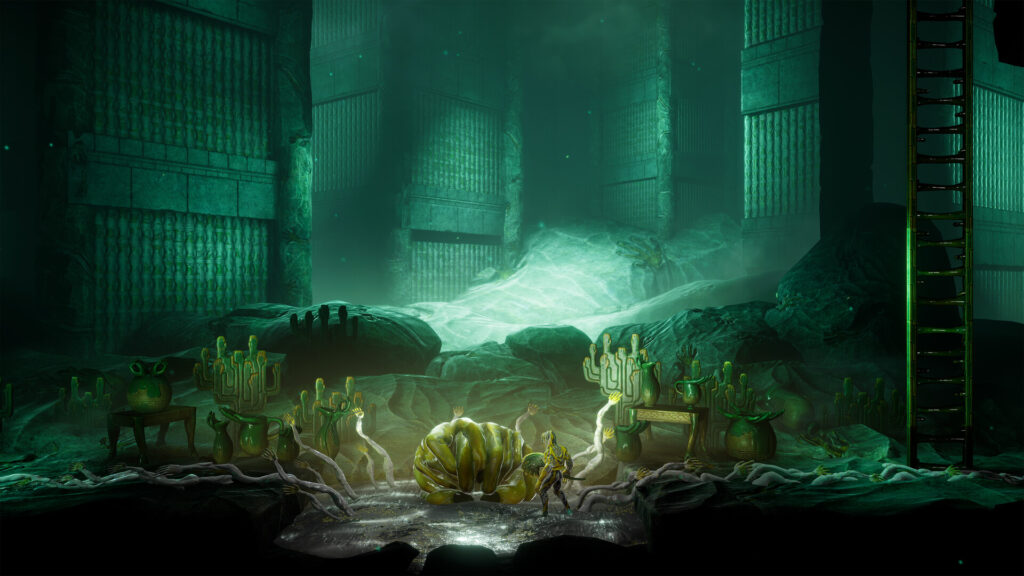
Surrogates are shaped like giant clasped hands and, much like ’bonfires’, resting refills your health and resets the enemies. Using the save points is how you level up and assign attributes. You also equip your molds here, so frequent visits are encouraged. Unlike most souls-like, though, there is no corpse run required, as you lose nothing on death, which I found rather forgiving. I was also able to freely use the ’return to checkpoint’ feature in the menu during my exploration.
Freedom to Wander
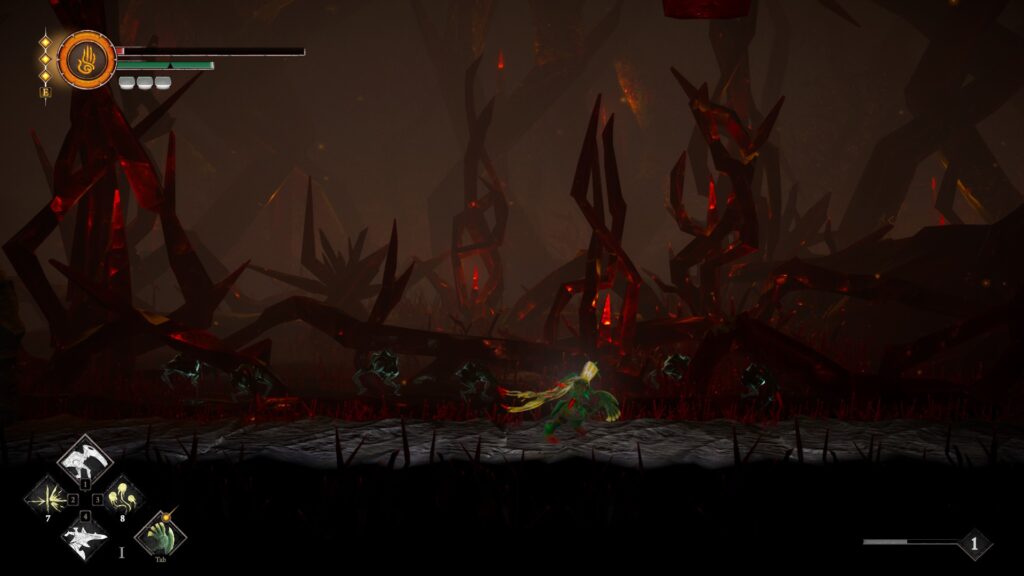
Being a metroidvania, exploration is encouraged. Which means, of course, during the adventure, you unlock more and more mobility options. These were acquired by certain boss victories or by finding what the game called ’discarded flesh’. Once found, these would be absorbed, rather violently, and unlock a new ability. You begin with a dash, jump, and use your grapple to pull yourself towards hooks. By the end of your journey, you can charge super jumps, use your grapple to bounce off the ground, and dash through the air, amongst other things.
Exploration isn’t just stuck to the 2D realm; there are doors leading to the foreground or background as well. Although it didn’t happen often, it still tripped me up when planning a route. Exploration is incredibly open, though, and you can approach some areas in different orders. The director wanted players to ’be able to engage the game in the manner that they enjoy most, rather than forcing players into a specific playstyle’, and I believe they have managed to succeed in this manner.
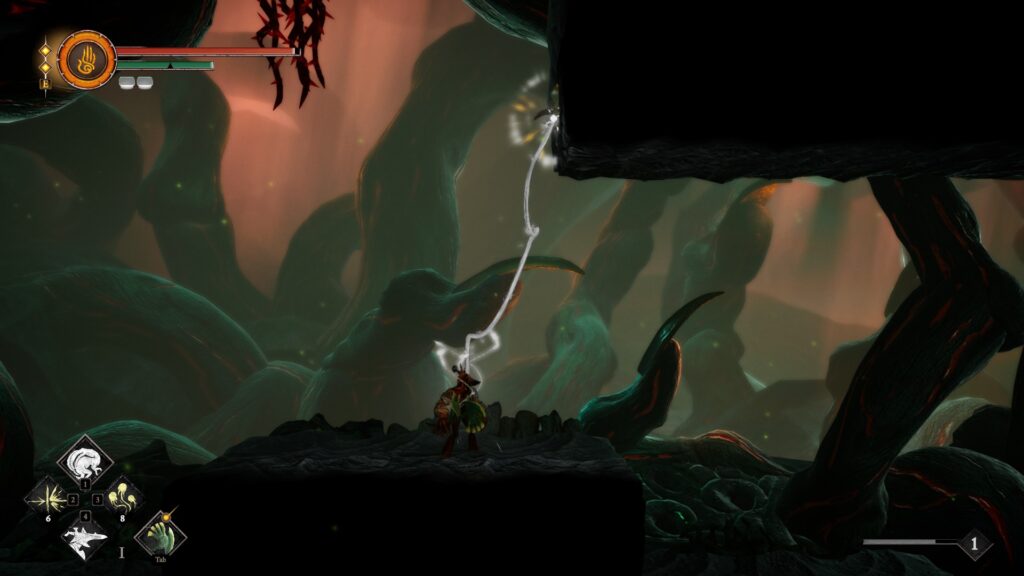
The intended path was not overly simplistic; it was just the right amount of challenge. Especially considering the paths to optional extras. These provided an extra level of platforming and precision that invited a flurry of expletives to leave my mouth. The only downside to completion was that these often yielded only extra fragments or currency. Although the director has said in patch notes that rewards for these platforming challenges would be adjusted in the future.
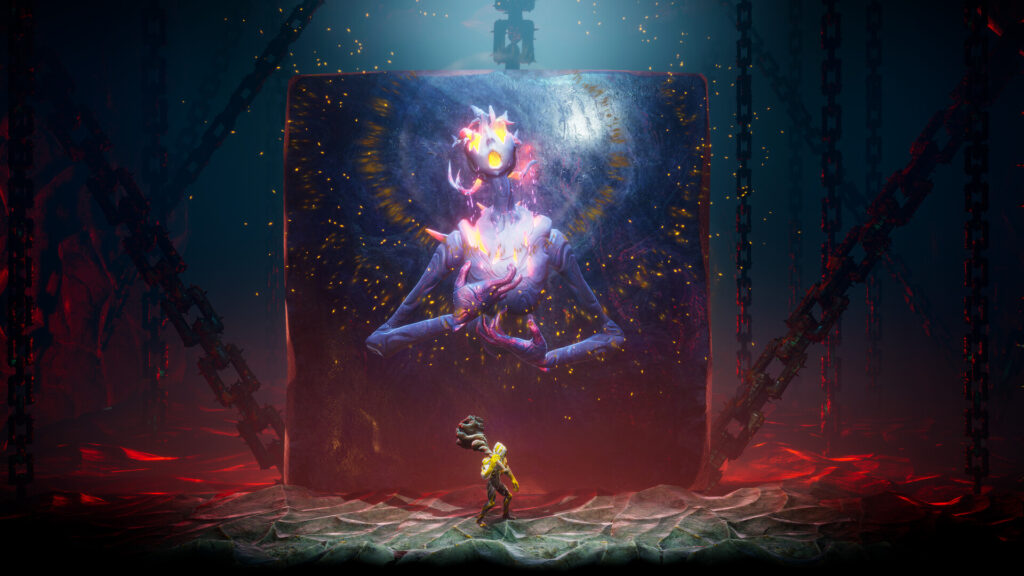
Boss encounters are very varied, both visually and mechanically. From simple dodge or parry affairs to some later ones that will require you to make full use of all your mobility options to succeed. Each one was a spectacle to behold and play.
Sound, Style, and Accessibility
While there is no voice acting at all, only simple sounds to indicate when someone was talking, the soundscape is mostly carried by its soundtrack. The composer Alex Roe does a fantastic job blending classical-style tracks and more contemporary music in a brilliant overture that makes each area distinct and boss encounters thrilling. You can listen for free over on his YouTube.
I want to make a special mention of the accessibility introduced in Grime II. As well as the standard mode, you get a story mode. In this mode, you can tweak damage values, both given and received, to tailor the game to your own playstyle. Add to this the amount of gear you can find and customisable attributes, and this is the most player freedom, I believe, you can get in this genre of game, making it probably the most accessible entry.
Final Verdict
Overall, I did enjoy my time with Grime II. Yes, there were frustrations; I got lost some of the time, and the lore will need to be explained to me by someone much smarter. But Grime II is a banger of a title, and I was completely hooked by its weird nature. I can thoroughly recommend that everyone should ’consume’ Grime II.

Developer: Clover Bite
Publisher: Kwalee
Platforms: PC, PlayStation, Xbox
Played on PC
Key Provided by KeyMailer
About the Author