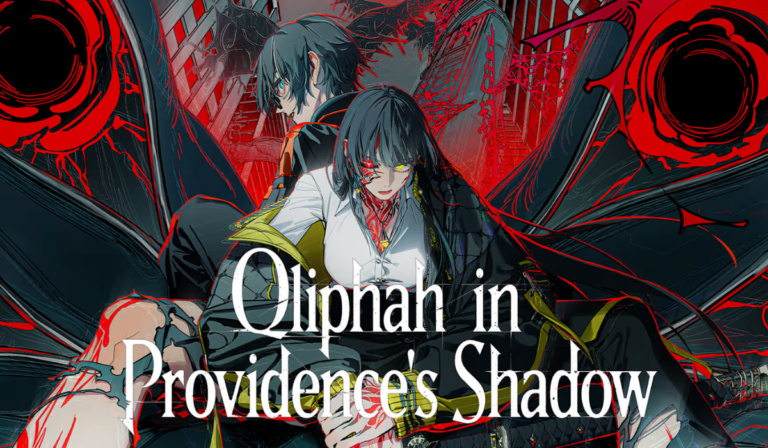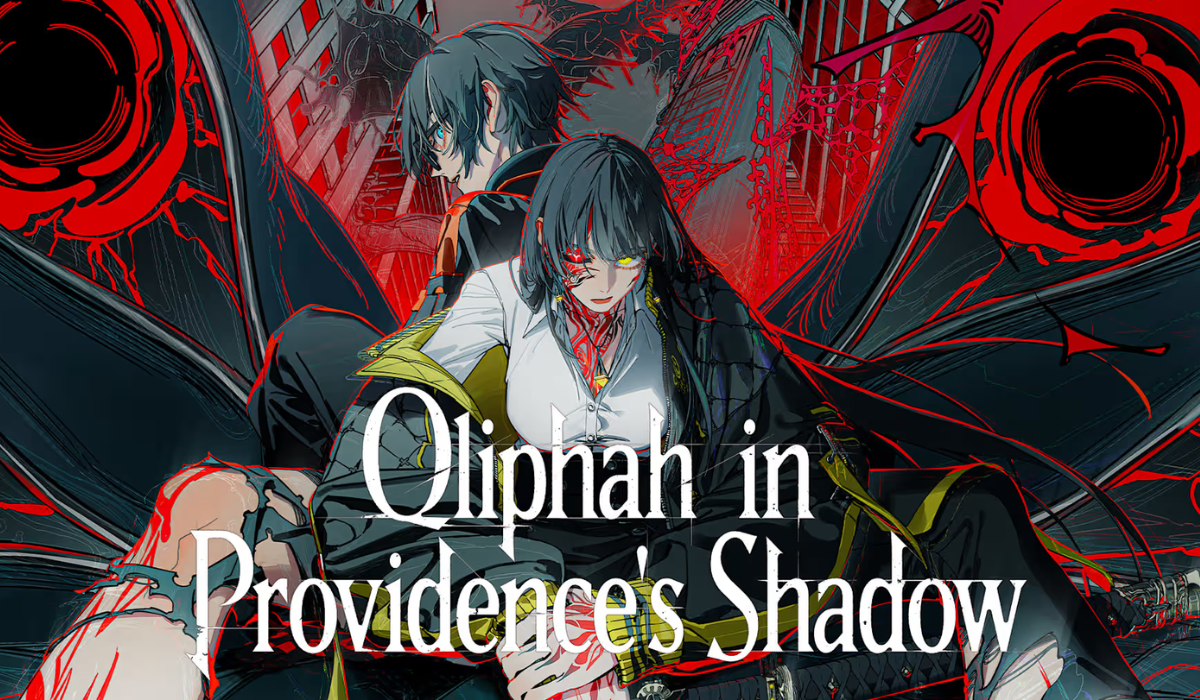
Soma Hoshigami was working his delivery job when his world got flipped upside down. Attacked by a creature he couldn’t comprehend, police officer Rena Hizuki rescues him and discovers a world that was hiding just on the edge of perception.
Qliphah in Providence’s Shadow (Qliphah) describes itself as a “tactical counter-timeline role-playing game”. A mouthful, to be sure, but let me try and break it down for you. Battles are presented in a classic turn-based RPG style with the teams facing off on either side. Instead of turns, though, everyone moves with no restrictions, with a timeline showing everyone’s attacks; however, time is controlled by you.
Timeline Tactics
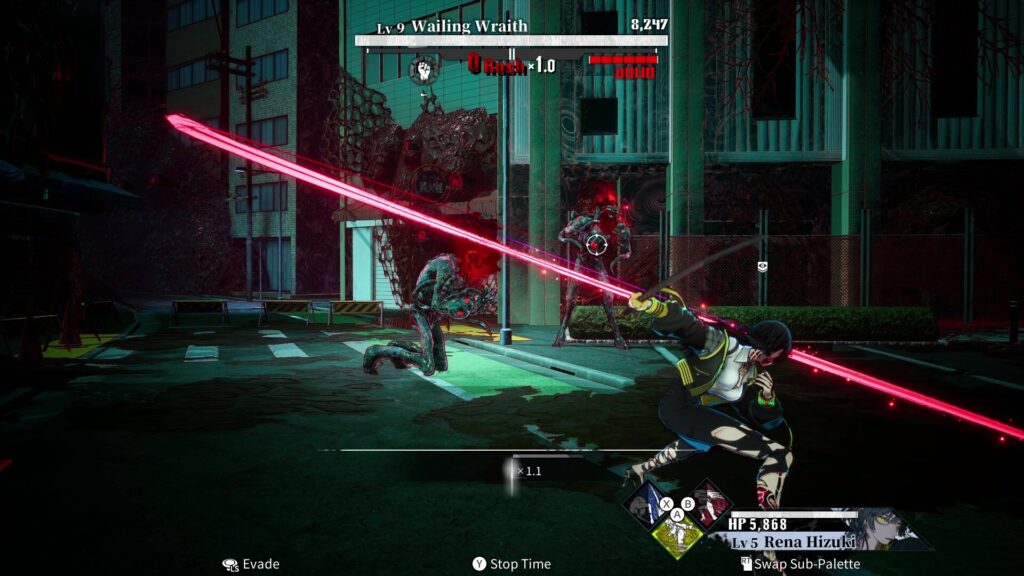
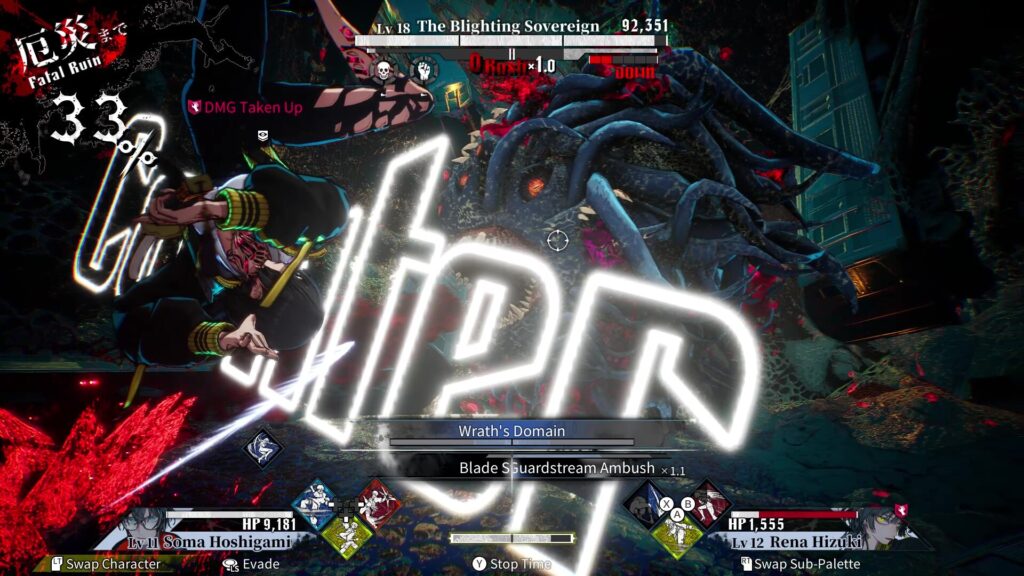
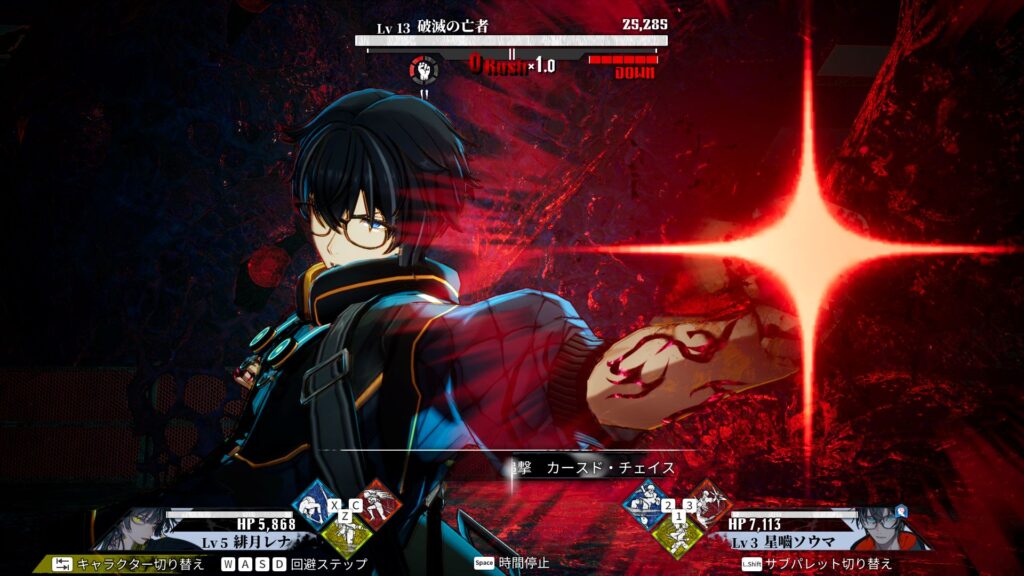
While the main player’s timeline is empty, time slows to a crawl, and only resumes when you choose an attack. You choose your attacks with the face buttons, which are handily colour-coded for light, medium and heavy. You also issue commands for your partner’s attacks with the D-pad, but these don’t resume the paused time, so you can queue up several attacks before choosing your own. Attacks require cool-down to be efficient between uses, so stacking the same attack repeatedly reduces its damage until it has recharged.
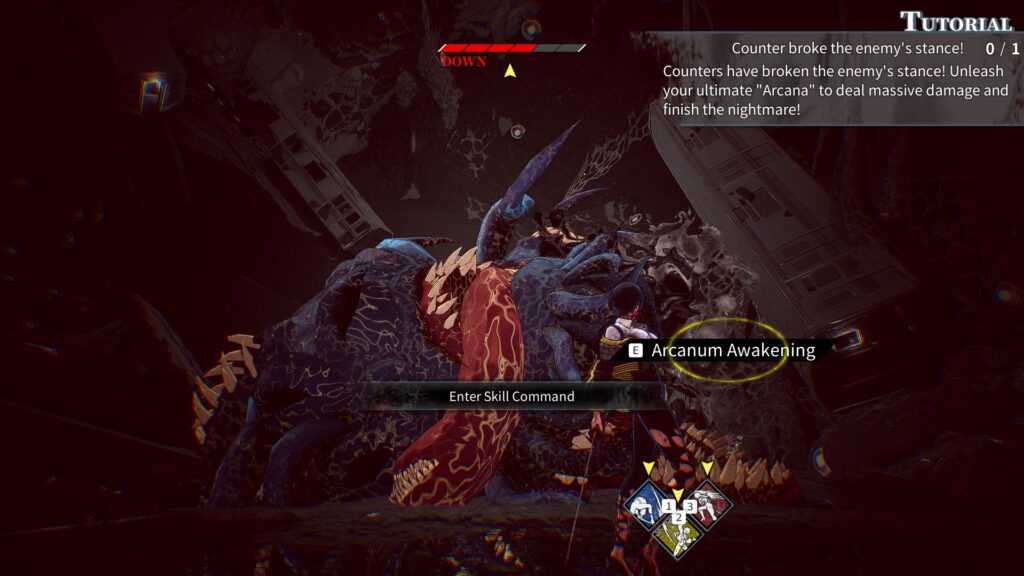
The tactical element comes in managing the timeline. It also shows what attacks are queued up against you. If you match the same colour attack at the same time, you counter the enemy and knock off a portion of (what I am going to call) their posture, which opens them up for damage and knocks them down. Knocking the enemy prone allows for a “pursuit attack”, but breaking their posture completely unlocks a “Arcanum Awakening”; an attack that can deal massive damage and clear the timeline.
Most of the damage comes from these counter-attacks, but you have other options as well. Holding R1 pauses time dynamically and opens up a second menu where you can assign more attacks or skills for buffs/healing, or you can flick the left stick to do a dodge step. This comes in handy for avoiding unblockable (grey) attacks, or, if you mistimed an attack, you can use it to move the timeline along or avoid damage.
Waiting Game
Annoyingly, skills also need to recharge between uses, but while attacks can be used at a reduced strength, skills cannot. This can lead to situations where both your block and heal are unavailable, and you end up just endlessly dodging until they are recharged.
Multiple enemies can be overwhelming, and untargeted enemies’ attacks do not appear in the timeline. If you are not paying attention, you can take damage from someone off to the side and even get knocked out of a counter.
You are rated at the end of each combat encounter and earn EXP based on your performance. Certain encounters can also reward new skill drops.
With flashy, over-the-top attack animations and dynamic effects on screen, Qliphah feels like a mix between a spectacle fighter and a JRPG, but without the intricacies of either. It’s all style and no substance, leaving the combat feeling very shallow. But what about outside of combat?
Another Reality
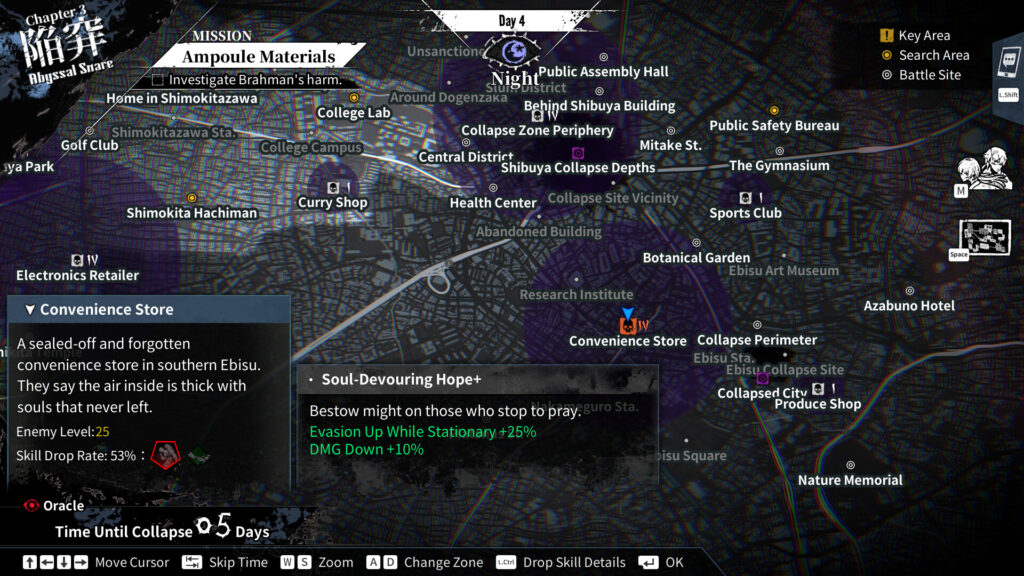
Qliphah‘s plot takes place in Tokyo after a supernatural apocalypse. A new designer drug, “Tiny True”, is running rampant through the underground and among the youth. As well as being addictive, it has the bonus of transforming a portion of the population into “Tier Ones”, supernatural beings that cross between realities and become bloodthirsty killers.
Luckily, Soma was not killed by his attacker in the opening sequence and was instead transformed into a “half-turned”, able to see and interact with the threat while retaining his humanity. Teaming up with Rena, an investigator in the Metropolitan Police Department’s 2nd Anomaly Investigation Unit, Soma is tasked with investigating cases of “Tiny True” outbreaks and keeping reality under control.
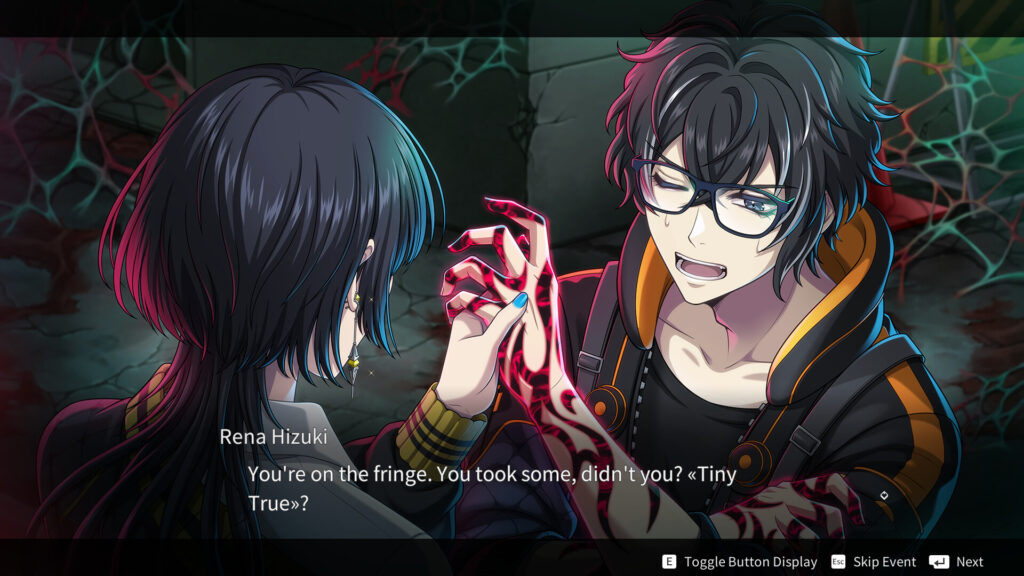
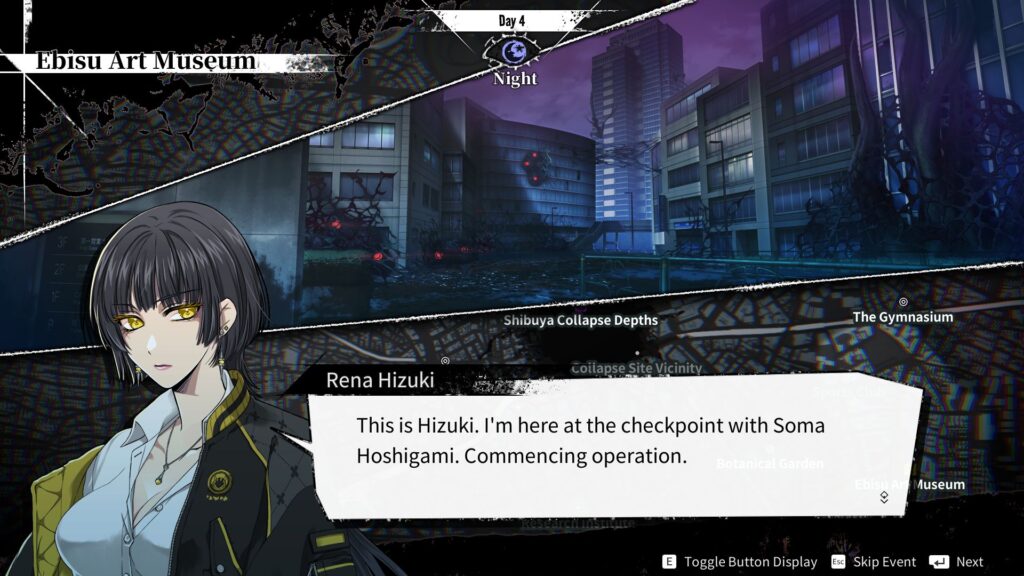
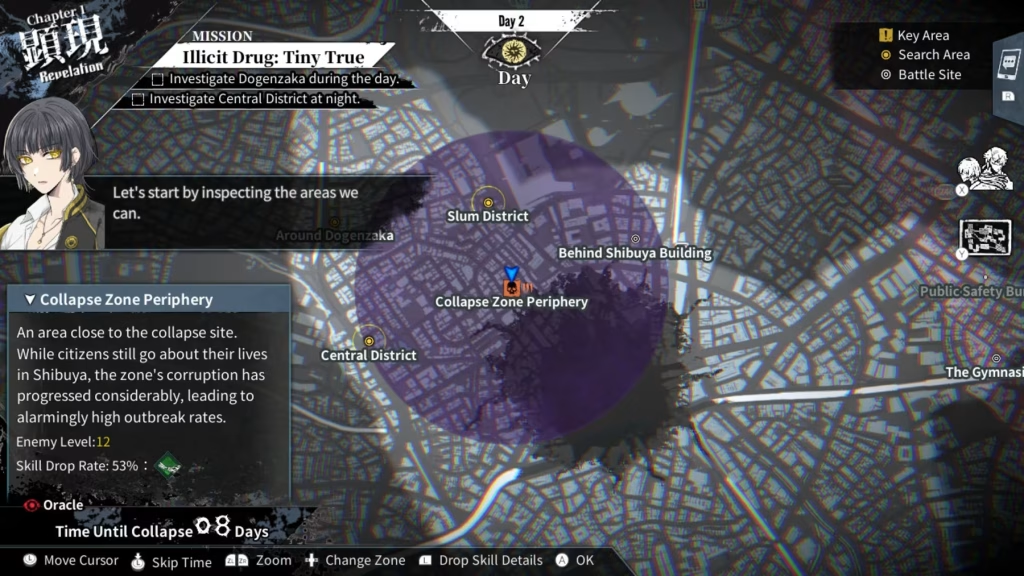
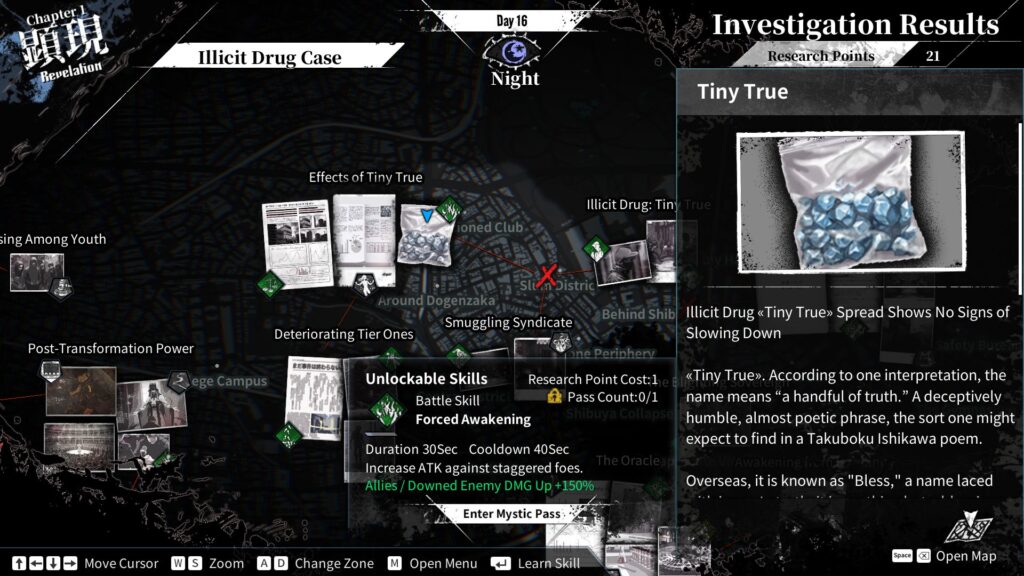
However, this is a very linear affair, as all the investigation and dialogue are presented in a visual novel style. The dialogue has no choices, and the investigation is marked by destinations on the map. Choosing a destination takes you to either another cutscene or a battle, and the only choices are which areas you visit.
The only roadblocks you may face are when local reality corruption is too high. In-game, this means a location may be locked off, and you must battle at the epicentre to reduce it. Depending on the level of corruption, you may have to do multiple battles which lead into the next gameplay element.
A Ticking Clock
The investigations have time limits. A countdown of days runs until reality collapses. Each investigation action takes half a day, and day and night can affect whether a location is viable. A cafe may be deserted at night, for example, but has an event during the day. The countdown isn’t an instant game over, thankfully, but each day past the deadline raises the enemy level by one, which can lead to unwinnable situations if left too long.
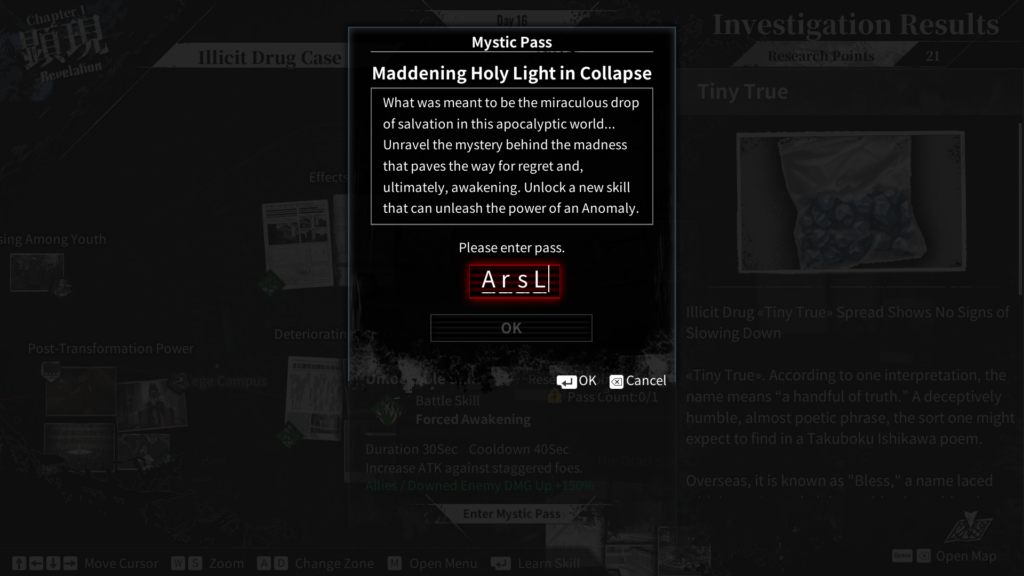
Upon completion of an area, a relevant fact is added to your evidence board, and you earn investigation points. You spend these points either buying new skills linked to the facts on your board or upgrading existing ones. Occasionally, a fact is locked with what the game calls a “Mystic Pass” and requires a code word or phrase to unlock, keeping gameplay fresh.
This is the most investigative Qliphah actually gets, with you having to scroll the in-game social media for the relevant words. The tutorials suggest this is an ARG of some kind, and players must work together, as the code words are so esoteric and random I never found one outside the initial one. Although I wouldn’t count this as it was practically given to you Metal Gear Solid-style through screenshots outside the game; one of the few disadvantages of a prerelease review.
Big Problems
Once you investigate enough, you reach the climax of the current case and usually get a lengthy cutscene accompanied by a boss monster. These battles are much harder, with multiple phases and larger “posture bars”. They also include specific battle manoeuvres, unique to these encounters. Like the “Buddy counter”, where you must time both of your characters’ counters at the same time, and both attacks must be fully charged. But sometimes it feels more random than this, and early on I struggled to land this consistently.
Boss encounters also come with a “Calamity” level. This in itself is a time limit, and if it reaches 100%, it is an instant game over accompanied by a trauma-inducing cutscene of Rena being consumed or absorbed in some fashion. What makes the level rise isn’t clear, but I think it was a combination of damage taken and time passed. This made the bosses unnecessarily stress-inducing, as the time limit combined with the massive health pools made me feel like I was barely tickling the monster. I would make mistakes trying to rush damage or run out of time trying to play strategically.
I’m not afraid to admit I lowered the difficulty for these encounters just to get past them. While the option to grind for levels is there with repeatable encounters, the more time that passes only raises the boss level further.
Anime Aesthetic
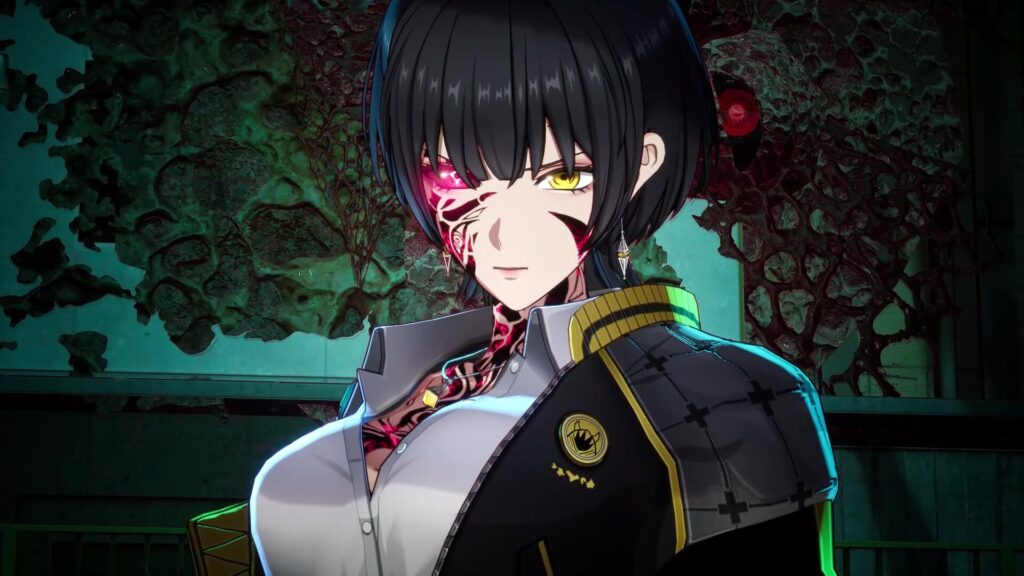
Qliphah is definitely anime-coded, with over-stylised main characters and a convoluted plot that eventually leads to secret labs and doomsday cults. I was surprised/suspicious when the download size was barely over 1GB, but after playing I can understand why.
There are barely a dozen unique 3D models, including our protagonists, and you don’t see any environments outside the battlefields, of which I remember there being only four. Each is swathed with the same otherworldly palette of dark greens and off-reds. Anything else is portrayed with 2D art. Although the art stays consistent throughout the story, the main characters on the title screen and menu seemed to have a different artist’s interpretation. I think I would have preferred this style over the safe, generic style we get in every game.
Sound and Music
Likewise, the game lacked varied music tracks. I think I counted four total: a gothic title-screen track, fast-paced electronic battle music, a generic background track for dialogue, and a ridiculous, out-of-place anime track for the climax. Though I will admit, they are still wedged in my head, so they are memorable. Qliphah is also fully voiced; however, only in Japanese, so you will be reading all the dialogue if you’re not fluent.
Lastly, I had a minor bug that may be unique to my setup: Qliphah would always try to open on the wrong monitor. It’s not a deal-breaker and certainly a minor and unique annoyance, but something I’ve never really encountered before and had to learn keyboard shortcuts to fix.
Final Thoughts
In the end, Qliphah in Providence’s Shadow feels like a drop in the bucket of anime games out there or coming soon. It does one unique thing, but only that; making it feel like a tech demo rather than a full-fledged title. Clocking in at around 10 hours from start to finish, with promised gameplay DLC (cosmetics are already available, surprise), I don’t see any reason to return, and I can’t see it being particularly memorable.

Platforms: PC, PlayStation, Switch
Developer: Arc System Works, UnitePlus
Publisher: Arc System Works
Release Date: 24 September 2026
Played on: PC
Key provided by: PressEngine

This post contains affiliate links. If you buy through them, we may earn a small commission at no extra cost to you.
About the Author