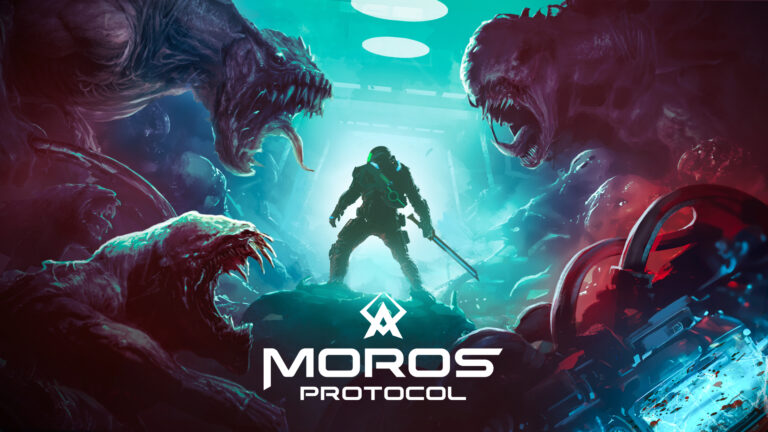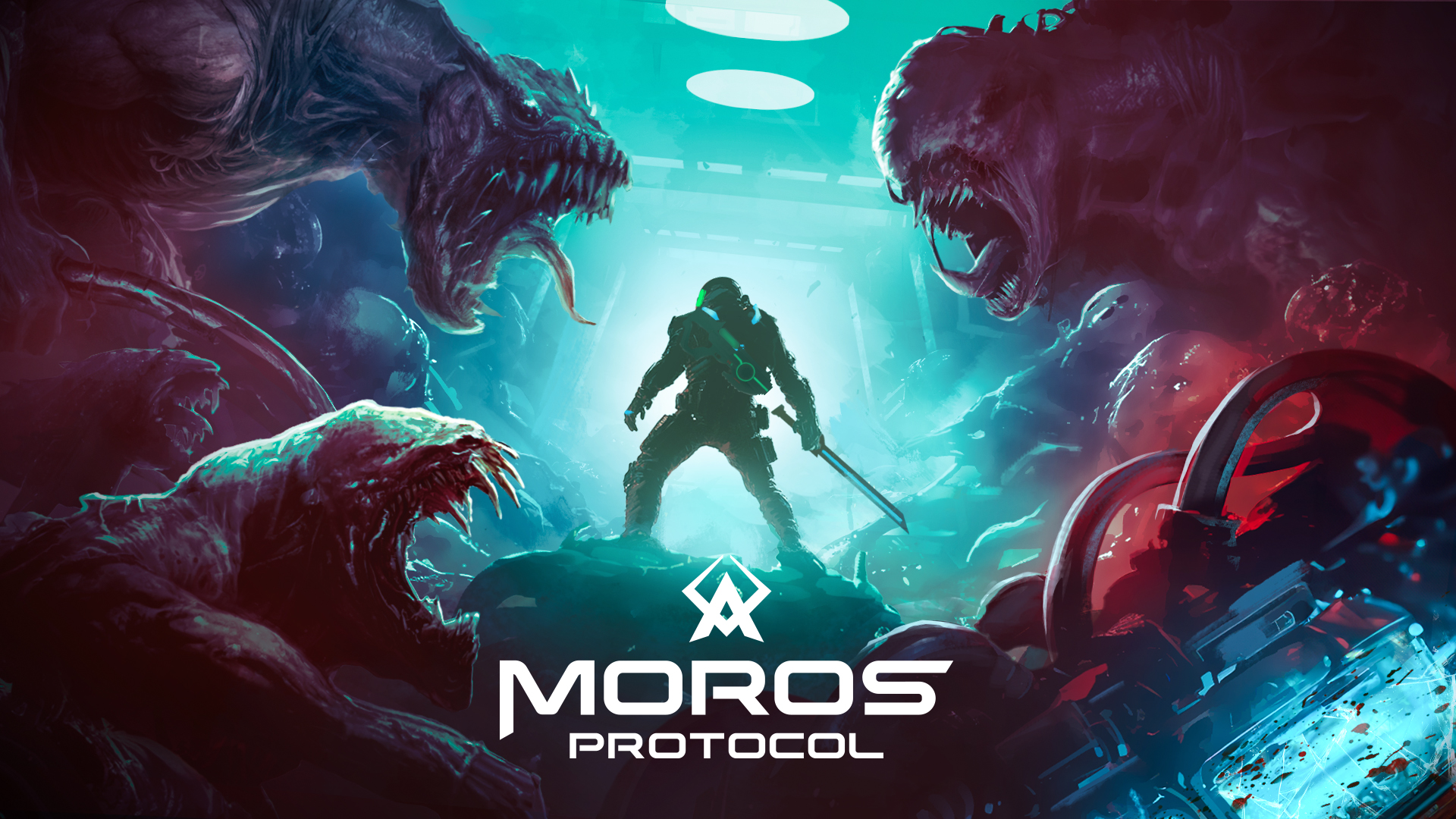
In a Sci-Fi future, deep in space, you find yourself alone and outnumbered. You’re heavily beaten and have few rounds left. “Next time will be different,” you think to yourself. You go round the corner to face your enemy in a final blaze of glory. This is the Moros Protocol.
Moros Protocol is a sci-fi first-person roguelite boomer shooter set aboard The Orpheos, a derelict warship lost in deep space. You are a trooper named Alex and are woken up from your sleep pod by an A.I. assistant and told the ship has been infected by a hostile life-form, the Darkphage. Your job is to survive and help Abby (the A.I.) reconnect to parts of the ship to fend off and eliminate the aggressors.
Alone in Space
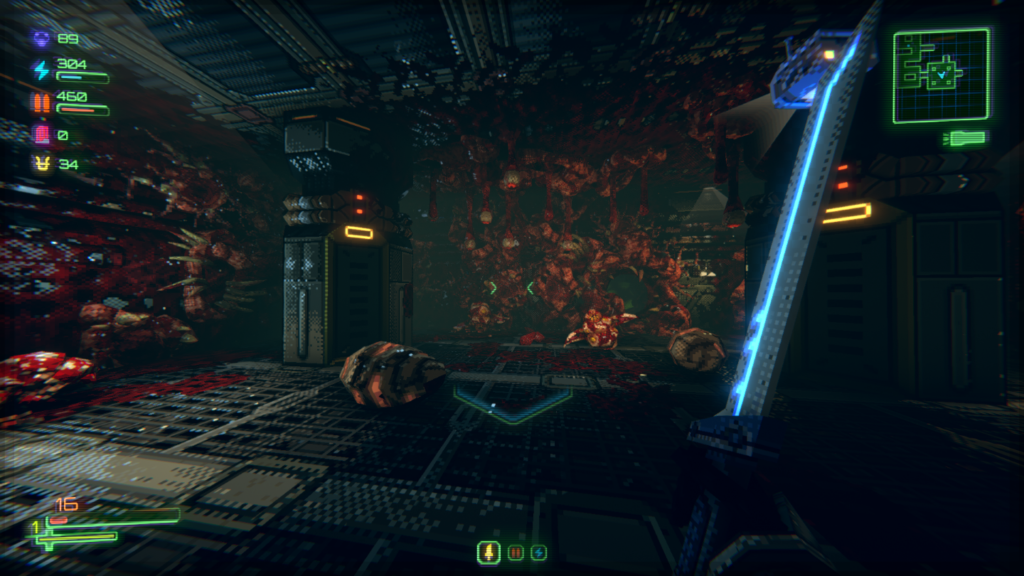
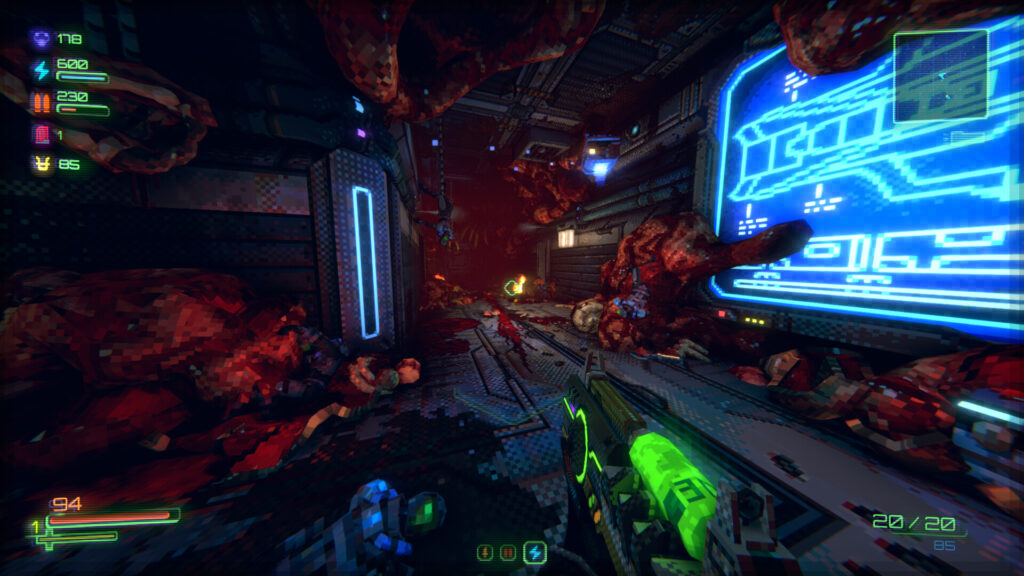
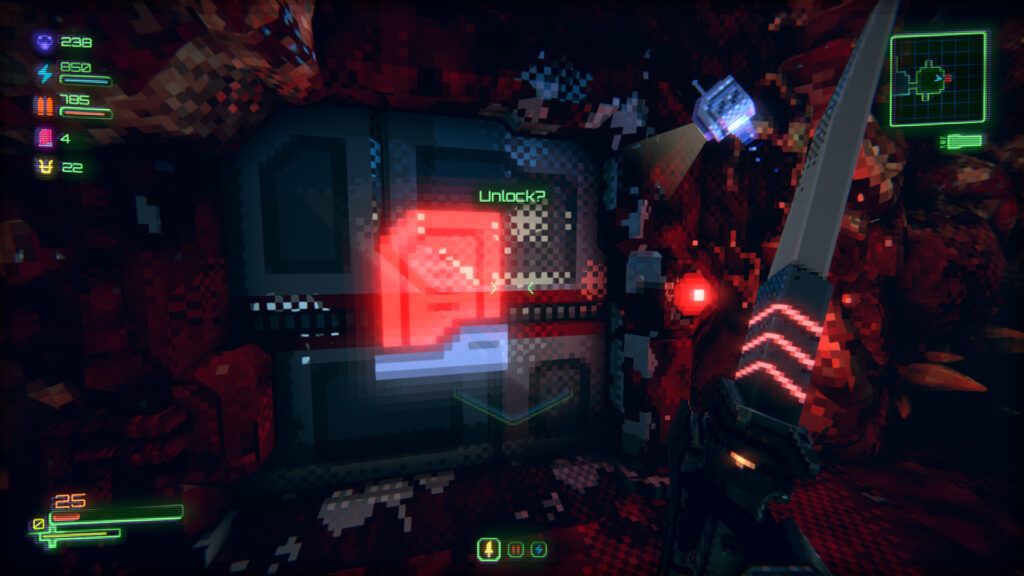
The Orpheos is divided into three Areas, and each Area is made up of a series of Sectors. Each Sector is procedurally generated when you spawn and is divided up into rooms with connecting corridors. Each room will either contain a bunch of enemies, power-ups in the form of augments, new weaponry, or maybe nothing at all. Upon finding hostiles, the room will go into lock-down, and you must clear the room to unlock the doors. Don’t think about hiding in the connecting corridor either, as a damaging gas fills it to “encourage” you to move into the room.
Early Steps
You wake up; you only have your sword in hand. Your character can swing normally, or you can charge for a power attack. You can’t do this indefinitely, as it drains your stamina bar, and you need this for jumping and dodging; it comes back relatively fast, though. You also have a kick, but it’s not great for attacking; you use it to smash containers or boot explosive barrels at targets.
Moving to the next room, it locks down because of the enemies inside. You clear the room to the best of your abilities, and the creatures have dropped ammo (physical and energy), money, and biomats. If you were lucky, they also dropped charges for your med-stim.
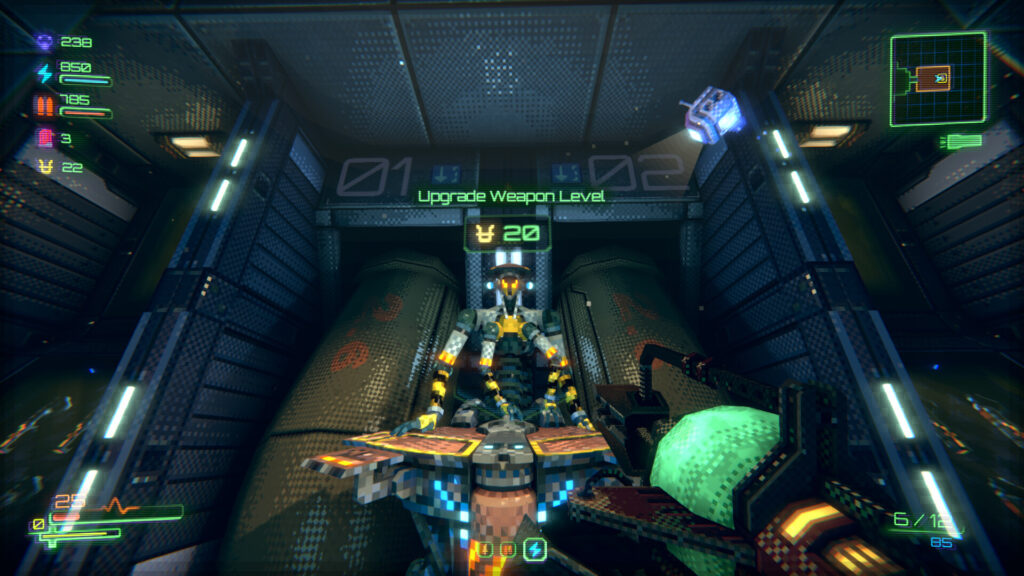
Then you see two doors; one has an [A] above it. You go through that door. It contains a single chest with an augment inside; it increases your melee damage if you are airborne. You slot it into your sword and keep moving.
Build Crafting
Later, you find another door with a gun symbol above it; it requires a key-card, but a previous enemy dropped one, and you can unlock it. A chest in the centre of the room opens and a random weapon spawns: a standard pistol which uses physical ammo. You pick it up, and it goes into one of your two remaining weapon slots. Killing enemies is certainly easier with it, but you notice enemies don’t drop as much ammo now; switching back to melee generates more ammo.
Clearing the rooms, you find a teleporter to the next Sector. Activating it takes you to a map screen where you choose your next destination from a selection of three, each with different threats or bonuses.
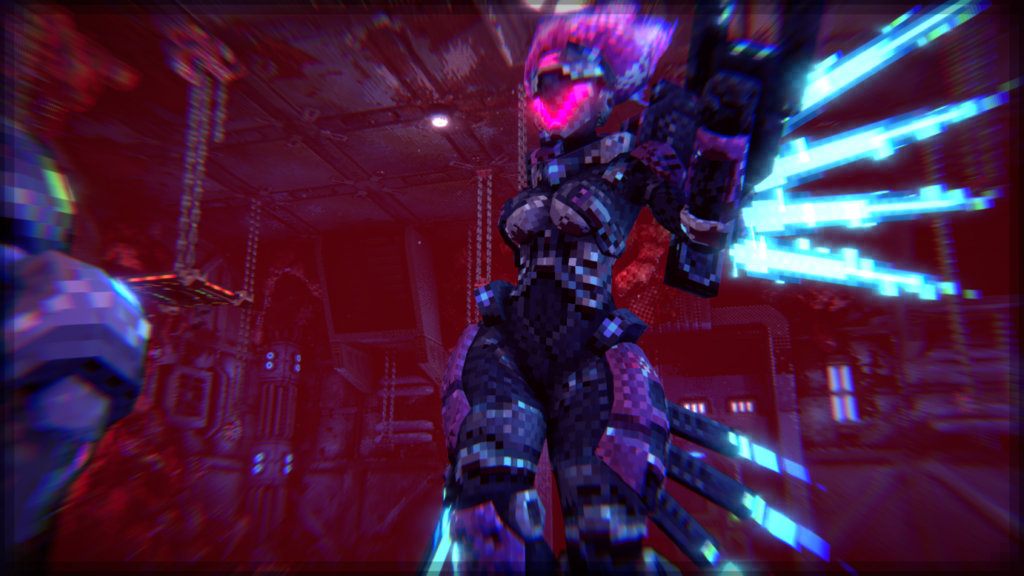
You continue along the path until you are inevitably killed; this being a roguelite, though, death isn’t the end. Your consciousness is uploaded to a new body somewhere else on the ship, and the run begins anew.
Death Is Not The End
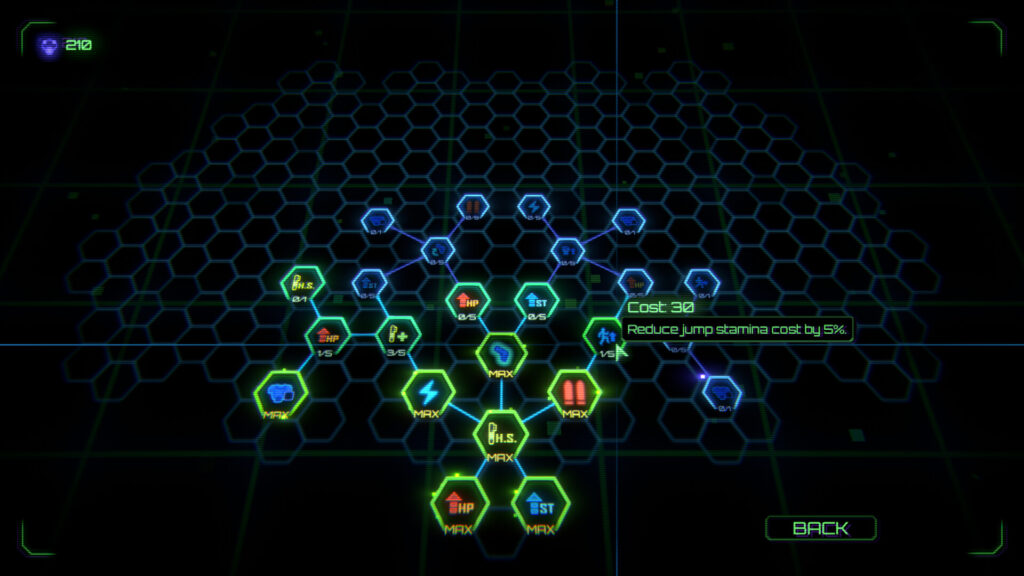
All those Biomats you picked up come into use here, as you can purchase permanent upgrades to your character from an extensive perk tree. Upgrades vary from your standard “increased health/stamina” to beginning with bonus key-cards/money/weapons. This is your gameplay loop in Moros Protocol: try to make it as far as you can, die, level up, and try again, with runs varying from minutes to up to an hour.
The levels also have other elements: secret rooms filled with potential goodies, and vending machines that spit out ammo, augments, and healing charges. Every couple of sectors has a vendor that offers different services, items, upgrades, or augment fusions. Sometimes there’s a challenge room that, when completed, can offer a substantial gain in materials. Although I didn’t get to try it, Moros Protocol also offers a co-op mode.
Big Bad Bosses
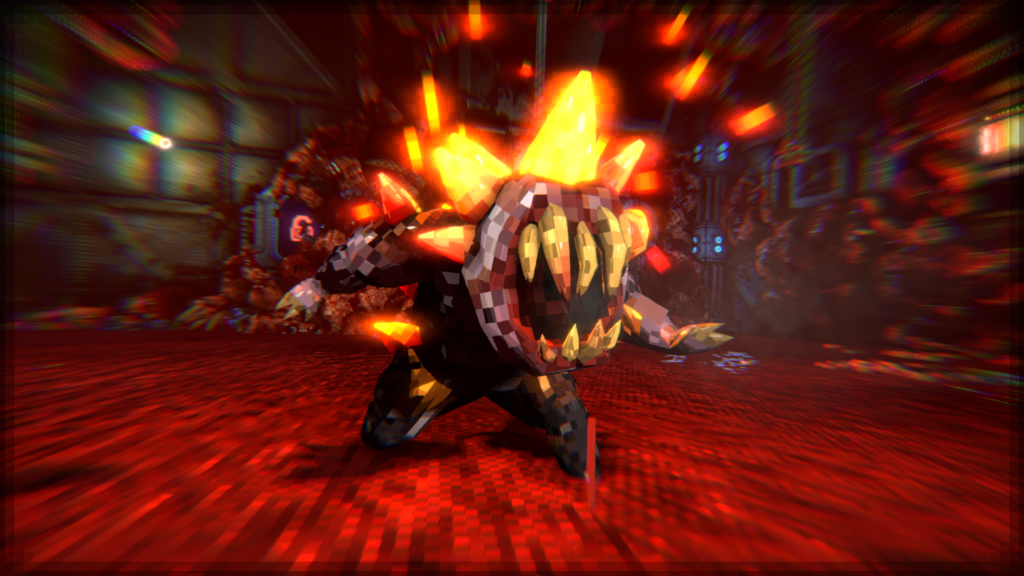
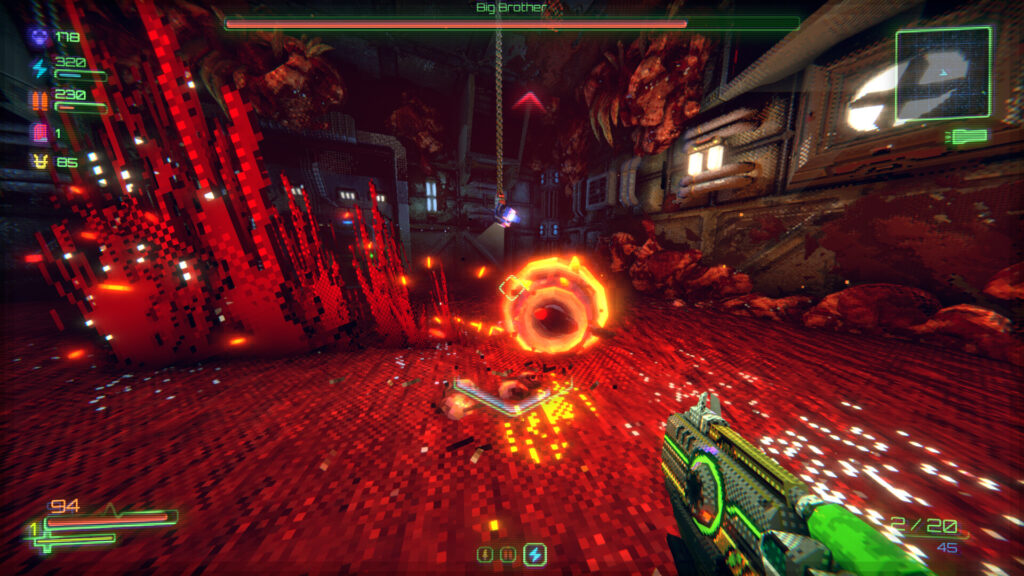
Every Area has three bosses, which are divided up among the Sectors and are clearly marked on the map with a big target; you can’t miss them as all roads lead to them. From what I have faced so far, they are extremely varied, from giant walls of flesh, killer assassins, and the first boss, a tiny creature that likes to Sonic spin-dash you. So, time your dodges well! There is even a recurring antagonist who will battle you a couple of times.
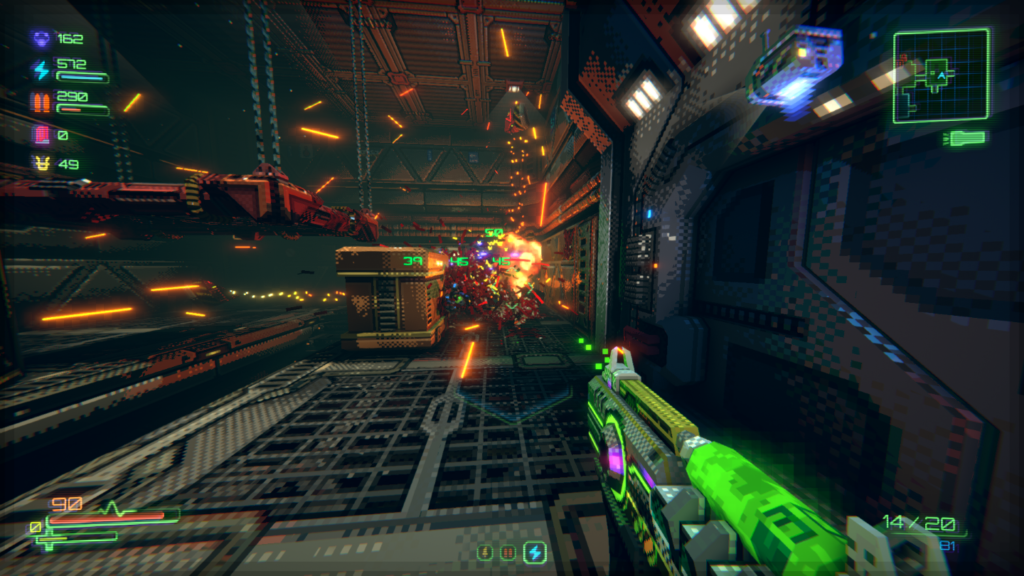
Moros Protocol’s combat favours a more run-and-gun approach, with enemies swarming you if you try and camp too long; your dodge has some level of invincibility to it, and hoarding monsters into groups to lob a barrel into them has some level of destructive glee about it. The gun-play feels really nice, though some tinkering with the default settings was required for a comfortable experience. Clearing a room is signalled by a brief slowdown on the final enemy kill, giving each battle a cinematic conclusion. It truly does live up to classic boomer shooters in this regard.
Some Downsides
However, a few foibles keep me from enjoying Moros Protocol as I should.
Balance is a major issue; not all guns are created equal, and some are definitely better than others. The fact that you have to use a scarce resource (keys) to obtain them limits how many chances you get to “spin the RNG wheel”. Augments can also range from the useless (2 points of extra health) to godly (each dodge produces an explosive), and some weapon augments definitely favour certain weapons. “Increased damage but the accuracy” goes down isn’t useful on a pistol, but pop it on a grenade launcher and watch those numbers climb.
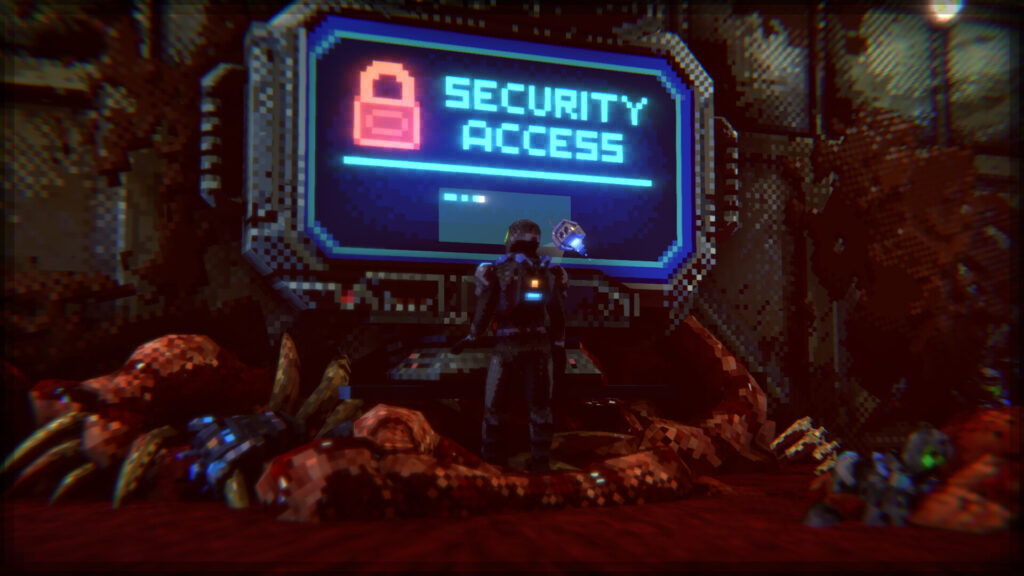
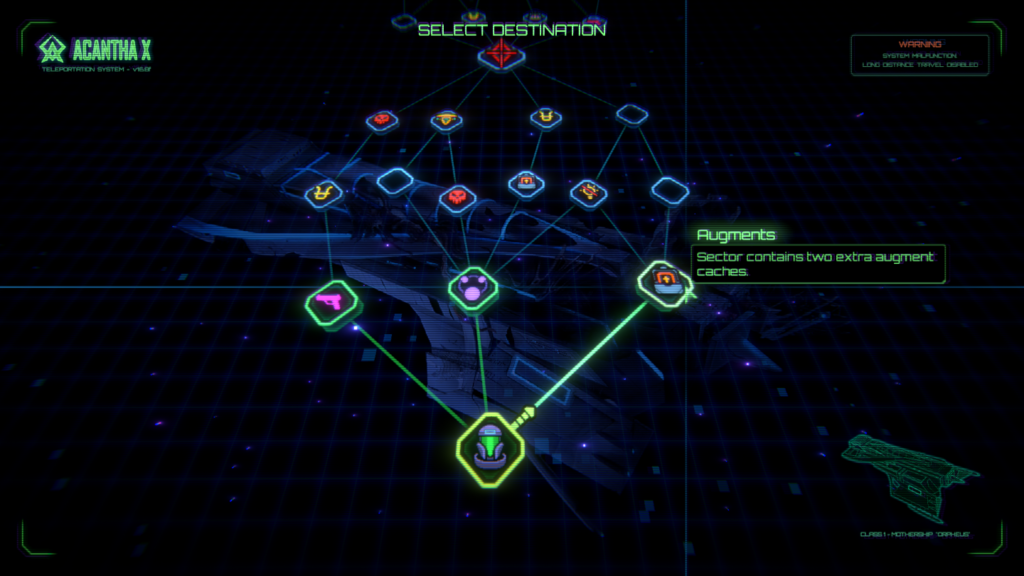
Checkpoints are few and far between. You can quit out of a run, and it will keep your place at the beginning of the current Sector, but upon death you go right back to the start of each Area. You only get to keep progression if you complete an Area and then get the option to choose where you start from. This initially confused me, as I assumed the checkpoints would be after each boss, but the map doesn’t scroll far enough to indicate an endpoint for each Area.
Healing is also somewhat dependent on RNG; you can only heal with a healing stim, which needs health charges, which are dropped by enemies or vending machines. It takes several of these to charge a stim fully, but then it only heals a percentage of your health. This is very much a game of “don’t get hurt” rather than tanking damage. However, if you’re into secret hunting, you are going to get hurt.
Secrets That Hurt
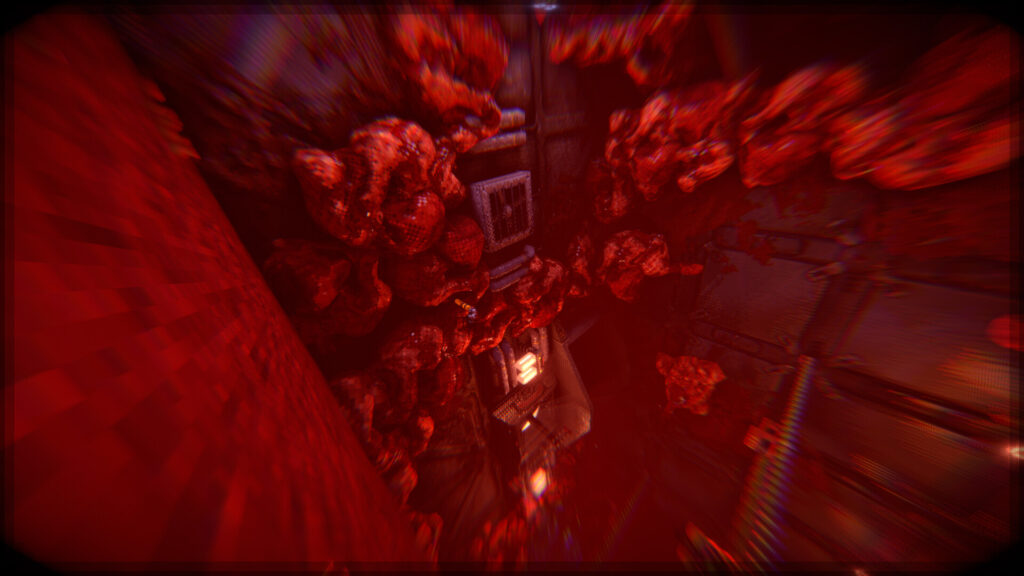
Scattered amongst each Sector are gaping maws in the walls with a membrane behind them. One of these membranes hides the secret room. The only way to break the membrane is with a kick, and when it breaks, it deals a flat 10 damage. And yes, it can actually kill you. I get the risk/reward mentality behind this design decision, since a secret room can hold substantial credits or biomats (though I’ve had some really bad ones). However, if you are having bad luck with healing items, it’s often not worth the risk.
It’s a real shame because I found a lot to like about the Moros Protocol. The 3D models had a gorgeous retro pixel art style painted on them. The lighting was atmospheric, with just enough neon to sell the cyberpunk aesthetic. The music kept up with the gameplay, with DOOM-inspired tracks during combat and subtle during quiet moments to let the ship noises shine.
There was very little to no spoken dialogue throughout Moros Protocol, just an announcement of the P.A. system every now and then, and the plot is very basic. The story both acknowledges and ignores Alex’s re-spawning ability. He goes from having existential crises to settling into it very quickly, but then boss cut-scenes ignore this by acting like it’s the first encounter every time. I admit this inconsistency was probably a gameplay contrivance, since boss arenas often go through a lot of destruction, but it still felt jarring compared to other story beats.
Upon Reflection
Moros Protocol sits in a strange place for me. I like it, but I want to love it. It has all the beats I love. Some great build crafting, a retro cyber aesthetic, pickup-and-play gameplay, but for every good run you must go through a dozen or so bad ones. This can lead to frustration, but when the moons do align and you get a good run, that’s when Moros Protocol hits its peak.

Developer: Pixel Reign
Publisher: Super Rare Originals
Platforms: PC, PS5, Switch 2
Played on: PC
Key Provided by: PressEngine


This post contains affiliate links. If you buy through them, we may earn a small commission at no extra cost to you.
About the Author