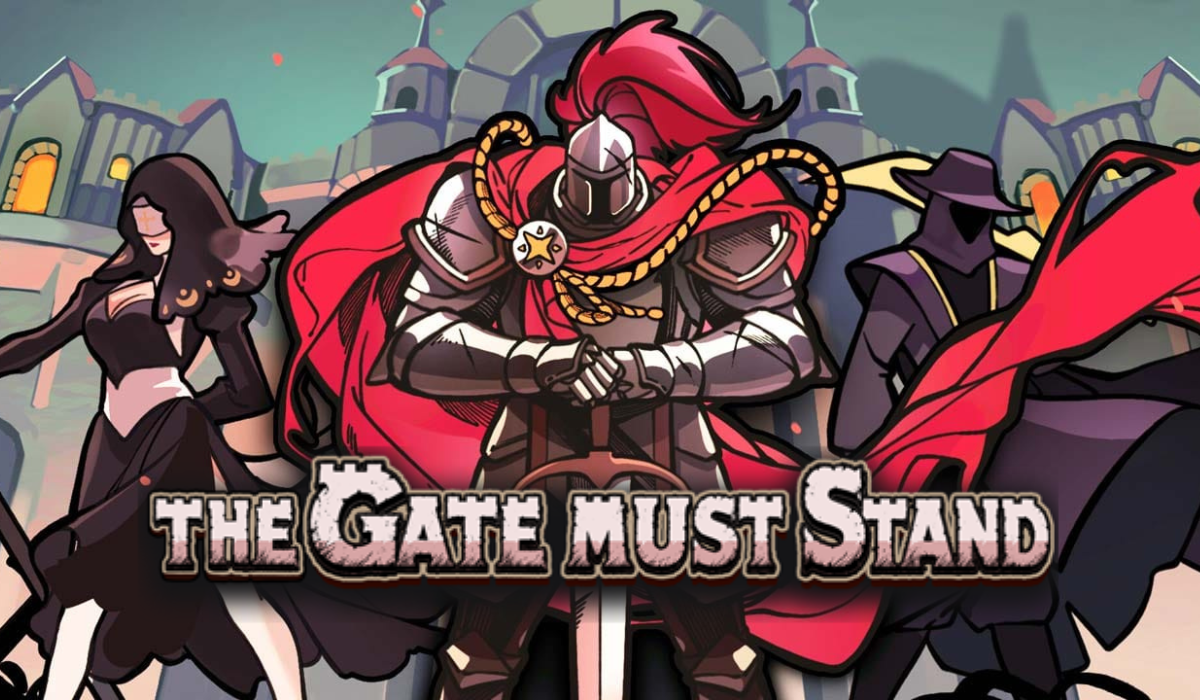
Tower defence games are hit-or-miss with me. I neither love nor hate them; I just acknowledge they exist. But when The Gate Must Stand popped into my inbox promising a blend of Vampire Survivors-style gameplay on top, I couldn’t help but take a look.
I do admit I may have been tricked by a snake-oil salesman with the email, as Senmu Studio itself doesn’t boast Vampire Survivors-style gameplay, but I can certainly see why the comparison was brought up.
Gameplay
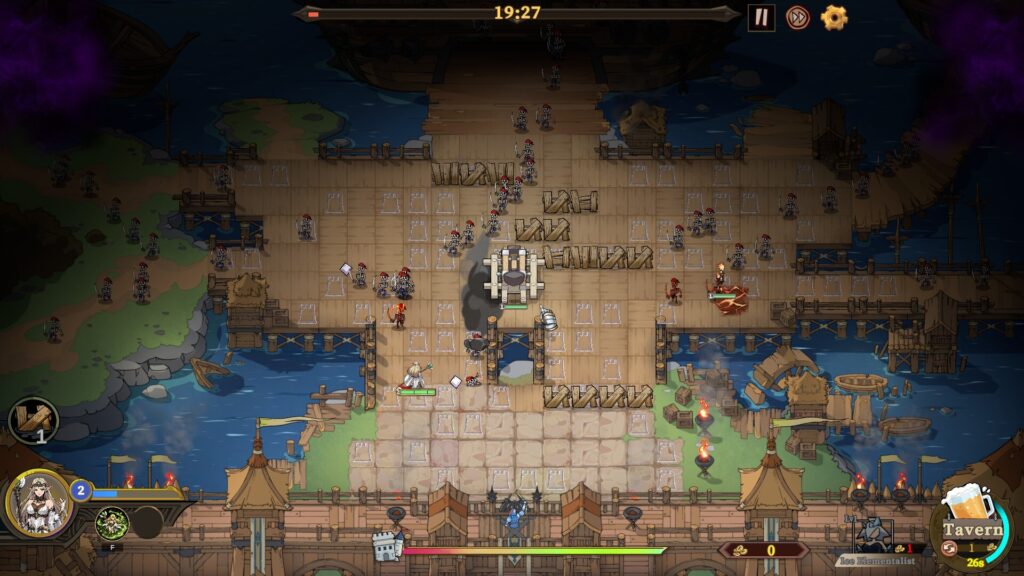
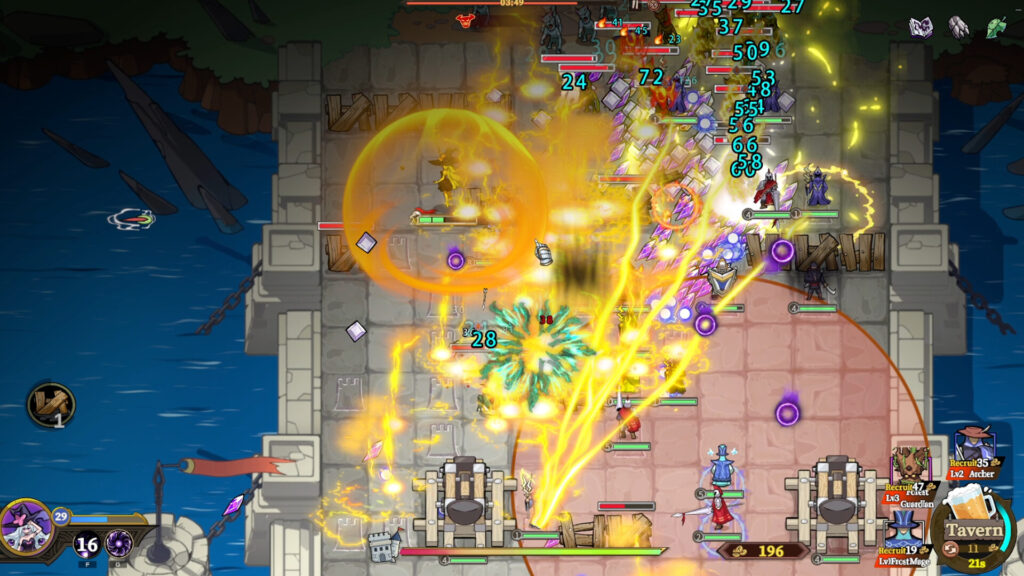
You play a hero who is tasked with defending the gate to the city, and it is up to you to place units, defend barriers, and defeat the constant stream of enemies all funnelling towards the city gate. Defend the gate, and you move on to the next level, where you can earn permanent upgrades to carry over to subsequent playthroughs.
On paper, it sounds great. You choose your hero, each having different abilities depending on your playstyle, and a constant stream of income as time goes by to purchase minions you can place on the battlefield from the tavern. Levelling up your hero or minions gives you the obligatory three choices common with roguelite titles. You move your hero about the battlefield, and they auto-attack, and you can have two abilities on cooldown.
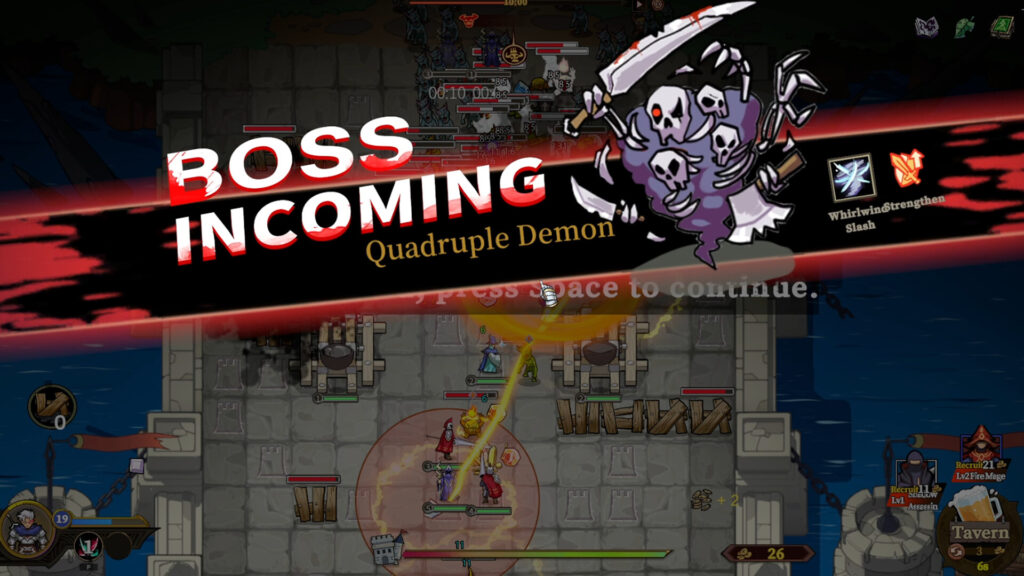
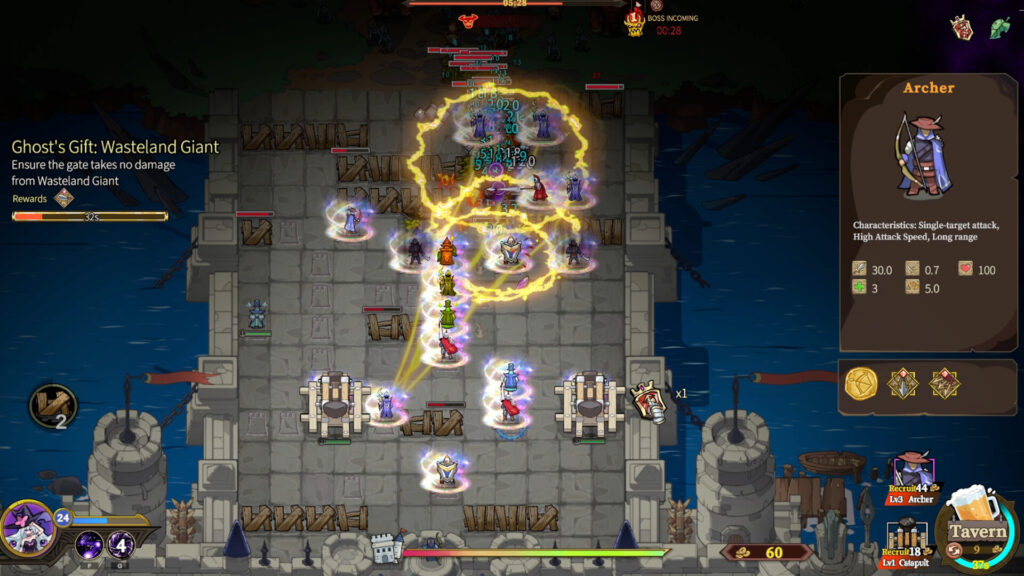
Every game has a 20-minute timer, with an event occurring every minute. Merchants appear, the tavern refreshes, and boss battles occur every five minutes. To avoid lulls during these minute checkpoints, you can even speed up the game to two or three times the speed. Defeated enemies drop EXP crystals, which must be collected by your hero, and purchasing duplicate minions could either create small armies or be stacked on top of each other to level them up. Your minions and hero have their own health pools, but will respawn after an allotted time.
Randomness Holds It Back
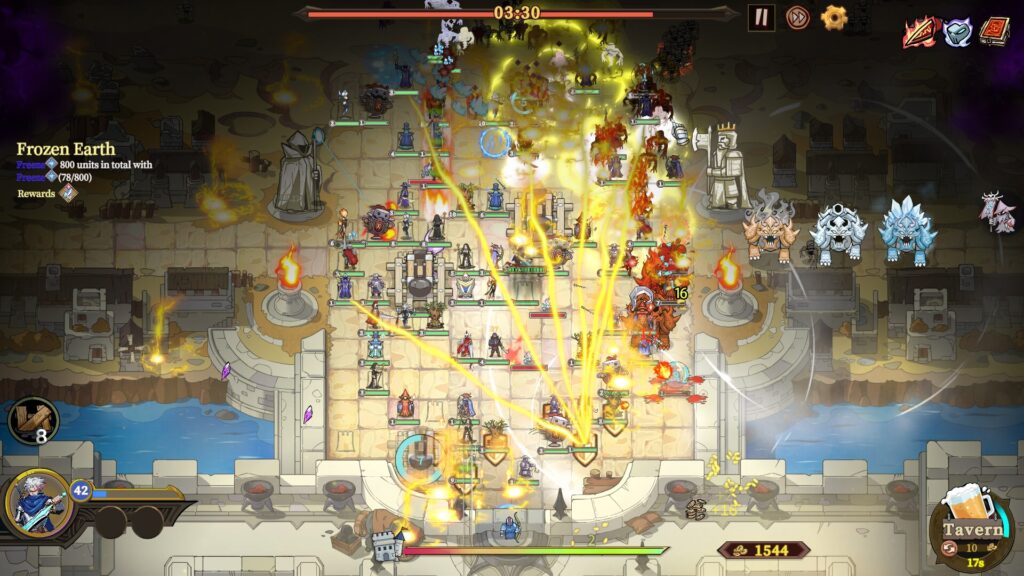
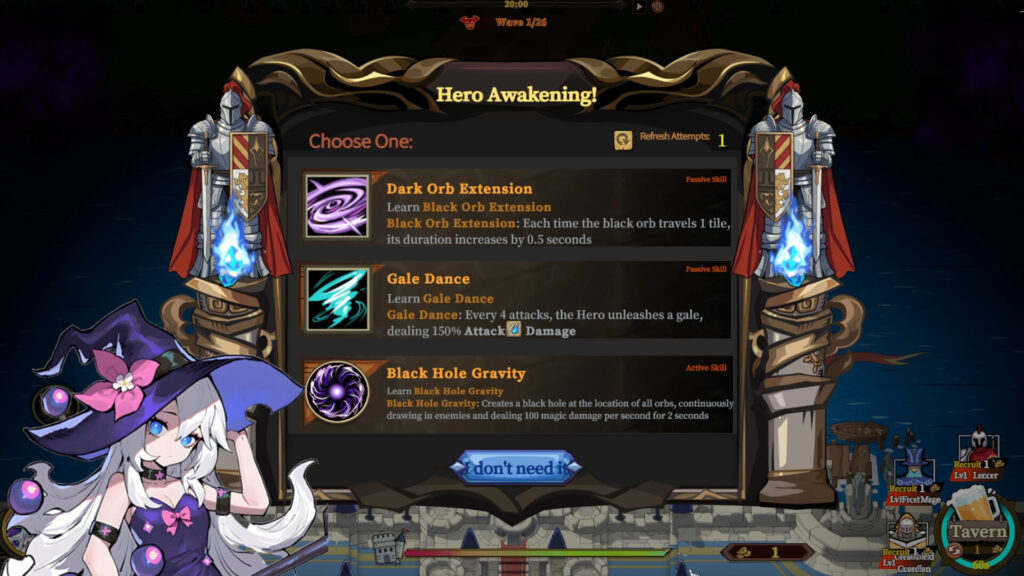
The main issues stem from randomness in levelling. Because your abilities are also in the same pool as your stat upgrades, it is entirely possible to go entire games without unlocking your powers. The same goes for the minions; you could spend entire matches waiting for a certain troop to turn up. There are manual refreshes, but these are limited.
You never get to be truly overpowered, which I feel is the redeeming feature of these games. Starting squishy, but through power selection and synergy, creating a stupidly powerful build. Instead, you feel like you’re barely getting by. You do unlock other heroes and more varied minions at a generous pace as games progress. But again, this adds to and dilutes the loot pool.
Balance Problems
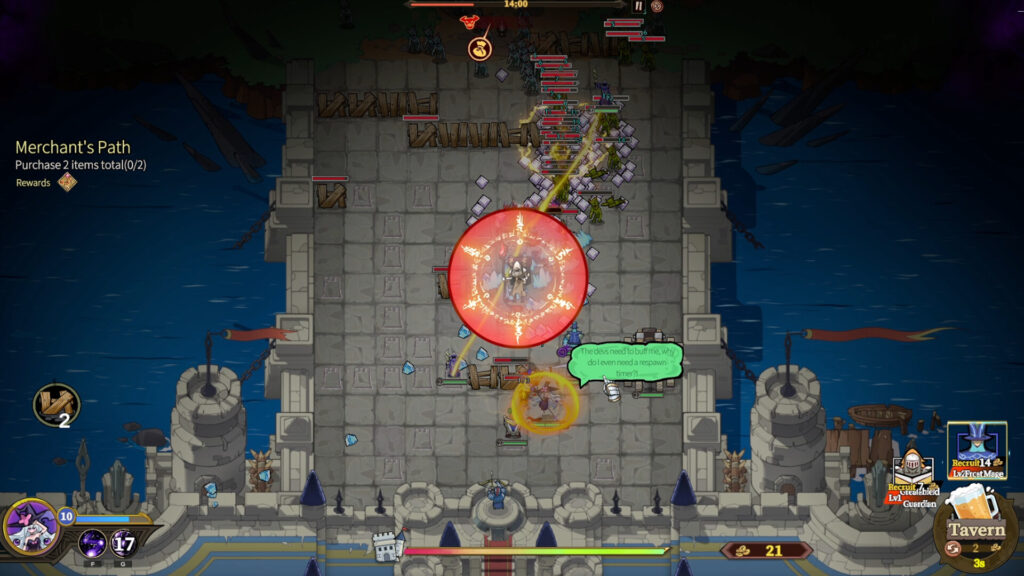
Balance is another massive issue I had with The Gate Must Stand. The regular mooks were squishy enough, and the mid-bosses melted reliably. The 20-minute big bosses, however, had astronomical health pools and could one-shot your hero, your walls, and your minions. One particular boss had a mechanic that decreased its armour, but it either wasn’t working, or the debuff did nothing to offset its massive health pool.
Getting to these at the end of a 20 min run was really demoralising and made me not want to do another run. The added fact that one of the end bosses doesn’t actually target the gate leads to a stalemate where I could walk away, wait for my units to respawn, and slowly whittle its health down.
Presentation
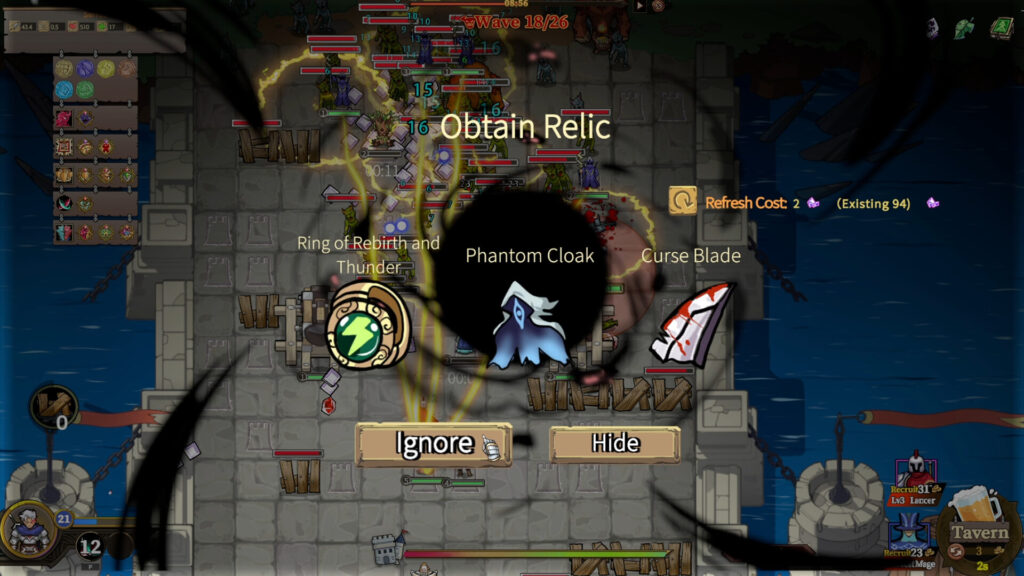
The art is hand-drawn rather than sprite-based, giving The Gate Must Stand a Flash-game or even Xbox Live Arcade feel. However, I spent the majority of matches zoomed out to see the full battlefield. There was a community discussion around possible AI-generated art for the hero portraits. In response, the art was replaced with earlier artwork they knew was handmade while they awaited confirmation from the responsible art team. The music was serviceable but not memorable, and the same with the sound effects.
Final Thoughts
The main pull of tower defence games is that when you fail, you know why. You can adjust your strategy accordingly and shore up any weak points. The Gate Must Stand doesn’t allow you to do this, as random chance just negates any sort of strategy you can come up with. Failure is determined by a bad roll, and that’s something you just can’t counter.
There are bones here, but it just needs a lot of refining. There is a roadmap of updates coming, so post-game support was planned rather than an afterthought. The Gate Must Stand isn’t a bad game, it’s just not a memorable one either. It’s just that, at the time of writing, there are too many frustrations to fully recommend it.

Platforms: PC
Publishers: Gamersky Games, Yogscast Games
Developers: Senmu Studio
Key Provided By: Press Engine
About the Author