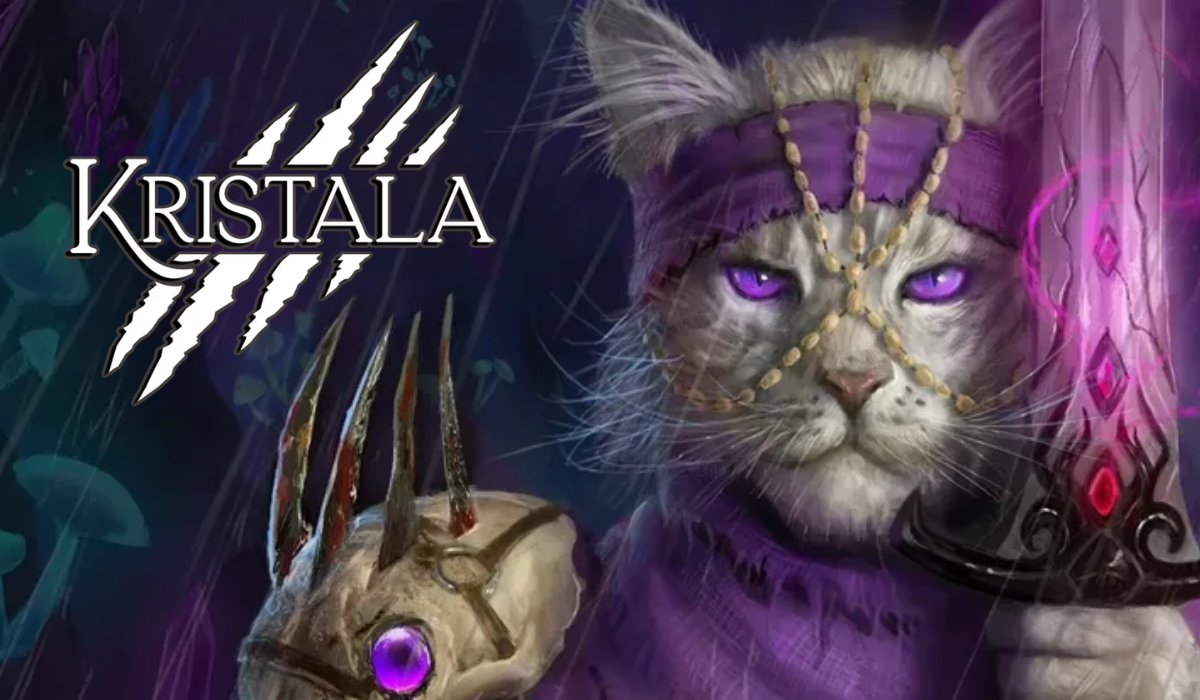
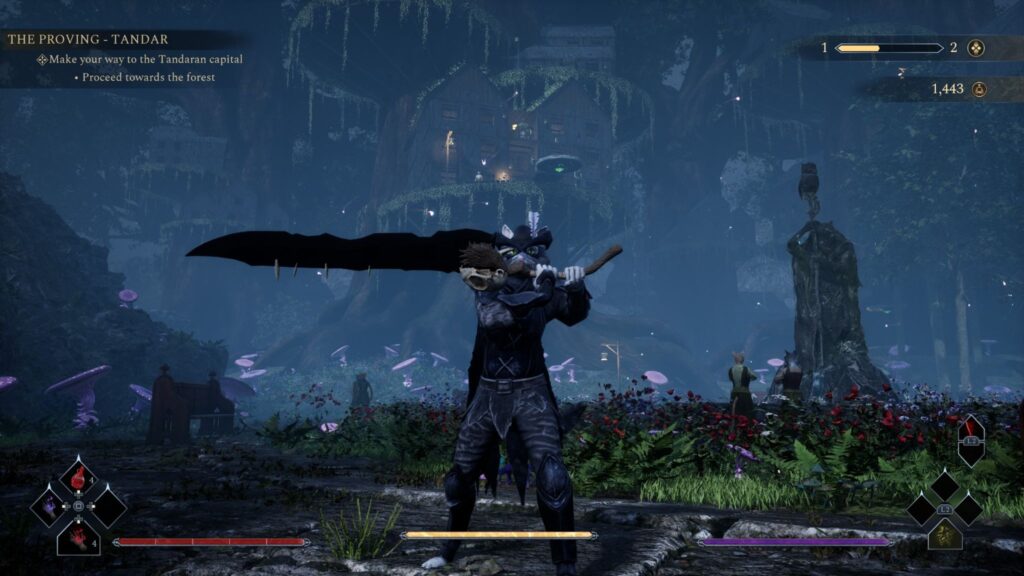
Kristala is a heavily inspired Souls-like game, where your main character is a cat-humanoid, and the enemies are all variations of rats, ghost cats, and other creatures in that family. Kristala is immensely fast-paced compared to its contemporaries, but also suffers from buggy mechanics, bland level design, and a slight misunderstanding of what souls-like players actually want when they play these games.
A Brand New World
Soulsborne or Souls-like gameplay is an art form in itself. Beyond the fantastical world, brutal enemy AI, and robust combat systems lies a mechanically tight game. When you jump, dodge, parry, light attack, heavy attack and everything in between, there is a tactile and immediate response to what you do. Even if you sometimes get locked into animations or players get caught out trying to heal, all of the mechanics for Souls games have a predictable tactility that is easy to learn but hard to master. Kristala would have you believe it has the same quality, but it is only 70% of the way there.
Before expanding into the finer details, Kristala is a wholly competent game when you start. Kristala has a standard amount of audio-visual settings and hosts specific gameplay options as well, which is welcome to see in indie games. Character customisation is present here, but completely barebones. Kristala should have opted to allow players to choose their armour set instead, or spend a bit more time in character customisation for your feline compatriot. Kristala also sometimes communicates its tooltips at the beginning, but the longer players need to dive into more of the stats, echoes, and weapons, the tooltips and UI don’t do much to explain.
Optimisation and Control
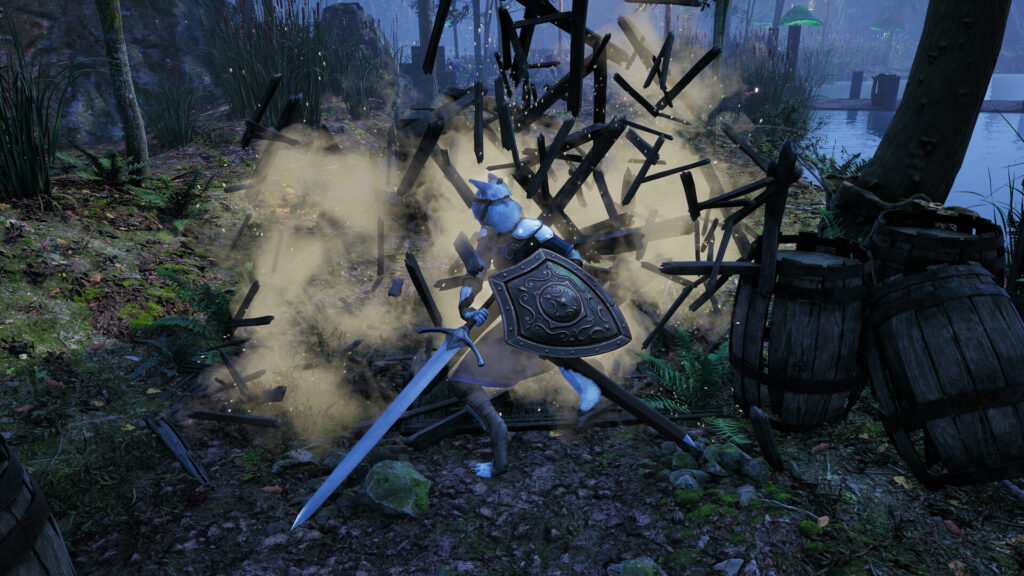
When you start Kristala, it runs really well. It was surprising, as my expectation of 3D indie games is usually stuttering frame rates or technical issues, but I experienced minimal frame stuttering and good optimisation. In my playthrough, I only experienced a handful of glitches or frame drops and the inclusion of an ’Unstuck’ button in the settings is highly useful for when they occur. Overall, Kristala is technically sound and stable in its frame rate, and that’s wonderful.
Gaining control of your player character, players get the standard light and heavy attacks. You also get access to parry, dodge and dashes (which give you i-frames). The unique mechanics for Kristala are stealth-based. Players can go into a crouch state, or slide into a crouch state and stay hidden in grass cover in order to get the advantage on unsuspecting enemies, dealing massive damage, and “Balance’ damage.
Balance is the Essence
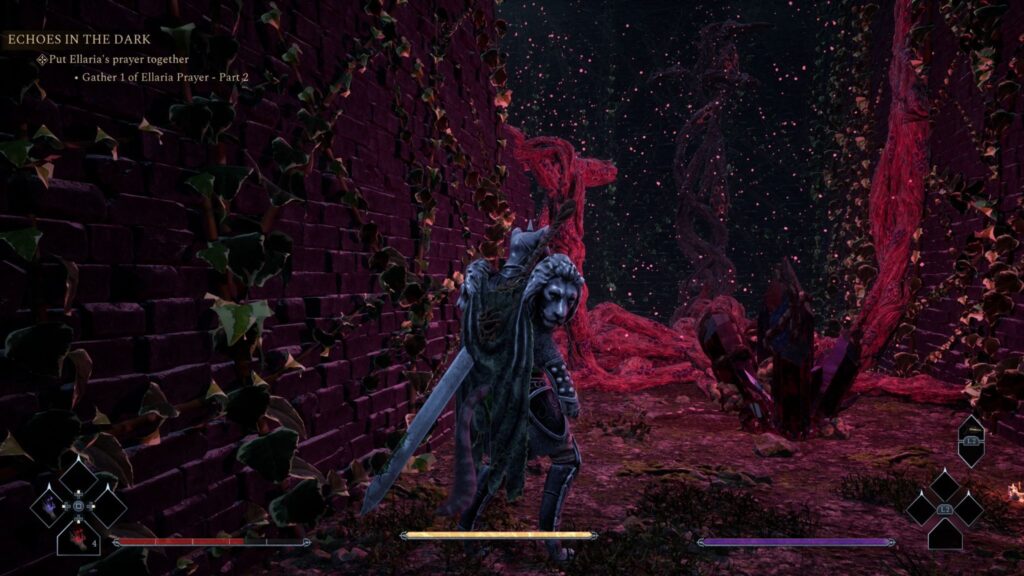
Balance is Kristala’s version of Stamina with an interesting addition. All moves, such as jumping, dashing, dodging, and heavy attack, take Balance away. Light attacks do not drain any Balance, so the pacing of Kristala makes it so that you can move around battle arenas swiftly. It also enables my playstyle, which was a Strength Bleed build, using swift balance recovery and jump light to attack all enemies. I didn’t experience much of the magic, but I would assume that it also has depth in the same way that weapon builds do.
Kristala also boasts some of the cleanest player animations I’ve seen, which compare to AA and are even better than some low-effort AAA games. Takedown animations are quick, efficient and don’t overstay their welcome. Enemy animations have a similar speed to them and react relatively well to interrupted attacks and parries. It’s not perfect by any means, but it gets the job done.
Not Always Landing On Its Feet
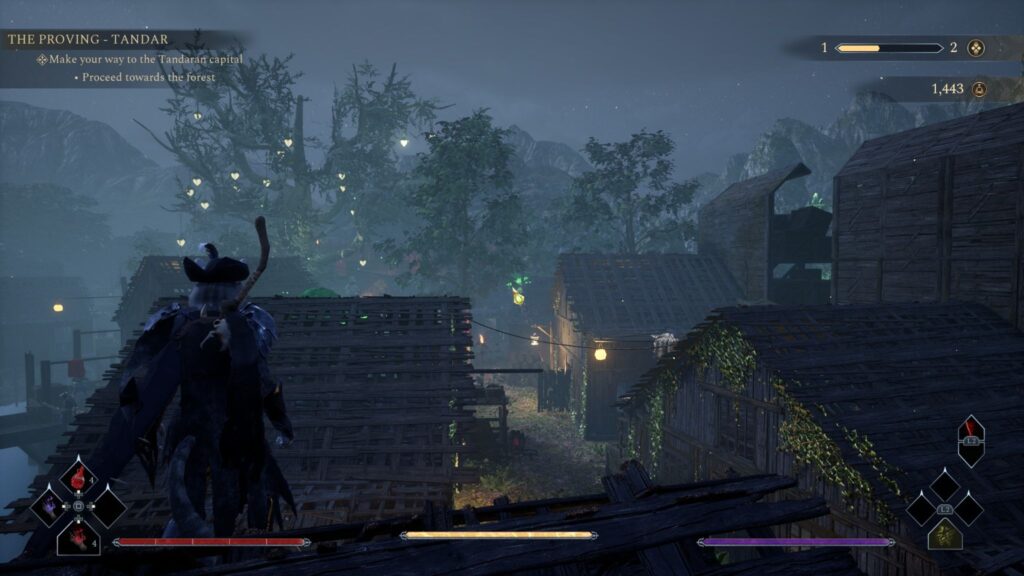
Where things start to fall apart is in Kristala’s other standout gameplay feature: heavy platforming. To be blunt, it isn’t good. Players can run on flat roofs but not certain slanted roofs, wall-run, jump, stealth kill, and run on ropes. All of these traversal mechanics miss the mark in little ways that make the platforming more frustrating than it needs to be.
Falling into the water off a box, not getting the jump-off on a wall run, and a miss on the rope, all of this compounds to a wholly unsatisfying platforming experience. When it does work, you can really feel the swiftness that separates Kristala from its contemporaries, but you are hoping for it to work in your favour in the first place.
Character Growth
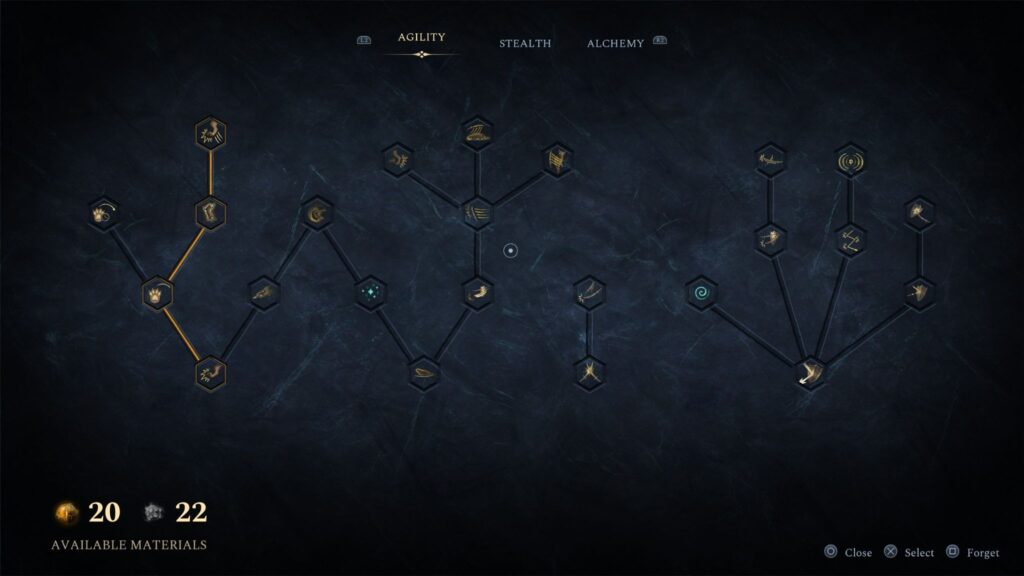
The skill tree system is a pleasant addition. Once I found my build, I was able to adjust the skill tree to my liking using this game’s reset mechanic, Amnesia Stones. I found the stones to be plentiful on my difficulty, which was the hardest/original difficulty called Stray difficulty. Most of the skill tree is self-explanatory, as the tooltips and UI do a good job here. It’s in the Preparation menu, under the Save Fountain, which leaves much to be desired.
Gameplay and game feel are Kristala’s strong suit, but when you start, it’s hard to get an understanding of that. The new player experience for the first ten hours is absolutely in need of work. Sadly, the lore isn’t something I was originally interested in, and I wasn’t very inspired to understand it. The story beats introduced at the beginning, speaking about the six Kristals, found me dreading the rest of the game.
Learning The Quirks
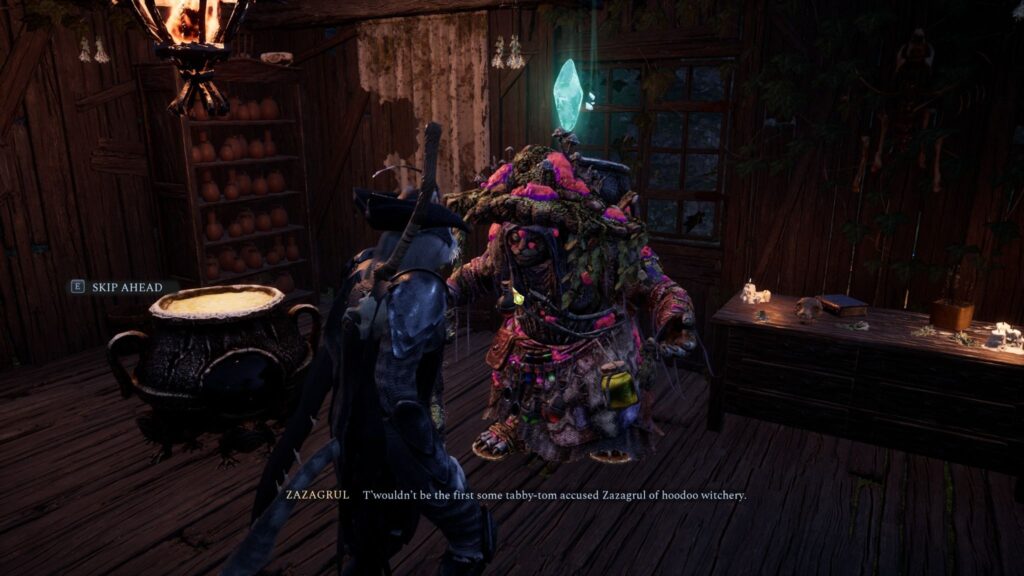
The invented terminology for many systems, magic, and player races had me rolling my eyes at first. But the cast of NPCs start to grow on me, Zazagrul, Levida, even Atreus Stone and the Blacksmith. The effort to have them voiced allowed me to become truly invested in what was happening, but that only happened towards the latter half of the playthrough. It gave me the desire to complete their side quests and see them come to a conclusion.
Unfortunately, there is a quest-breaking bug which I encountered in the Zazagrul/Ellaria questline, making it so that I cannot find any way to complete it. So be mindful that some quest-breaking bugs are unavoidable once you get them. By the latter half of my playthrough, what was, for me, a seemingly uninteresting story experience left me wanting to learn a bit more. Indeed, Kristala’s inclusion of decent voice acting, writing, and voice direction was enough to convince even a cynic like myself.
Frustrations
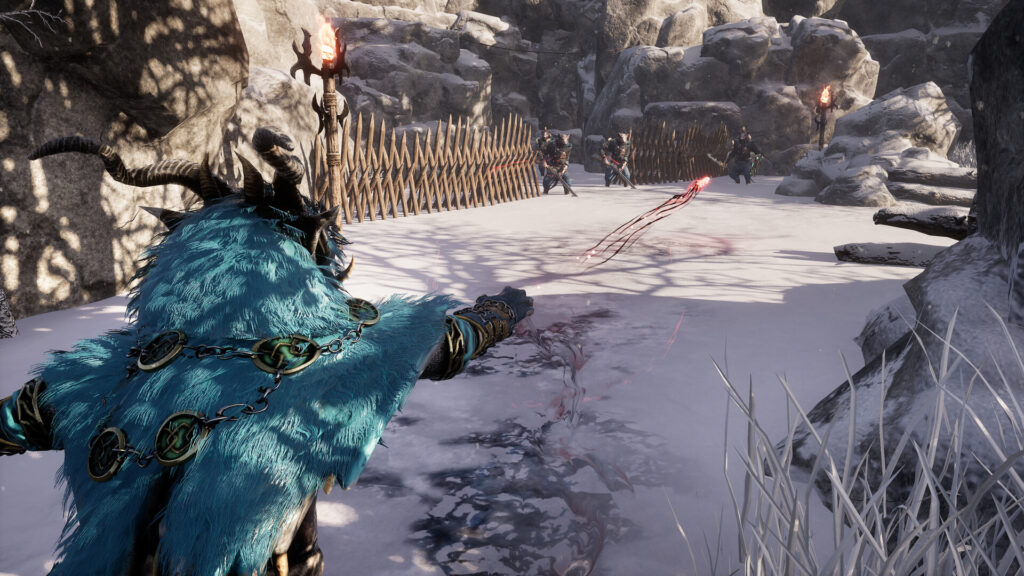
At this point in the review, I’d had a mixed experience that generally trends positive, but here’s where my strongest indignation lies. The environments and levels are just bland. Nothing about them is in the least bit inspiring or coherent. Even ending up in the Tandar area, which is a snow level, nothing really stands out. The skybox lacks much detail, and the terrain, both inside and outside the levels, appears kitbashed together.
The illusion of Kristala immediately falls apart here, and it’s unfortunate because other parts were redeemed the longer you played. Unfortunately, if you like to be immersed in the world of Kristala, it’s not here at all. The same wooden shacks plague the entirety of the first area; it’s no better in the second, even with a change in lighting and theme. And it repeats the same sentiment on the snow level as well.
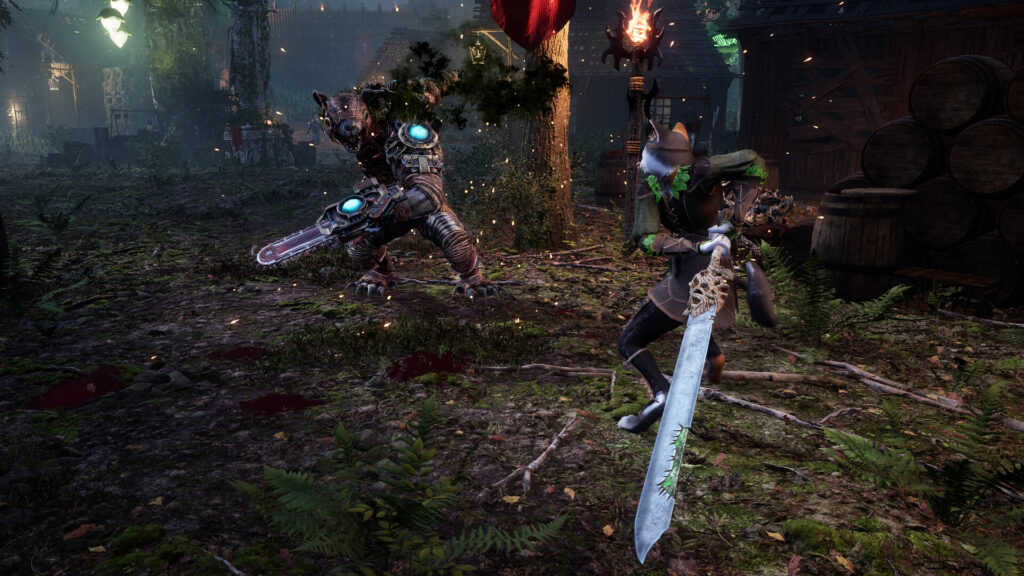
The last bit of frustration comes into the enemy count, enemy AI and boss battles. Enemies are not very unique, but there are a lot of them. I have noticed an overabundance of the same enemies across many areas. I think cutting down some of the bloat in enemies and pathways would be for the betterment of Kristala overall. Considering that, the beginning area of Dalamase is the weakest in level design, enemy variety, and consistency, setting the game off to a weak start.
Lumbering Bosses
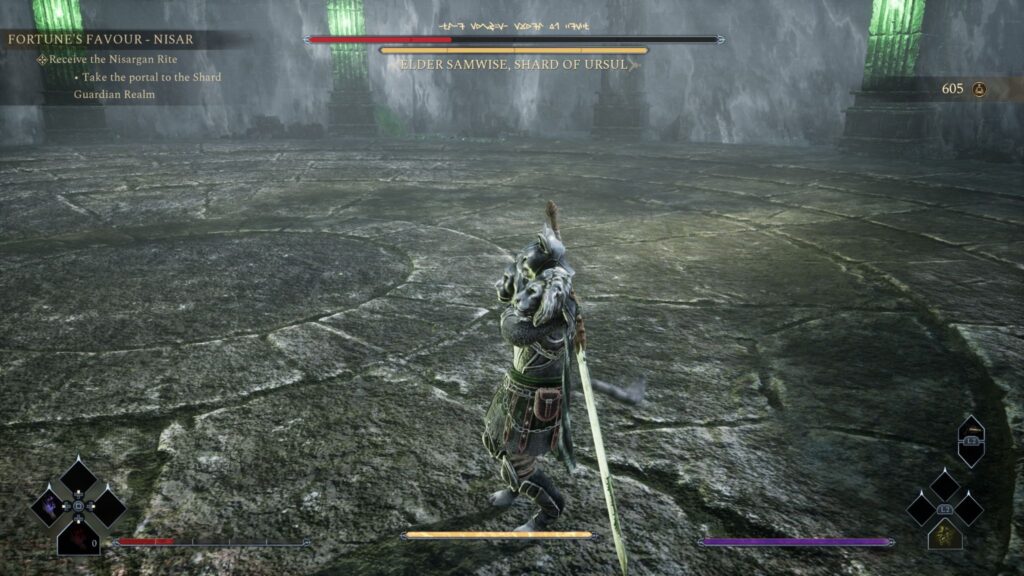
Boss fights feel arbitrarily slow. The player normally attacks a combination of the health bar and the Balance bar. Most enemies, the player is attacking their health bar. In some instances, you do more damage to the balance bar in order to do a finisher move, which Astral Clocktower Studios has called ’Balance Damage’ as a stat line that seems to take a percentage amount of Physical Attack Power. When I started my 4th boss fight, Elder Samwise, this mechanic started to feel awful. Inherently, it isn’t an awful mechanic, but psychologically attacking a boss and seeing it chip away even less than Elden Ring bosses or Bloodborne doesn’t feel great.
For comparison, some Bloodborne bosses have limb breakage, where a player attacks a limb to disable or do big damage, alongside big stagger animations for big damage. Because Kristala only relies on bosses’ Balance breaking being the only opportunity to do any meaningful damage, players spend time not reacting to most of the attacks, only looking for the yellow ring parry attacks.
While they deal a massive amount of damage to the Balance bar and, subsequently, the Health bar, it felt more like a fight of waiting rather than a fight where you’re on the back foot and reacting to the Boss pattern or Boss AI. It’s a very subtle distinction, but it means the world to the game’s feel when you experience it, and it needs to be meaningfully tuned for that engagement.
Final Thoughts
Astral Clocktower Studios has something special with Kristala. It doesn’t fire on all cylinders in some boss fights or with environmental detail. Yet captures the absurdity of NPCs and commits to the world’s lore while providing a Souls-like experience that is unabashedly fast-paced and stands as one of its strongest contenders in the indie space, albeit a tad buggy. Kristala takes some time to get used to, but when you delve into its systems, you can find a Souls-like game that has the same breadth of options as its contemporaries and deep combat mobility that you can only find with Kristala.

Platforms: PlayStation 5, PlayStation 4, Xbox One, Microsoft Windows, Xbox Series X and Series S
Publishers: Astral Clocktower Studios
Developers: Astral Clocktower Studios
Played On: Steam
Key Provided By: Keymailer
About the Author