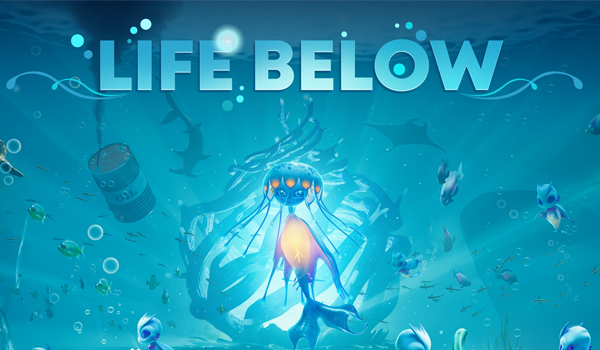
Having played the demo for Life Below, I was eager to sink my teeth into the full release. With a compelling narrative from Rhianna Pratchett and beautiful aesthetics, the demo promised an incredible management simulation game. But how does the full game stack up?
A New Hope
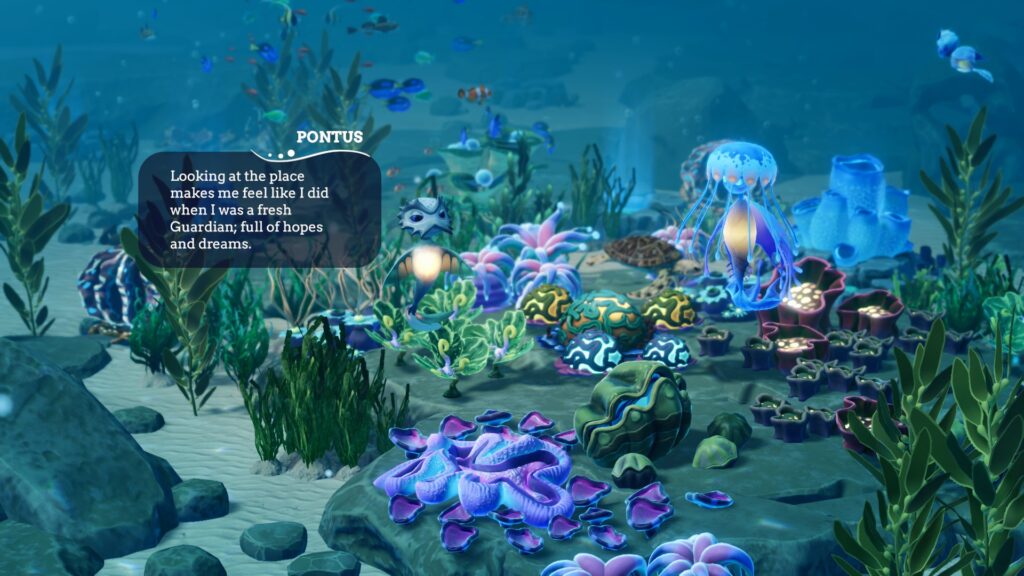
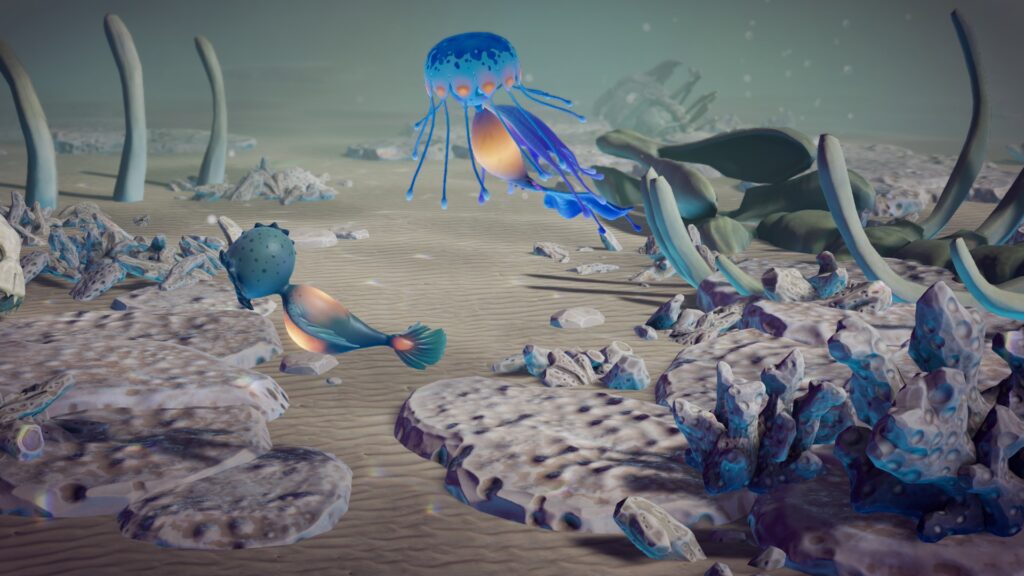
You play as Thalassa, a newly appointed Guardian, as she takes on the challenge of returning life to the ocean after great devastation. She is accompanied by Pontus and other Water Sprites who will help her build, clean and generally manage the reef under your command. Their designs are elegant and adorable, and set the tone for the rest of the game as they are introduced through an animated cut-scene.
The story is largely told through speech bubbles, allowing you to click through each piece of dialogue at your own pace. There are several fully animated scenes at poignant moments of the story, but there is no voice acting. It’s not an especially deep story, with only three major plot points between you and the end, but it still manages to be impactful.
Humble Beginnings
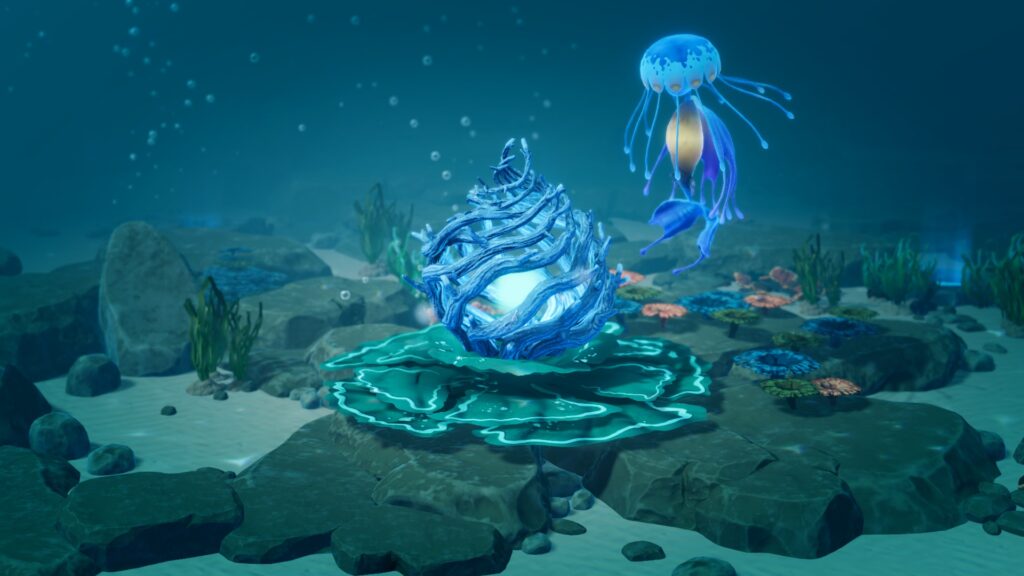
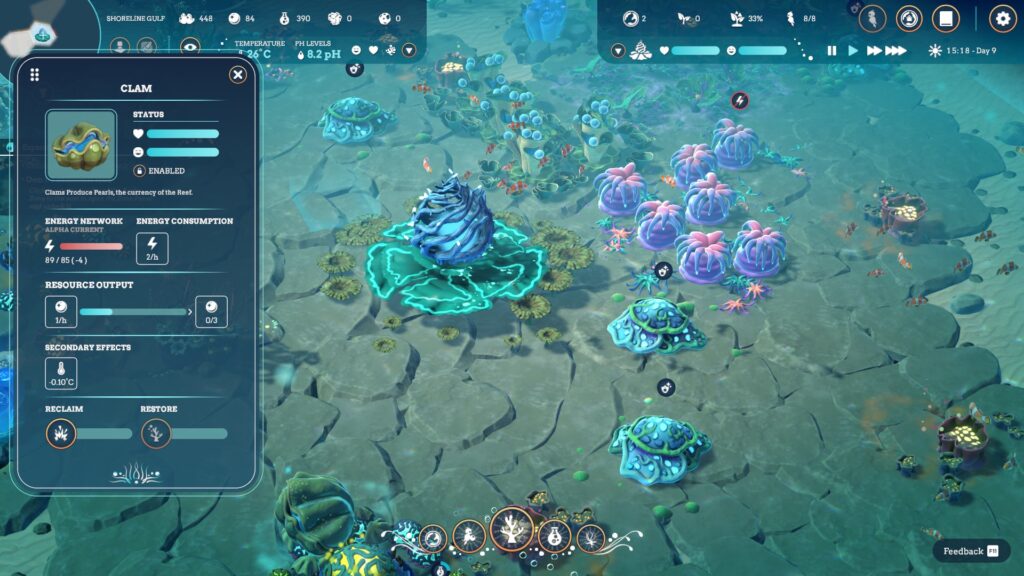
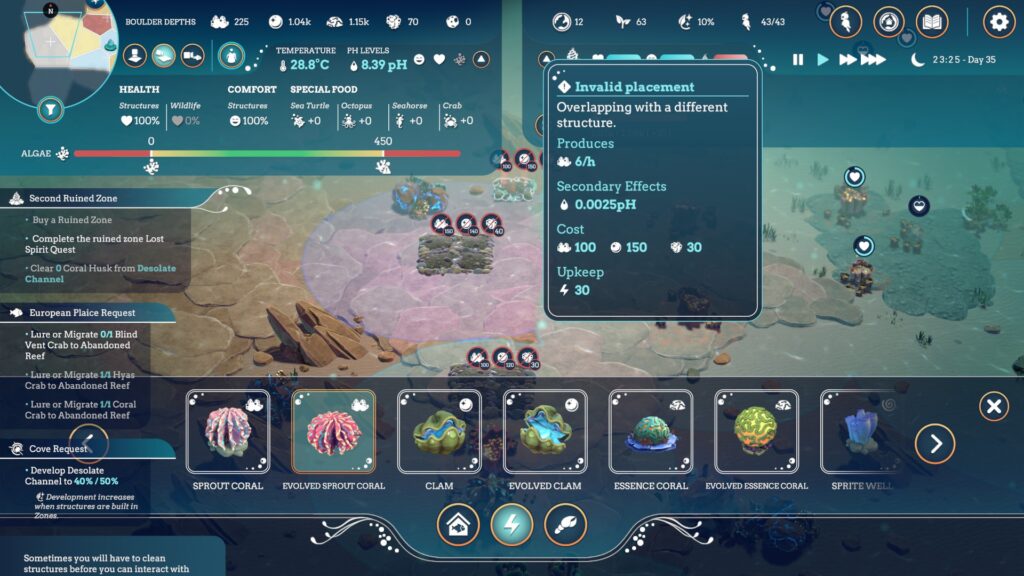
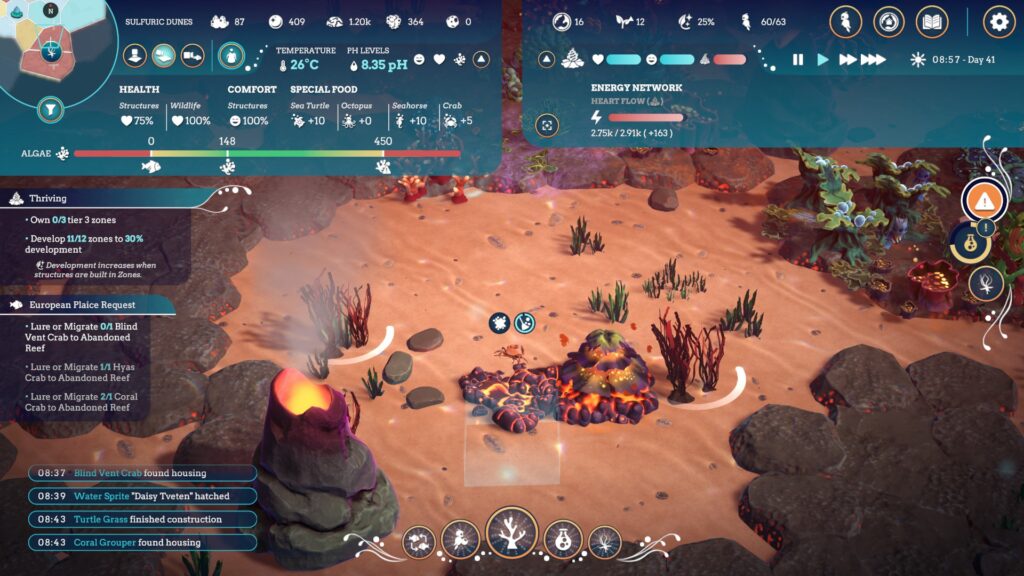
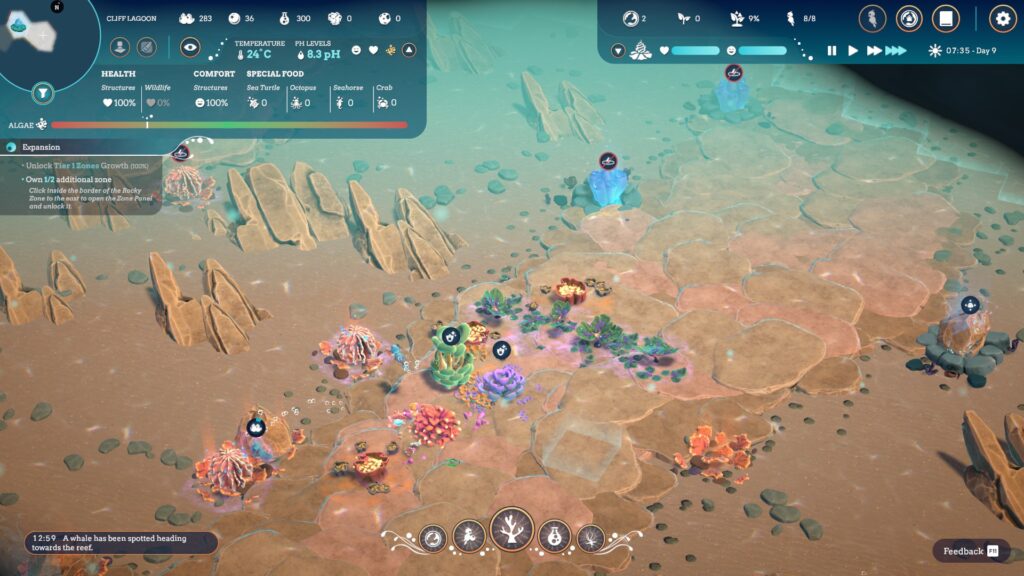
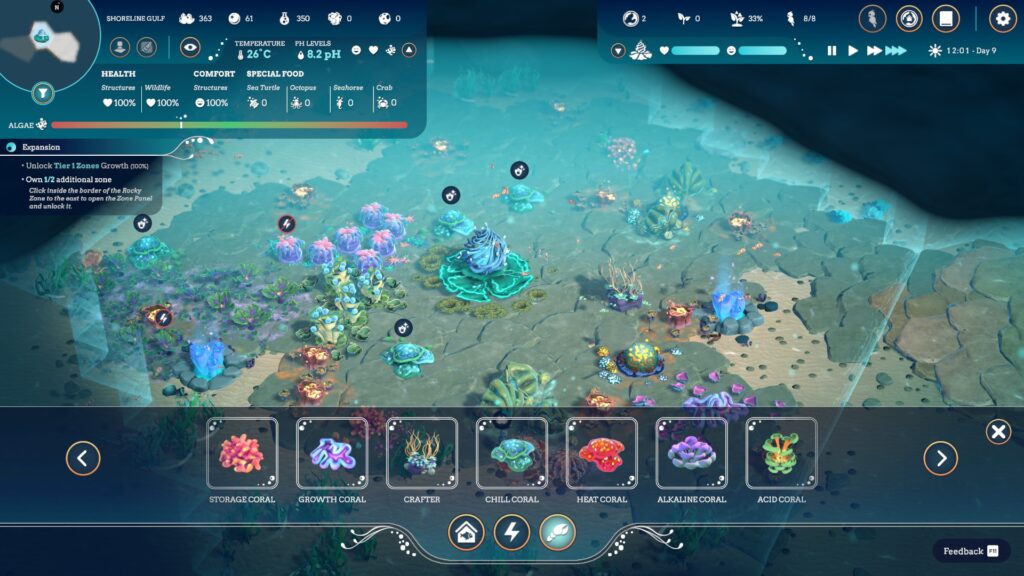
Starting with a few plants and corals, you begin to build your first biome. There’s one to collect coral pieces, another to produce power and clams to collect pearls from. You’re then quickly introduced to research and crafting tools as you aim to lure fish and other lifeforms to your biome to make their homes.
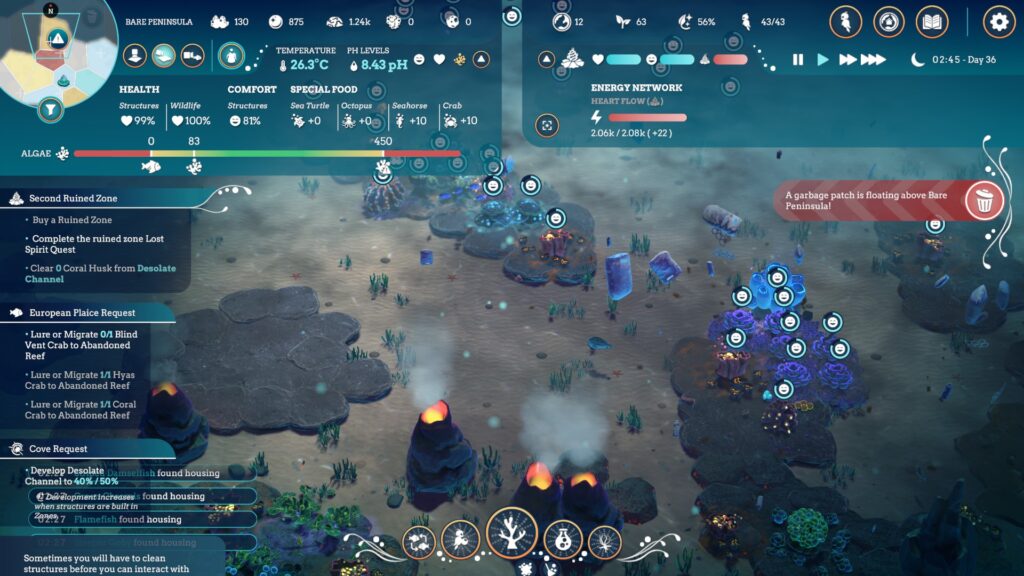
Each biome introduces a new challenge as its pH levels and temperature fluctuate. To combat this, you need to put down heat or acid corals and pray you get them powered before they die from exposure. They will then be hit by sandstorms, cold snaps, and other natural disasters, which they must overcome before losing their biodiversity and damaging the heart of the reef.
Although there are no real-time constraints, research, resource management, and biome stability are central to your development. Bringing in new fish earns you biodiversity points to spend on research, but you need the infrastructure to meet their food and habitat requirements. Expansion is always good, but you’ll need to power each new structure, and new biomes often come with new challenges to overcome before you can effectively use them.
Maximum Effort
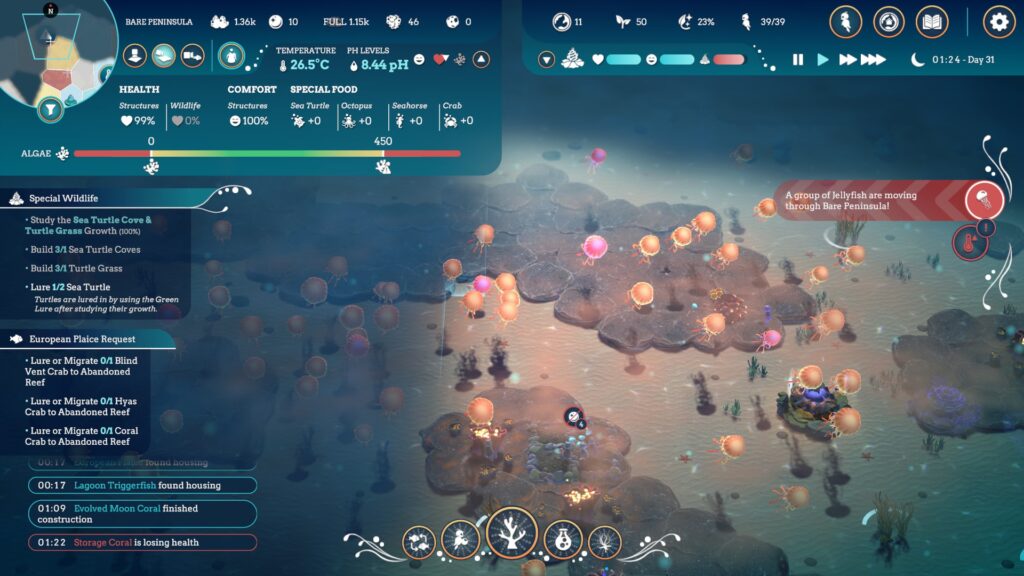
I enjoyed the progression of the ’Growth’ tree. Some research items are locked until you lure in specific animals, which gave me more incentive to try out the lures and look more closely at their boons. It took me a while to realise how OP’d the shiny grass lures were, however, and I was stuck trying to lure sea turtles with rubbish odds.
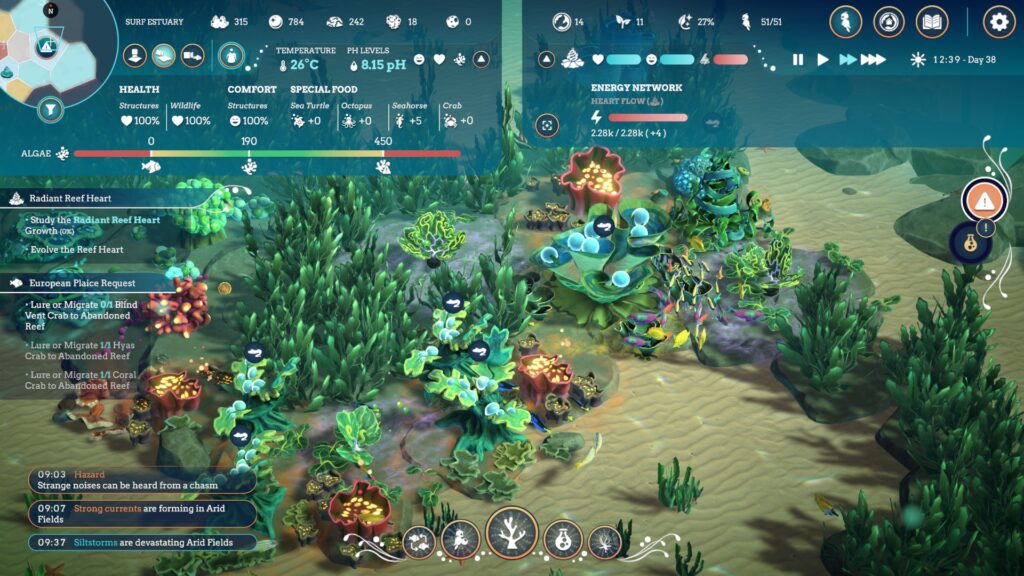
Upgrading my structures gave me a special kind of itch that ended with a total overhaul of earlier biomes. Migrating fish across different biomes to maximise their numbers in each area was time-consuming but rewarding. Although I’m not sure this was necessary.
Besides the fish leaving if they didn’t find a home, I didn’t notice any real downside to luring in fish and only keeping the rarer creatures. It also becomes much harder to fill zones as you reach the higher-tier areas, so while the evolved areas give more fish for your structure, there’s still a limit to how many fish can go in each area, regardless of space.
You’re Not Alone
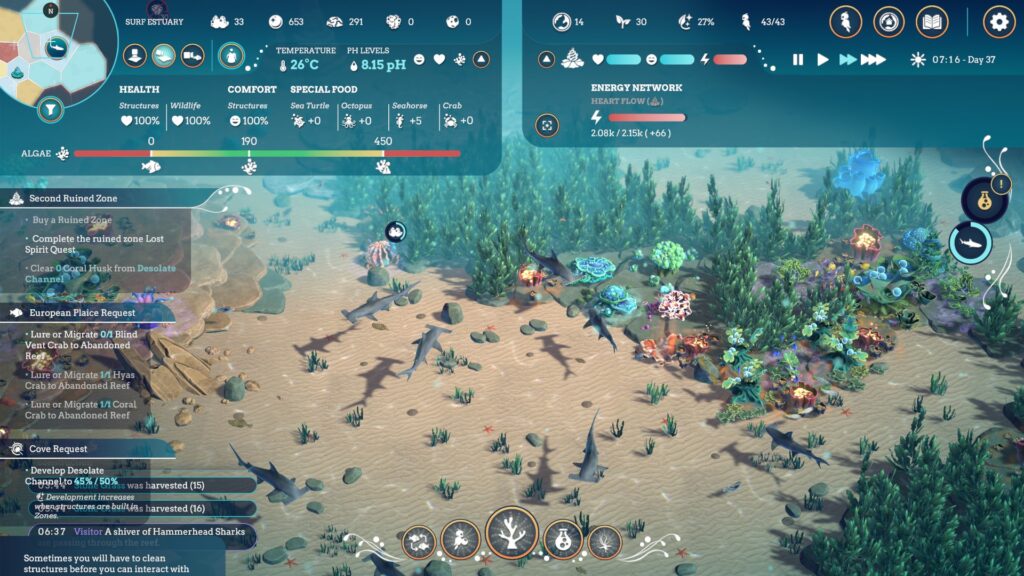
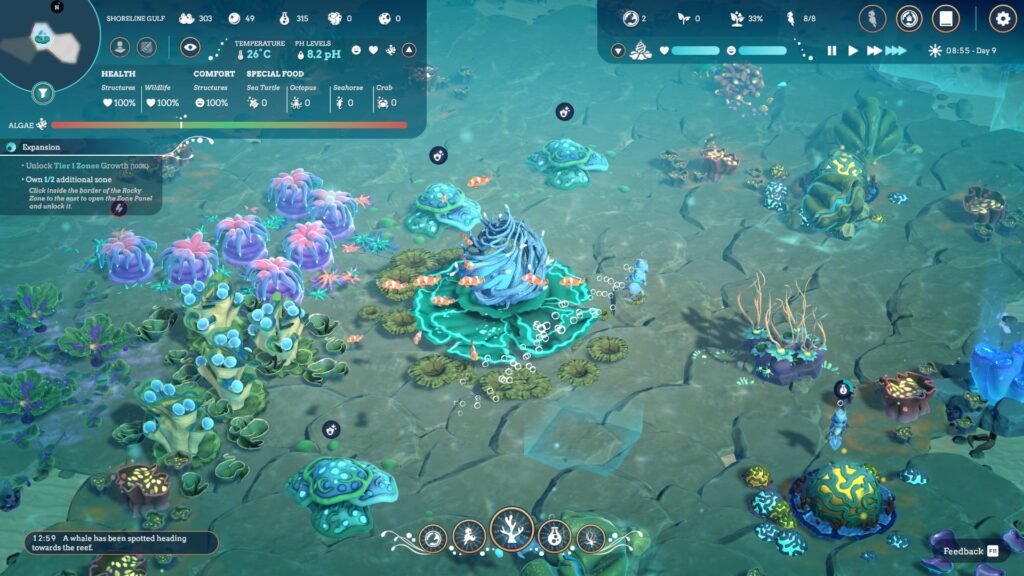
While you do have sprites to help with building and other tasks, some of the rare animals gained from lures have specific tasks. Seahorses can haul items between storage and crafters, while sea turtles will chase away invading jellyfish. I enjoyed this mechanic very much and spent a long while going back to add different animal beds into each area to maximise my productivity.
At first, I used my water sprites to handle much of the work in each biome, but it quickly became too much for them to maintain. I could rush to the next area and unlock more sprites, but I would just hit the same problems the next time I expanded. This forced me to rely on the animals to collect resources and reinforced the message that you’re working together to rebuild, rather than acting as some corporate overlord.
An Ocean Of Opportunity
You can pretty much play Life Below however you want. There is a quest-line and pop-up quests to collect, but which zones to unlock, which animals to lure and how you grow is totally up to you. This, combined with the enormous number of ocean biomes to unlock, gives it both longevity and replayability. Already, my mind is racing at the possibilities of a second run and how I would play differently with experience on my side.
The aesthetics are gorgeous and mesmerising, lending themselves to dissociation and hours of casual, relaxing gameplay. Combined with the incredibly chillaxing lo-fi background music and sound effects that hit all the aquatic ASMR vibes, I was able to truly lose myself in the cycle of life at the bottom of the ocean.
Play Your Way
I didn’t expect to see a lot in terms of accessibility in Life Below, but the settings were pretty stacked. There are UI and menu adjustments, as well as options for remapping your key binds. I played most of the game with the UI at full size, and it was a great help for my poor eyes.
A New Life Below
Admittedly, I completed the main storyline in fifteen hours, which isn’t a lot for management sims. However, there were still many achievements for me to hunt, and I can see myself going back to complete them at a more leisurely pace than my review schedule would allow for.
Life Below delivered everything I was looking for in an oceanic management sim and more. The climate change message is strong but not in your face, keeping the story sweet and good-natured. It’s powerful and compact offering some character progression without requiring a 30-hour runtime or taking away from the gameplay.

Platforms: PC
Publishers: Kasedo Games
Developers: Megapop
Played On: Steam
Key Provided By: Keymailer
About the Author