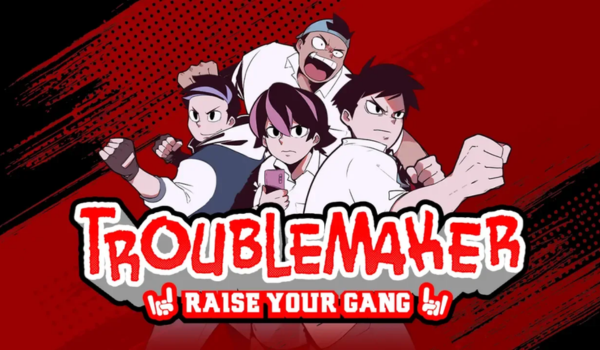
You walk through the school gates and immediately feel it ” that electric tension in the air. Not exams. Not homework. Territory. Reputation. Pride. In Troublemaker, respect isn’t earned with grades. It’s earned with your fists.
Released on March 31st, 2023, Troublemaker from Indonesian studio Gamecom Team and indie.io throws you into a delinquent power fantasy. It blends 3D arena brawling with light RPG progression and schoolyard chaos. The game doesn’t reinvent the formula, but it commits fully.
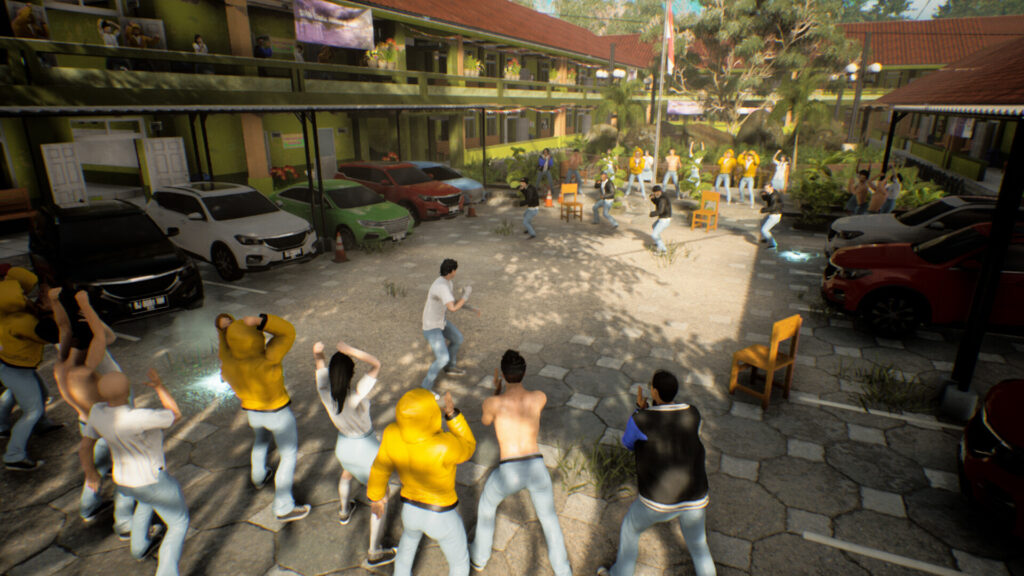
Welcome to the Jungle
You play as Budi, a transfer student with a murky past and a very immediate talent for violence. Your goal is straightforward: defeat rival factions across the school and climb toward the ultimate student tournament that determines who rules the yard.
Combat is the core of Troublemaker. Light and heavy attacks chain into satisfying combos. Enemies can be juggled between environmental objects, and Ultimate Arts (or ’Sick Moves,’ as the game calls them) deliver flashy finishers that make every combo feel cinematic. When everything clicks, weaving through a group of foes and finishing a chain with a sick move, it’s punchy and thrilling.
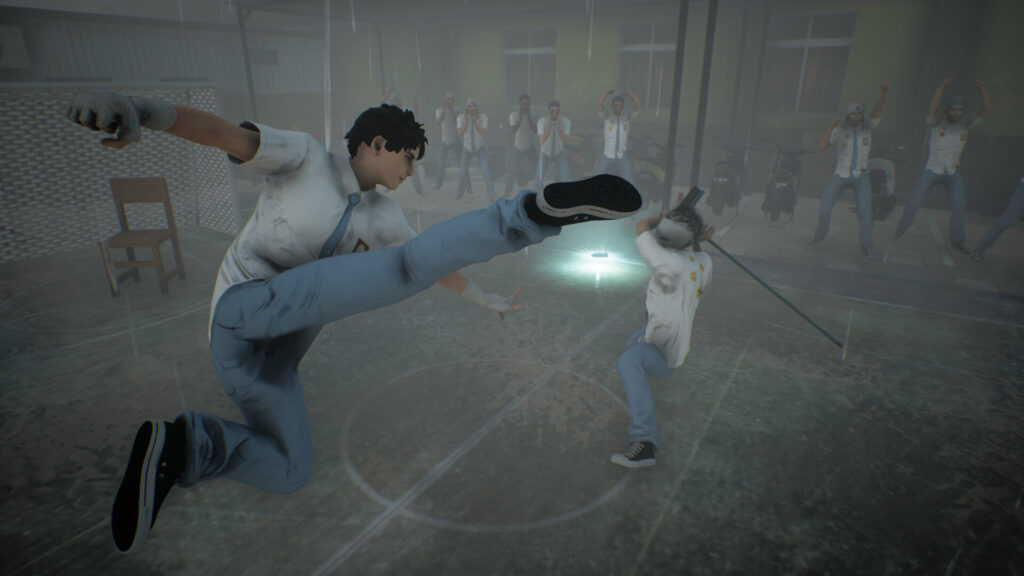
Boss fights introduce unique patterns and skill checks that demand attention rather than button-mashing. Regular encounters, while fun, can feel repetitive over time as enemy variety doesn’t evolve dramatically.
Difficulty overall isn’t punishing; the game offers three selectable options at the start of each campaign, allowing players to adjust the challenge to their comfort level. Even on the higher settings, the fights remain approachable while still giving a sense of progression and accomplishment.
Still, the energy of every fight keeps you engaged.

The Heart of the Yard
Presentation is a mix of strong personality and noticeable contrasts.
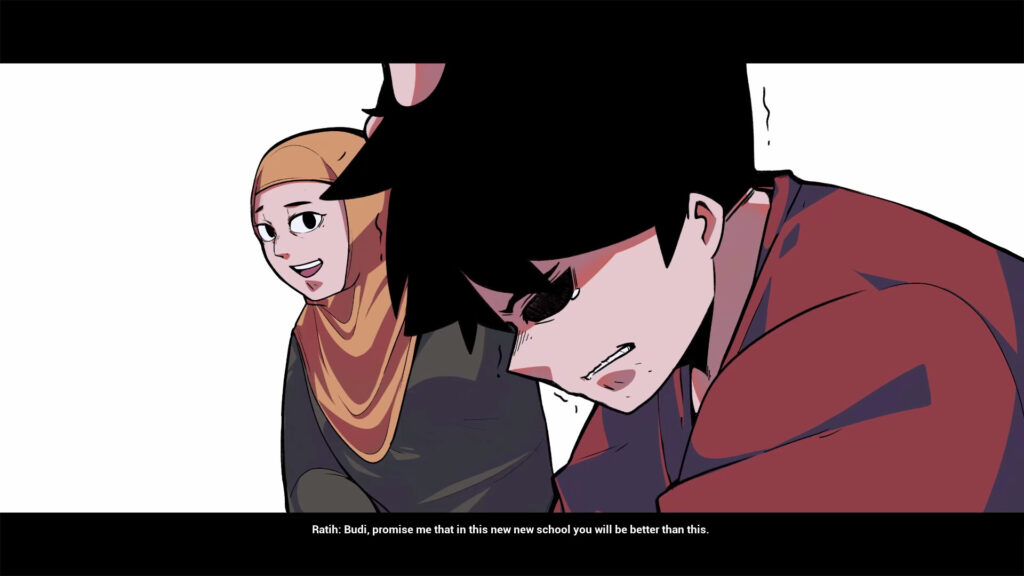
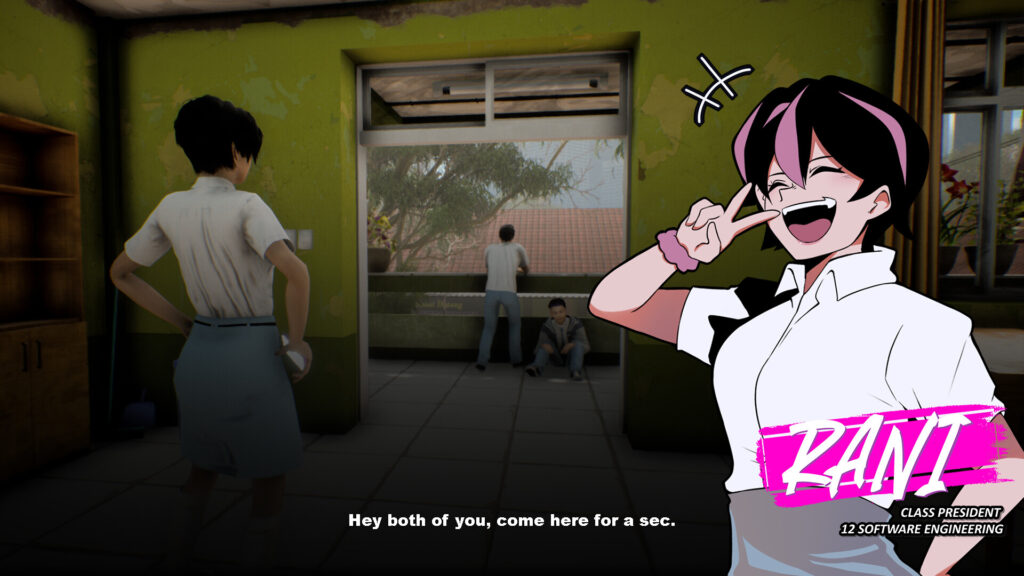
Cutscenes use a visual-novel style, featuring 2D anime-inspired character portraits. The artwork is expressive and helps sell key emotional moments. That said, there’s a noticeable disconnect between these stylised 2D images and the 3D environments of gameplay. The 3D assets, functional as they are, feel closer to store-bought models, which can make the transition from cutscene to combat feel a little jarring.
The game is packed with anime references, from One Punch Man to JoJo’s Bizarre Adventure. Most land well, adding humour or style, though one of the JoJo nods appears twice, making me wonder if it was homage or just convenient reuse.
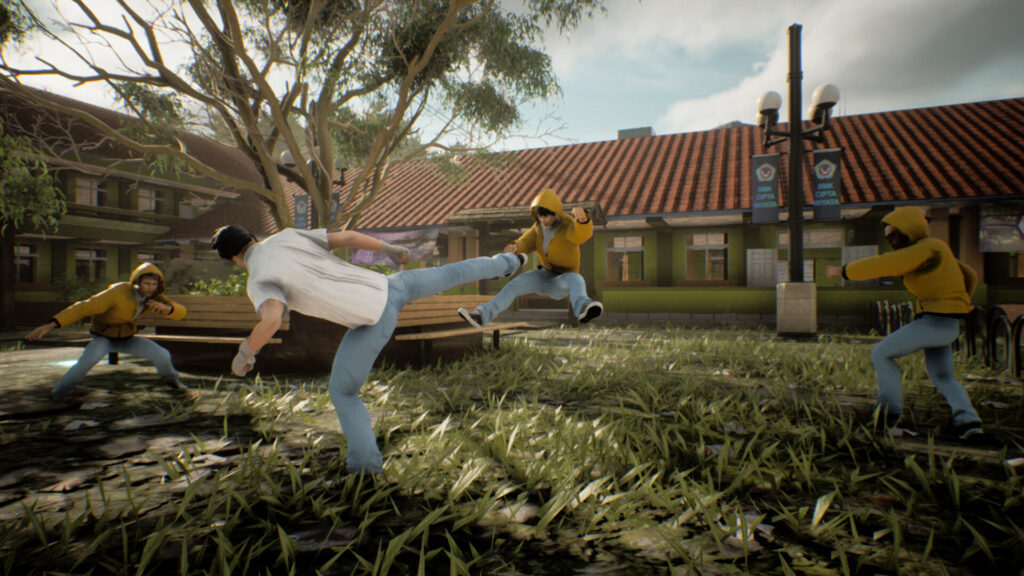
Voice acting is entirely in Indonesian, adding a layer of authenticity. Subtitles handle translation smoothly, though one word in particular was consistently left untranslated, which I believe was a stylistic choice.
One of Troublemaker’s strengths is its cast. Each of Budi’s friends and enemies feels distinct in the story, with their own personalities, quirks, and visual characteristics. The way they speak, dress and express themselves makes everyone stand out as a unique individual rather than a generic filler character. This gives the school world a lived-in, almost anime-like feel, making interactions and rivalries genuinely entertaining.
Money Talks
Progression revolves around earning cash and spending it strategically.
Winning fights and completing objectives gives you money. You spend it at the school shop. Here you can upgrade Budi’s stats, purchase health-restoring food, grab temporary stat boosters, and unlock additional Sick Moves to expand your combat options. Want a flashier finisher? You’ll need to buy it. Struggling with survivability? Invest in the right stat.
I enjoyed seeing familiar Indonesian food brands; it added a touch of visual flair that was unnecessary but much appreciated.
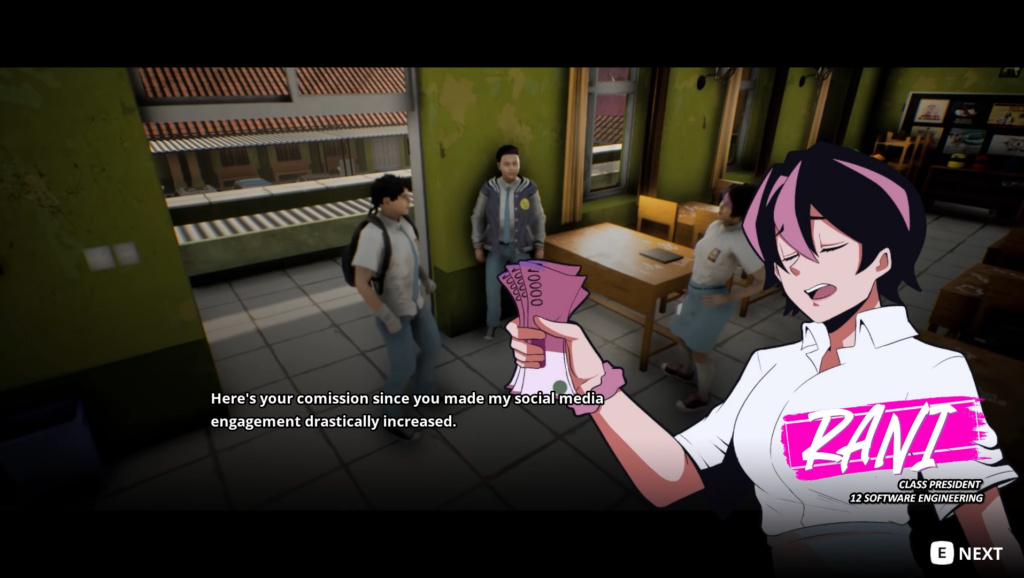
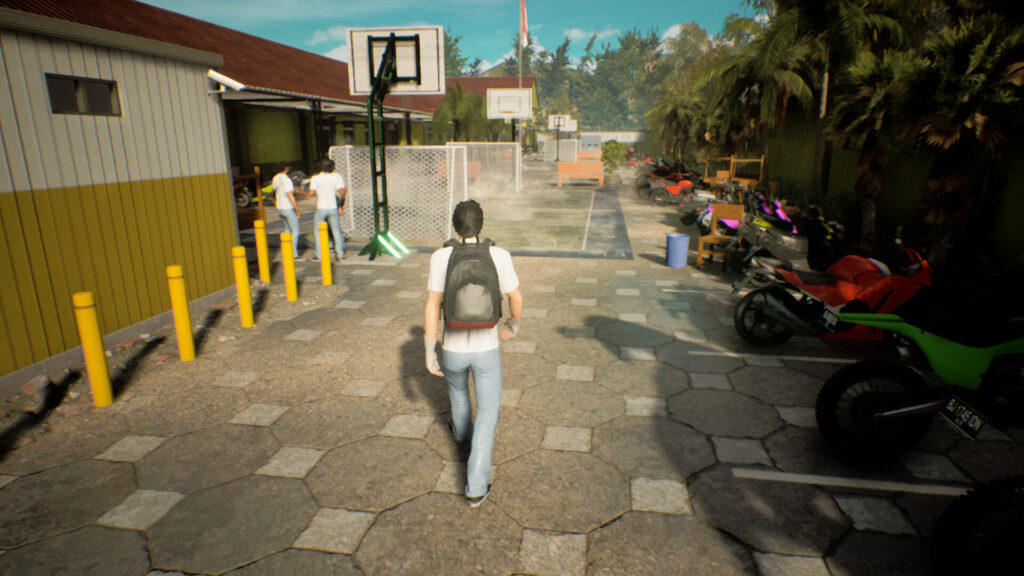
Free-roam sections add variety and personality. Between major fights, you can explore the school, taking on quirky side quests. Working out in the yard, playing card games, or even piloting a bird at one point. Each task rewards cash, which feeds into upgrades and keeps the progression loop satisfying. These diversions give a sense of life beyond combat and a playful break from the main fights.
With all its similarities, Troublemaker reminds me of an indie Yakuza: Like a Dragon game. While not as polished or in-depth, I couldn’t help drawing parallels to the series.
Detention Doesn’t Scare Me
Troublemaker isn’t without rough edges.
Camera issues crop up in tighter areas, and the soft lock-on can jump around in crowded fights. Some animation transitions are stiff, and the 3D environments don’t always match the vibrancy of the character art. Combat can be repetitive in long stretches, and while Ultimate Arts are flashy, the standard enemy design lacks depth.
There was a totally out-of-character stealth mission introduced in the eleventh hour that, while it made sense story-wise, slowed the pace down to a (literal) crawl. The story is also entirely linear, so there are no branching storylines or dramatic moral choices to make here.
There’s also an annoying slow-motion effect that triggers at the start of each mission, it lasts a little too long and interrupts the pacing. Occasionally, combat chains can break when Budi’s animation resets to default, which can be frustrating in the heat of a fight.
But underneath the polish issues is heart. The school’s world feels lived-in, the characters are memorable, and the energy of teenage rivalry, pride, and mischief comes through loud and clear. By the time the tournament arc reaches its peak, it feels earned.

Final Bell
Troublemaker is a scrappy, personality-driven brawler with a distinct voice. It doesn’t outstay its welcome, clocking in at around eight hours, and its story feels like a tightly packed, single-season anime, full of energy, personality, and memorable arcs without dragging on.
So, should you enrol? While Troublemaker is rough around the edges, much like Budi’s gang, its charm and personality won me over. If you enjoy classic beat ’em ups with personality and over-the-top schoolyard drama, and can forgive a little bit of jank. Troublemaker is well worth stepping into the ring for.
Just don’t expect to graduate quietly.

Developer: Gamecom Team
Publisher: indie.io
Platforms: Xbox, Microsoft Windows
Played On: Epic
About the Author