
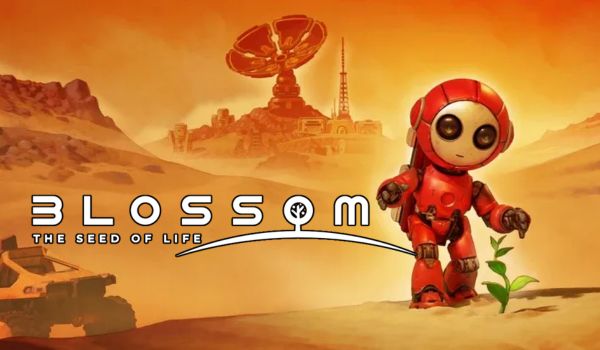
The planet Mars and terraforming seem to go hand in hand in modern media. From films and novels to video games. Blossom: The Seed of Life is the latest to take on this trope, but it removes a lot of the stress you commonly get and delivers a thoughtful and surprisingly relaxing take on the survival-crafting genre.
Premise & Core Mechanics
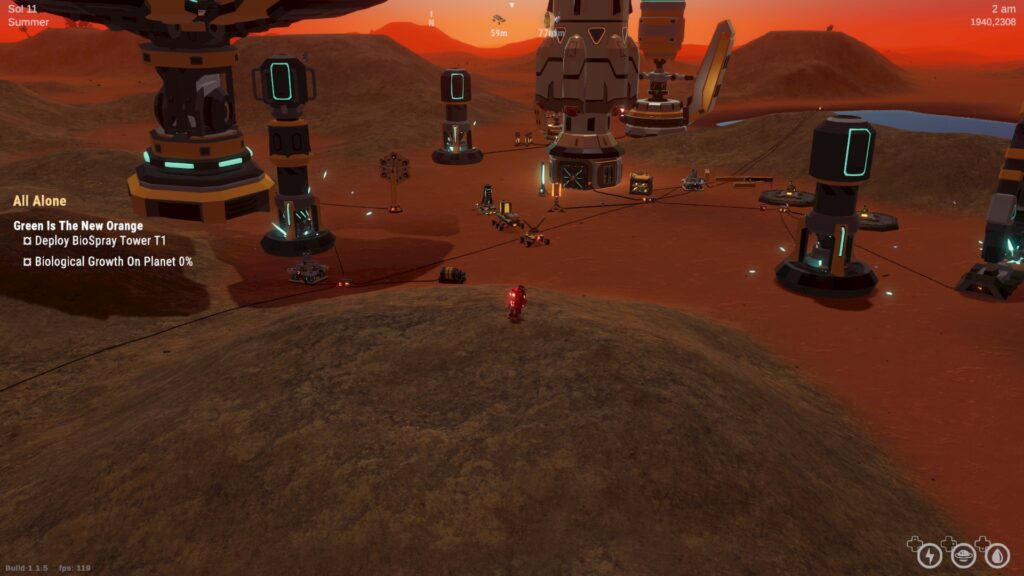
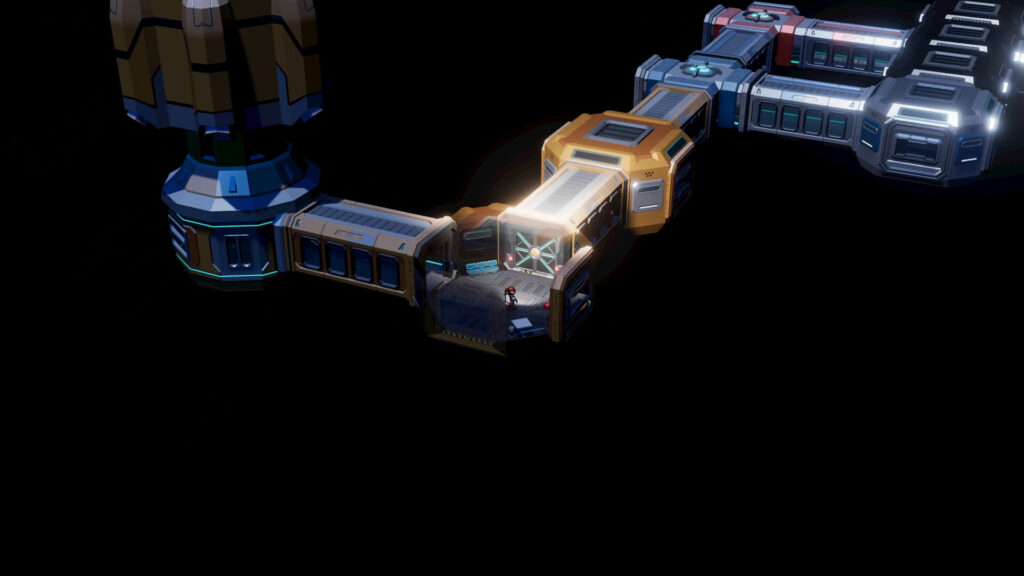
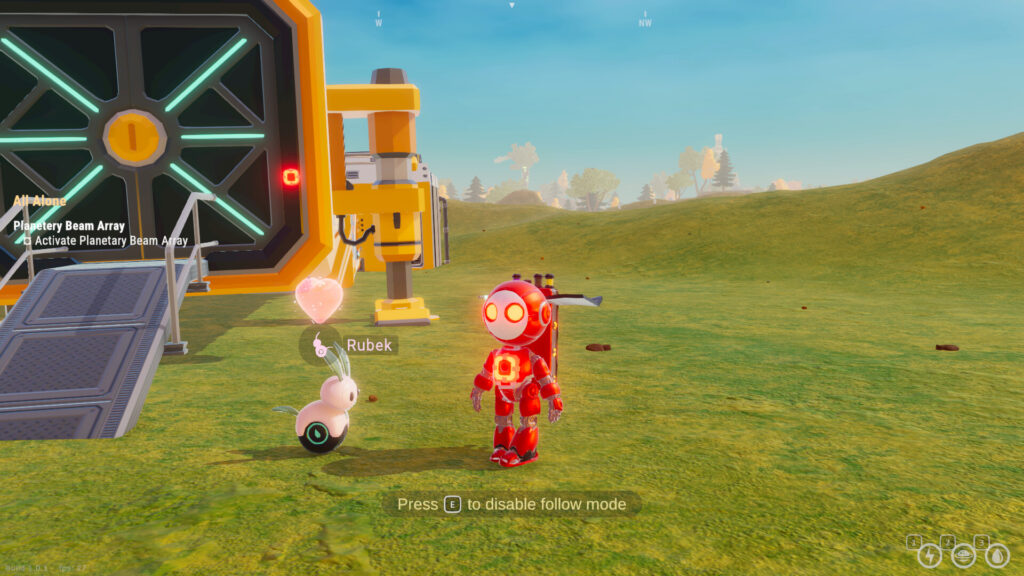
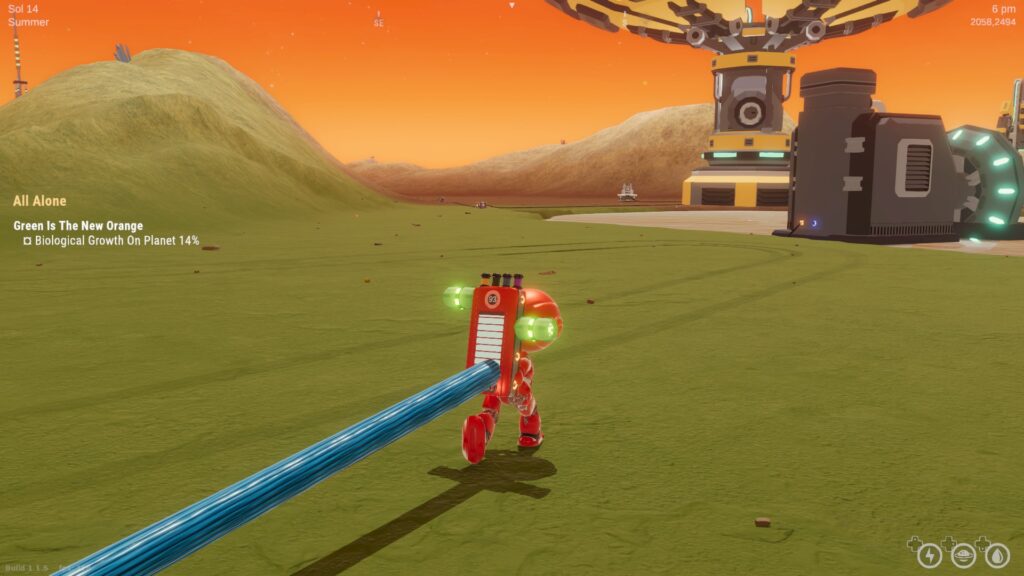
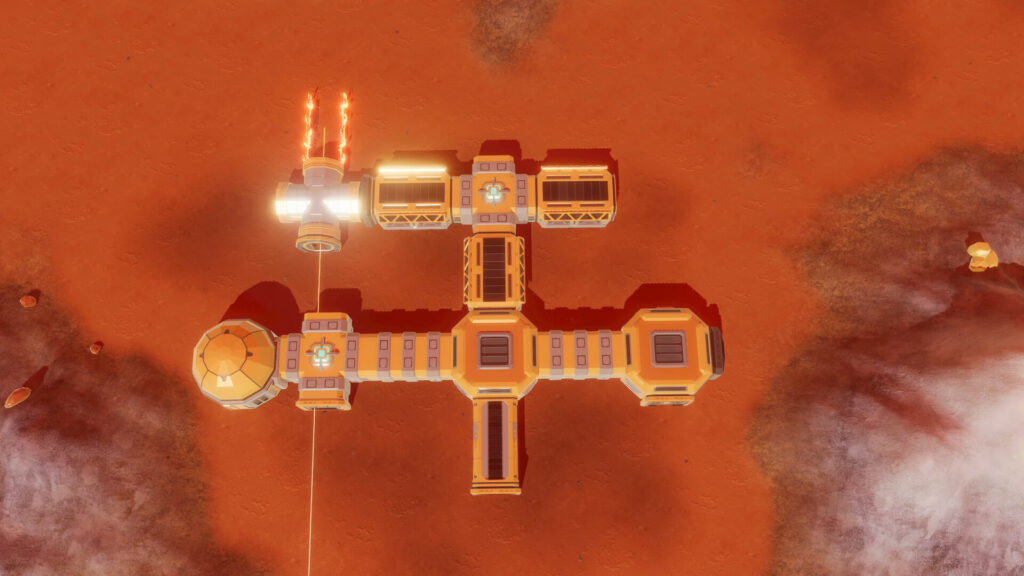
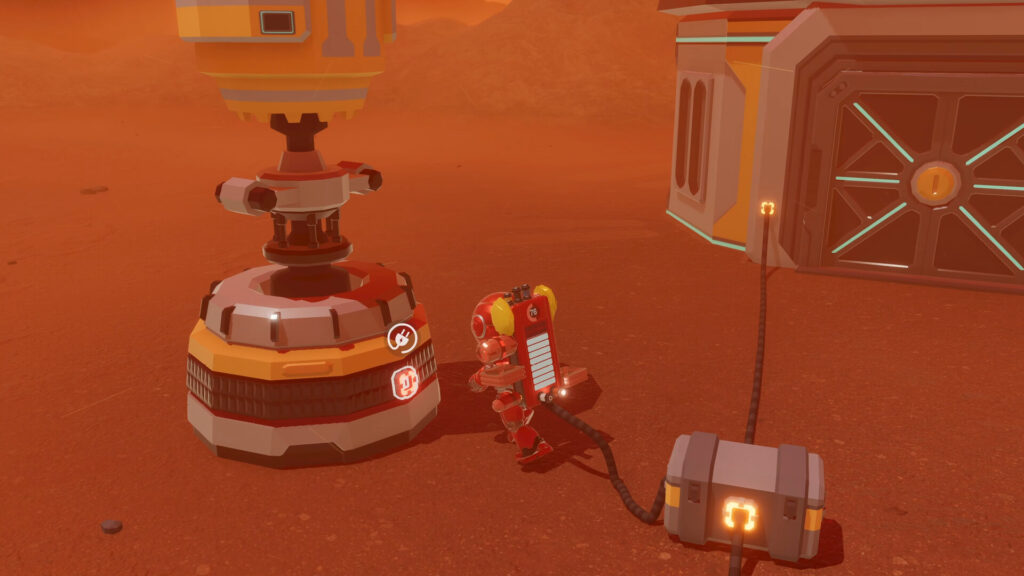
You play as Blossom, a small robot tasked with terraforming the dead planet – and considering you woke up on the floor of your ship with minimal battery life, you can say things haven’t started well. Blossom can plug itself into any power source, however, and drag the cable around to create a power network to other machines.
This system was very similar to another game I recently played, The Last Caretaker. Another title I found similarities with was Astroneer, especially the way your inventory was dictated and visualised by the nodes on your backpack.
Survival & Progression
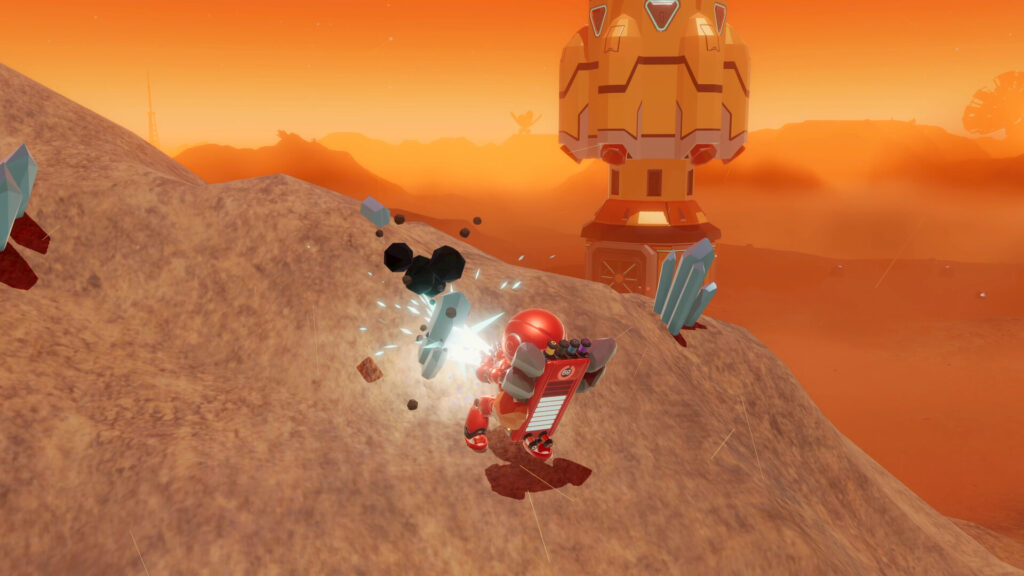
The surface of Mars is very inhospitable, but since Blossom is a robot, the only survival concern is maintaining power. Blossom starts with a small battery, but by mining surrounding resources, you can upgrade your power supply and add additional upgrades like inventory slots and such.
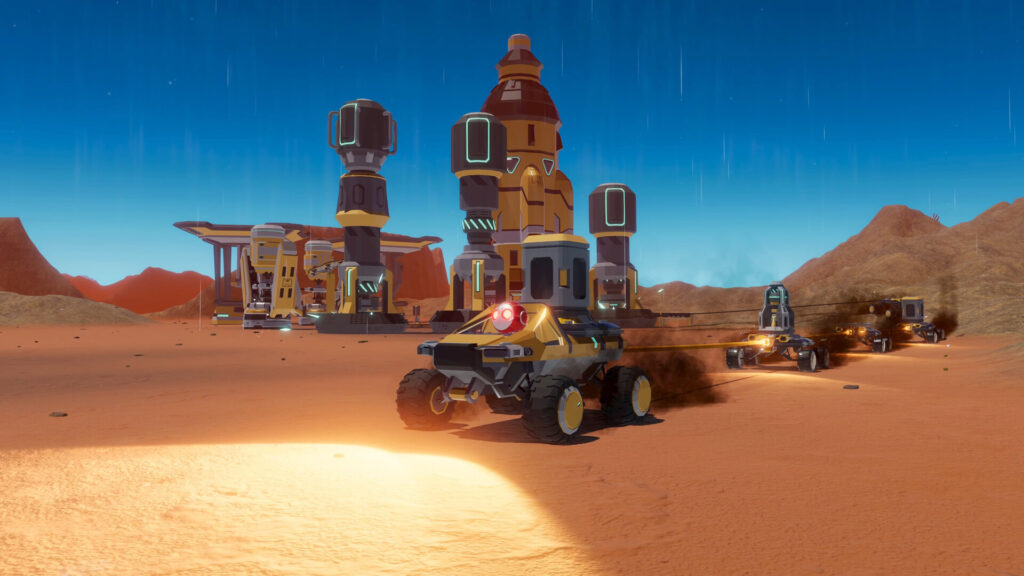
The gameplay loop is laid out logically with a natural sense of progression. You are presented with a problem and must construct a solution. Your ship batteries won’t last, so you need power – construct a power station. Violent sandstorms hinder your progress – build drills to release CO2 to create atmospheric pressure. The loop keeps progressing exponentially, with you eventually having drones collecting resources, multiple power plants and water stations, and giant sprinklers seeding life all over the map.
Challenge & Gameplay Feel
There are no enemies to fight; your main struggle is against the environment and your own limitations, especially energy management. Every action, from moving to powering machines, requires planning and forethought. Draw too much power, and the network fails. Keep the water pressure up, or the machinery stops working.
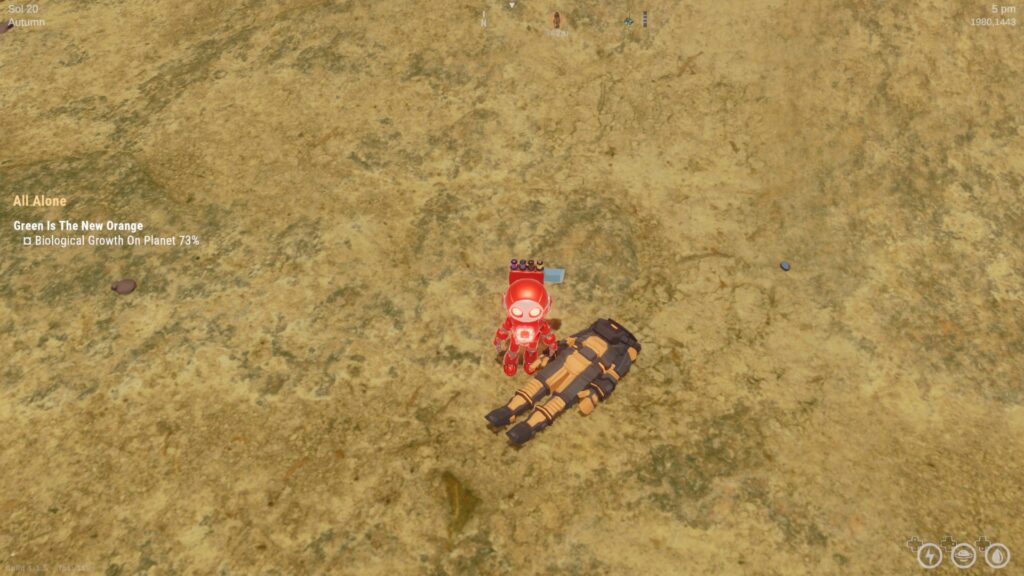
Running out of your own power is essentially death, with you being 3D-printed back at home base and having to do a corpse run to get whatever you were holding at the time.
Exploration & World Design
There is also a strong exploration element tied to Blossom. Not only will venturing farther yield rarer resources, but the world is scattered with ruins and remnants of failed terraforming attempts. Logs and blueprints can be found, adding a subtle narrative layer that keeps you curious. While you don’t get the entire surface of Mars (I estimate a 4km square map), it is large enough to warrant the exploration vehicles you unlock.
Vehicles & Expansion
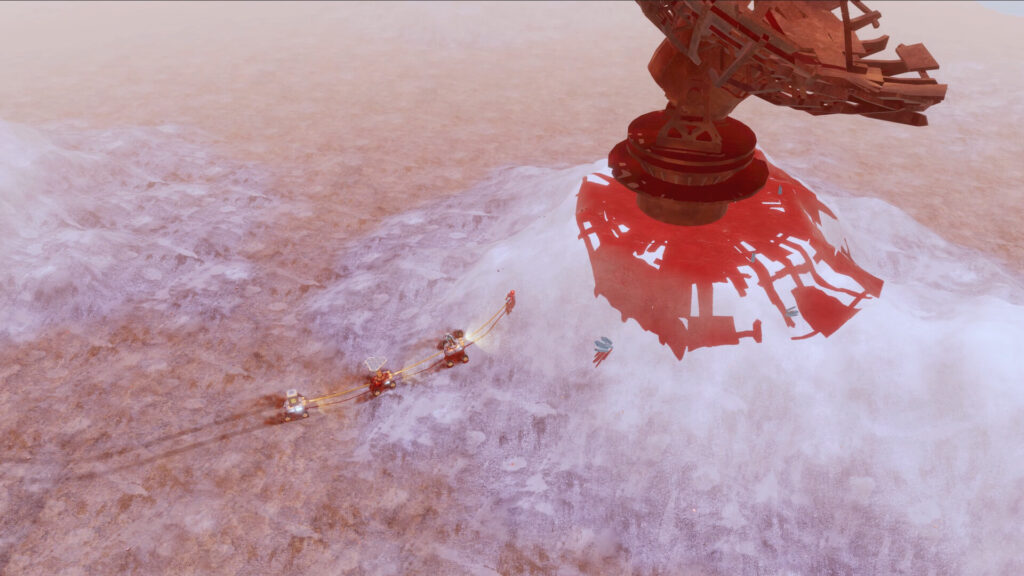
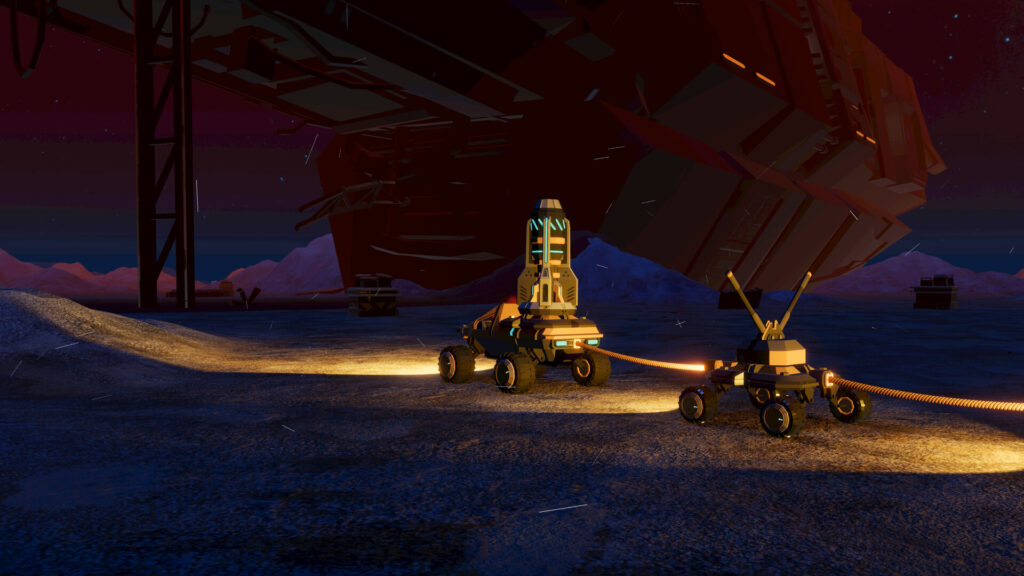
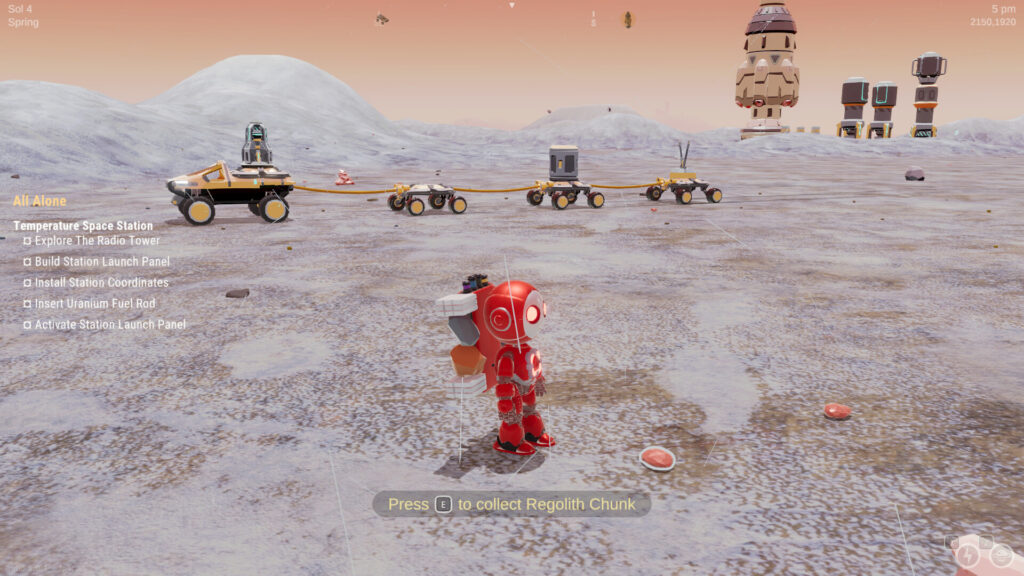
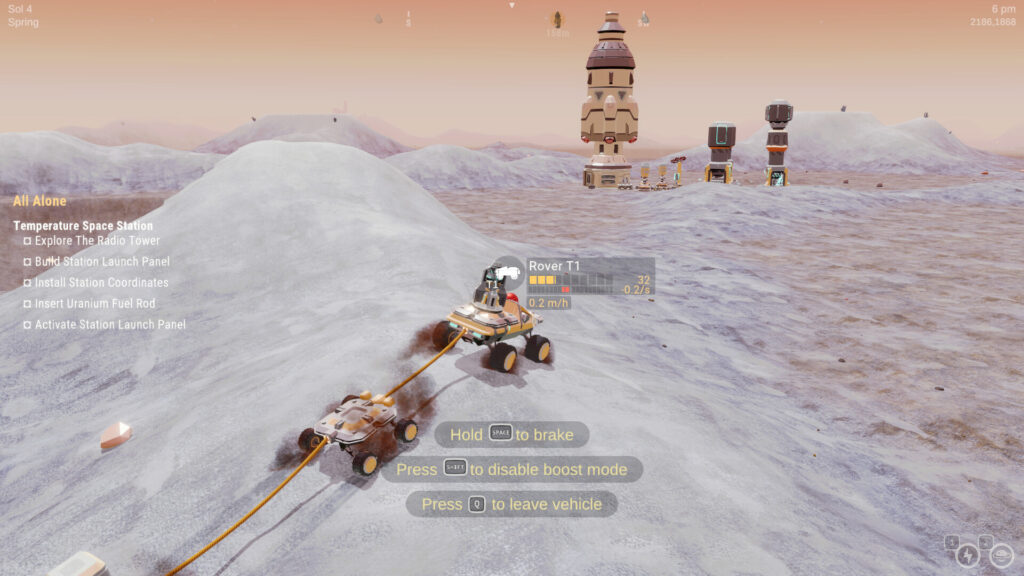
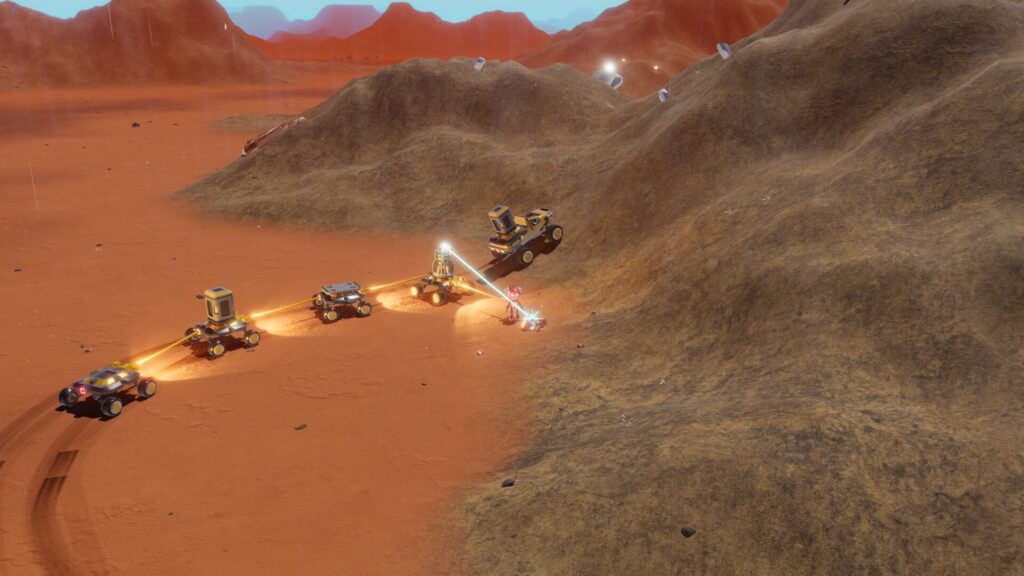
One of the key unlocks is the Rover, a ground vehicle you can attach multiple trailers to. With the right amount of progress, you can build the equivalent of a mobile base, so that exploration can remain uninterrupted and you can craft components and buildings on the go.
Visuals & Interface
Visually, the game leans into a clean, slightly stylised sci-fi look. The robot designs and machinery are charming. The environment can feel a bit flat or repetitive at times, but I suspect this is to accommodate the massive changes that happen dynamically as Blossom progresses.
The interface, though well designed with controller support almost fully implemented, can be a bit clunky, with definite pixel hunting required to find the interactive spot you need. One of the menus later on also had no (or no obvious) controller map to change sections, so I had to resort to using the mouse.
Pacing & Drawbacks
Pacing also was a bit uneven. At the start, although a bit confusing, it felt structured and well-paced. You earned upgrades and progressed through the steps at a regular pace. But as Blossom progressed, the steps took longer and longer to complete, and I found myself doing ’busy work’ waiting for the next tick on my mission counter.
There was also a scale of redundancy. When the steps are completed, the machinery used becomes useless. While you can dismantle unrequired equipment with no resource loss, the resources themselves were usually unrequired at the point I was at. So I had to find storage for them or just leave them scattered everywhere.
Final Thoughts
These issues didn’t detract from my enjoyment, however. I enjoyed my time with Blossom: The Seed of Life. It is a refreshing, low-stress survival game with a great sense of progression and a unique terraforming focus. The fact that this came from a solo developer, Pebbledust Games, is outstanding.
No, it’s not perfect; there are some rough edges and a bit of repetition holds it back from perfection. But if you have been looking for a comfy, cosy sci-fi crafting game, I highly recommend Blossom: The Seed of Life.

Developer: Pebbledust Games
Publisher: Pretty Soon
Platforms: PC
Key Provided by: Lurkit
About the Author




This sounds like the sort of game that I’d really enjoy; I’m a sucker for number-go-up resource managing games. Great review!