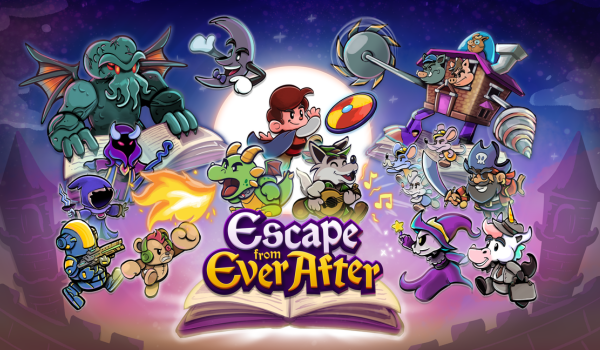
When a megacorporation takes over your favourite fairy tales, it’s up to Flynt Buckler to sabotage them from within. Escape From Ever After blends clever satire, exploration, and strategic combat into a surprisingly charming experience.
Escape From Ever After is a hybrid turn-based RPG and platforming adventure, drawing clear inspiration from the Paper Mario series. The familiar formula is given a twist by its setting; classic fairy-tale stories are being invaded, turning public-domain worlds and characters into both backdrops and side characters in a much more modern conflict.
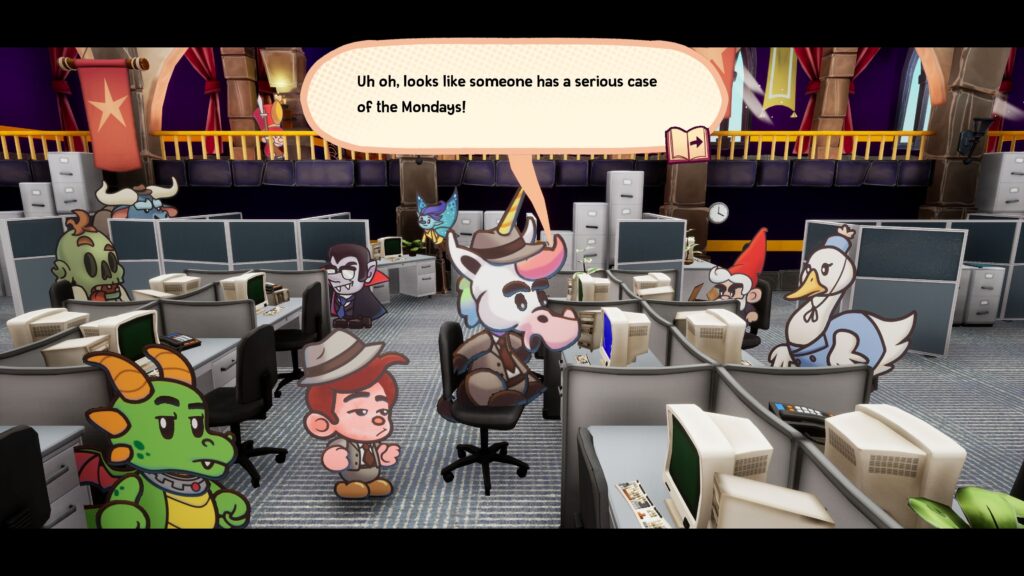
Players step into the boots of Flynt Buckler, a would-be hero on a quest to defeat the dragon Tinder. That quest is quickly derailed when Tinder’s castle is, ahem, acquired by the megacorporation Ever After Inc., a real-world company exploiting fairy-tale worlds for their resources and labour. After refusing to be a ’team player,’ Flynt is thrown into the castle’s dungeons, where he finds Tinder stripped of their power by Ever After’s technology. With the help of the three blind mice, the unlikely allies hatch a plan to take down the corporation from the inside by getting jobs, climbing the corporate ladder, and sabotaging Ever After Inc. at every level.
Gameplay
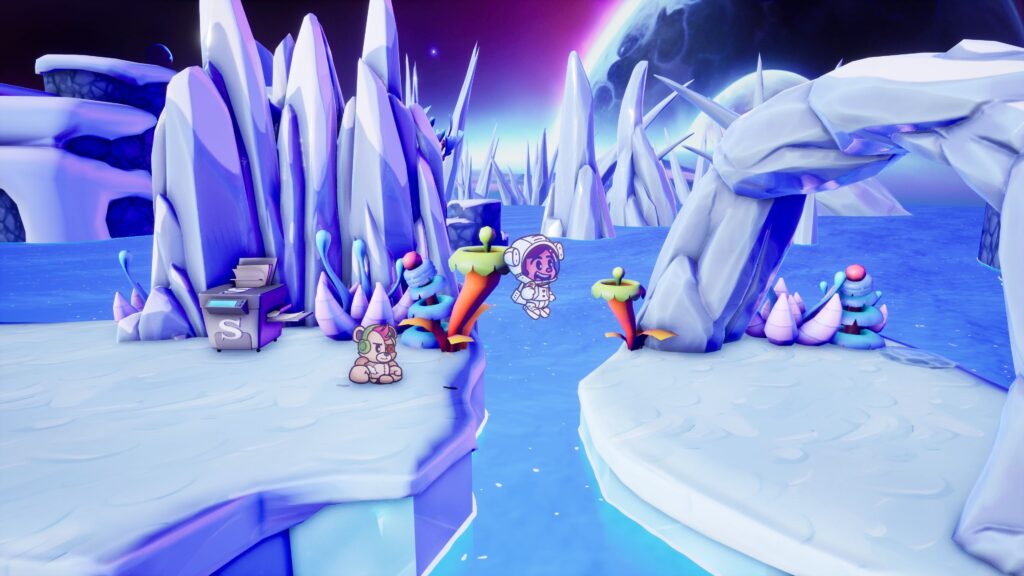
At its core, Escape From Ever After plays more like a 3D platformer than a traditional RPG, with a stronger emphasis on exploration and puzzle-solving than on precision jumping. Levels are built around interacting with the environment rather than testing reflexes. Encouraging players to experiment with Flynt’s abilities to progress. Flynt’s buckler can be thrown to activate switches or break crates, while Tinder’s flame is used to burn obstacles and trigger specific environmental interactions, giving exploration a steady rhythm of problem-solving rather than simple traversal.
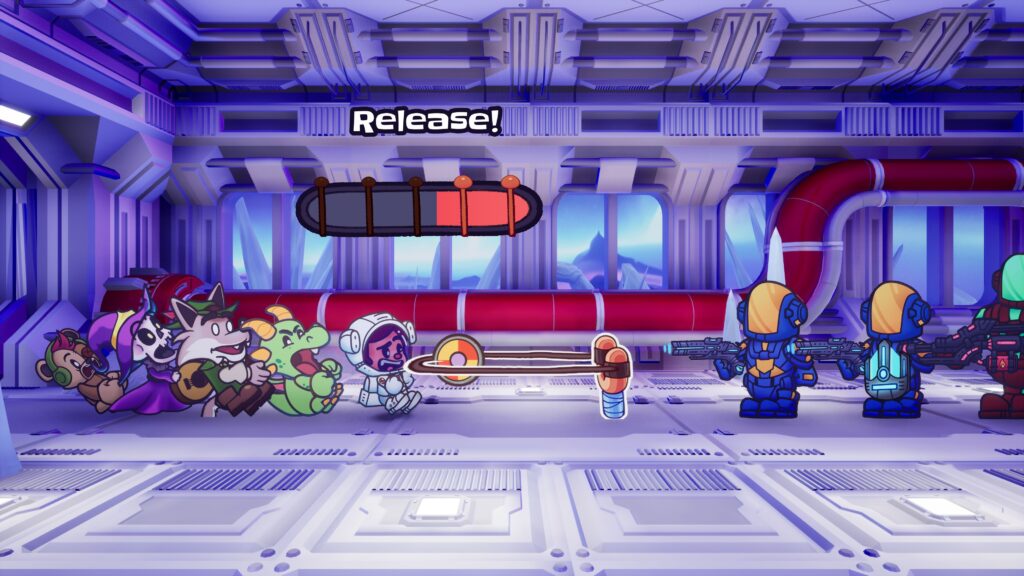
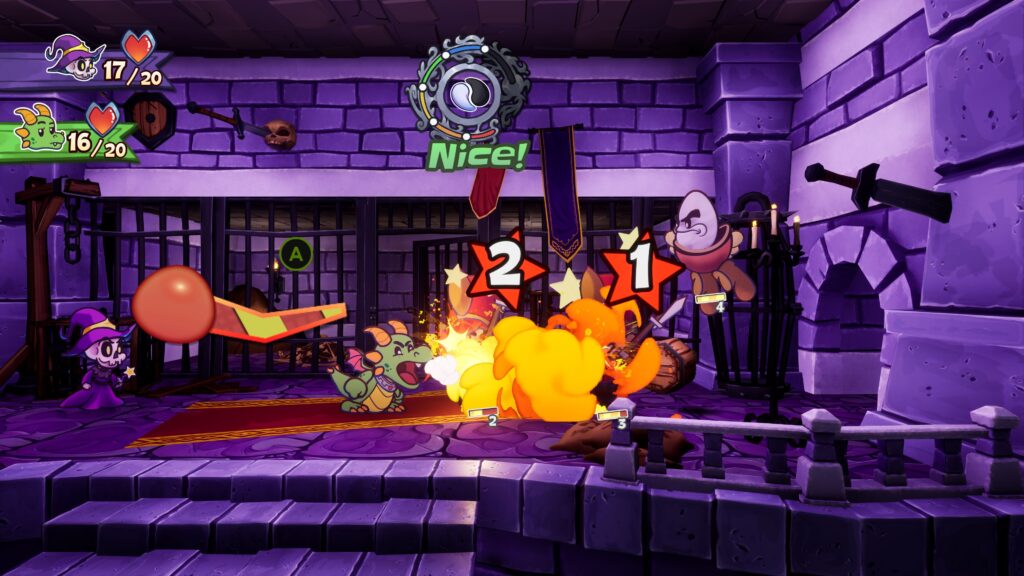
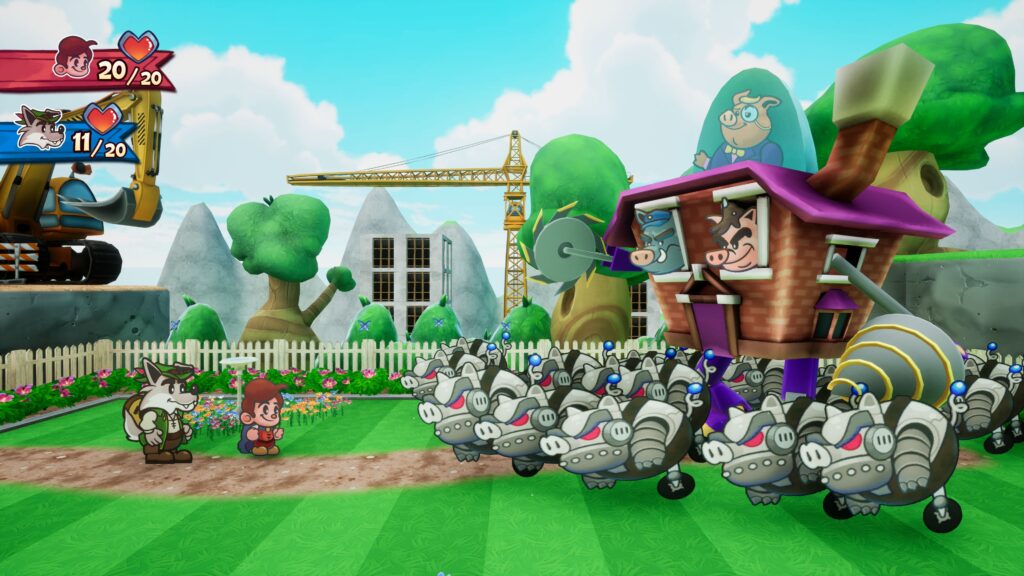
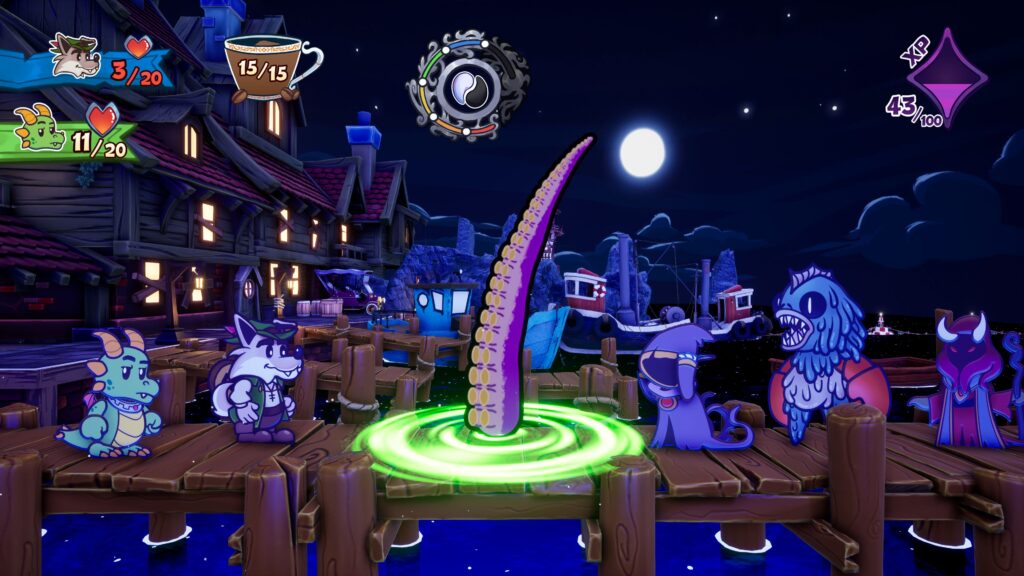
Combat is seamlessly integrated into exploration, with battles initiated by physically bumping into enemies in the world. Initiative is determined by who hits who first, after which the perspective shifts to a turn-based battle screen. From there, combat follows the familiar formula, with each side taking turns to attack, defend, or use abilities. Attacks can be enhanced with timed button combos, while well-timed defensive inputs reduce damage. A unique synergy system rewards players for skilful combat, building a meter through successful attacks and defences that can be spent on restorative abilities or ultra attacks.
Party Up
While Flynt recruits multiple companions over the course of the story, only two party members can be active on screen at any given time. Thankfully, switching between characters is as simple as a button press and can be done both during exploration and in combat. This makes party management feel fluid rather than restrictive, encouraging experimentation with different companion abilities.
Character progression is straightforward but meaningful. When a character levels up, the player chooses a single upgrade: health, mocha points (MP), or an additional item slot, forcing small strategic decisions. Each character can also discover items that grant new moves or passive bonuses, such as increased attack power, but equipment space is limited. This encourages players to carefully consider which abilities and items to prioritise.
World & The Ever After Inc. Takeover
The corporate takeover of Tinder’s castle is where Escape From Ever After’s worldbuilding really shines. What was once a traditional fairy-tale stronghold has been completely recontextualised as a sterile, soul-crushing office space. Cubicles now line the castle’s corridors, the grand entrance has been converted into a reception area, and the once-imposing great hall has been repurposed as a cafeteria. Even the throne room has been transformed into the HR department!.
The castle’s library houses a transporter that sends players to other fairy-tale worlds via storybooks collected over the course of the story. Overseeing it all is Mr. Moon, a relentlessly cheerful, crescent-moon-shaped middle manager whose corporate jargon and forced positivity make him an immediately memorable antagonist in his own right. Save stations are cleverly disguised as copy machines, while cakes and doughnuts restore health and coffee refills mocha points, reinforcing the office satire throughout gameplay.
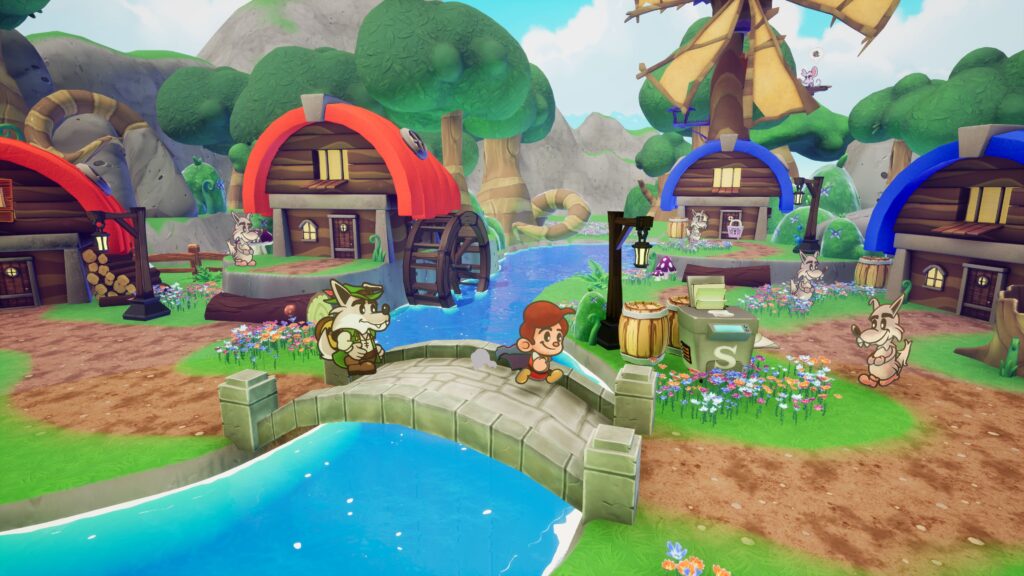
The takeover isn’t limited to Tinder’s castle. Ever After Inc. is setting up offices across multiple fairy-tale worlds, each reworked to fit the same corporate template. The first adventure takes players to the world of The Three Little Pigs, where a seemingly mundane labour dispute with the Three Pig Construction Company masks a much darker reality: the forced ’resettlement’ of the native wolf population.
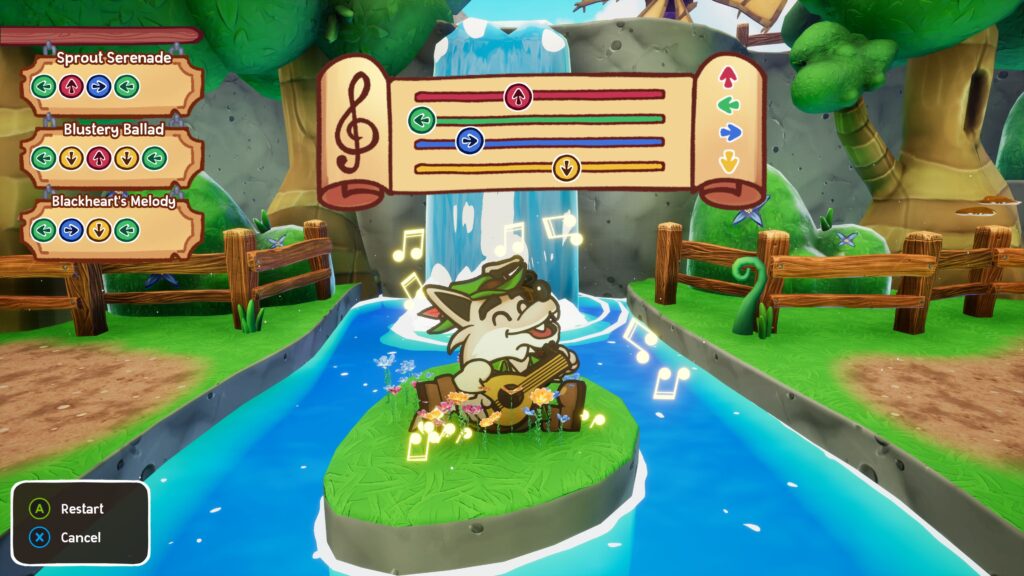
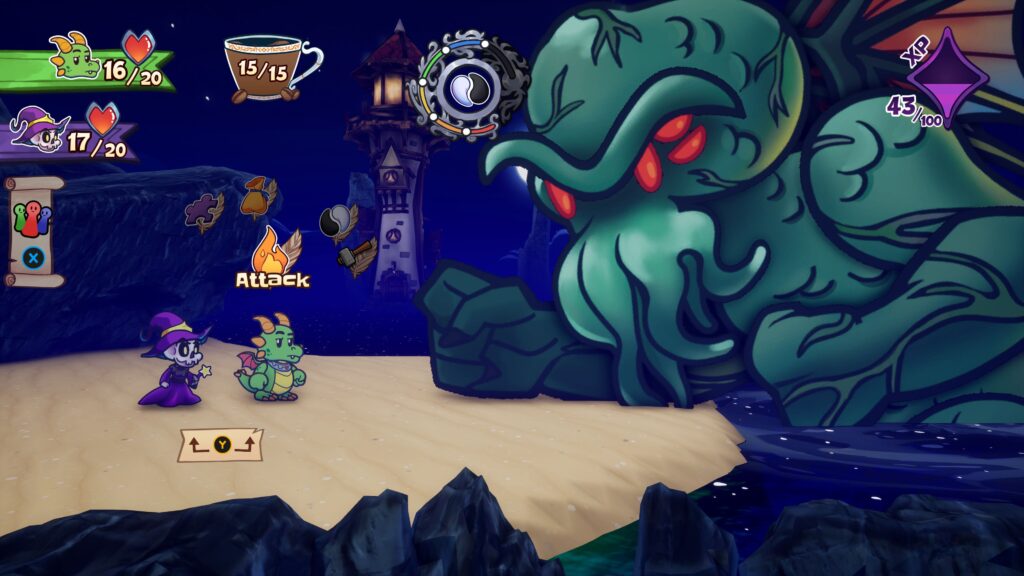
Flynt teams up with Wolfgang, a musician whose stage name is the Big Bad Wolf. He joins the party as a companion as players sabotage the pigs’ corporate expansion. Later chapters continue to remix familiar stories in unexpected ways, including The Shadow Over Innsbeak. A Lovecraft-inspired mystery where Sherlock Holmes has disappeared and a secretive cult of pigeons holds the town’s secrets. Each world maintains its own identity while supporting the overarching satire, keeping exploration and narrative fresh.
Presentation & Writing
Visually, Escape From Ever After is a treat. The bright, storybook-inspired colour palette and thick outlines give the world a comic-like charm. Characters are rendered in 2D within fully 3D environments, with expressive, fluid animations that bring even minor party members to life. Occasionally, the combination of 2D characters and 3D space creates minor challenges with depth perception. But these moments are infrequent and rarely disrupt gameplay.
The writing is equally strong. Though entirely unvoiced, the script is clever, witty, and genuinely funny, with moments that had me laughing out loud. Coupled with a lively, high-energy big-band jazz soundtrack, the game’s tone feels consistently whimsical and engaging, perfectly matching the visual style and satirical themes.
Replayability & Accessibility
There’s plenty to do beyond the main story. Worlds can be revisited at any time to grind for experience or collect gold. Some sidequests, of which there are plenty, can span multiple chapters. One of which is very reminiscent of the trading sequence in Link’s Awakening.
There are some customisation options available as well. Not only do we have the aforementioned equipment loadouts for varied gameplay, but Flynt himself can equip a number of costumes. Some of these are required for plot progression with unique abilities. But most are entirely optional just to add a bit of spice to the game. Flynt can also customise and upgrade his office over time. It begins as a cramped utility closet, but through exploration and purchases made during the adventure, it can be transformed into a fully realised luxury workspace.
Accessibility is handled thoughtfully. Difficulty can be adjusted to suit player preferences. With battle assistance options make combat more forgiving for newcomers without reducing strategic depth. These features ensure the game is approachable for a wide range of players.
A Happy Ever After
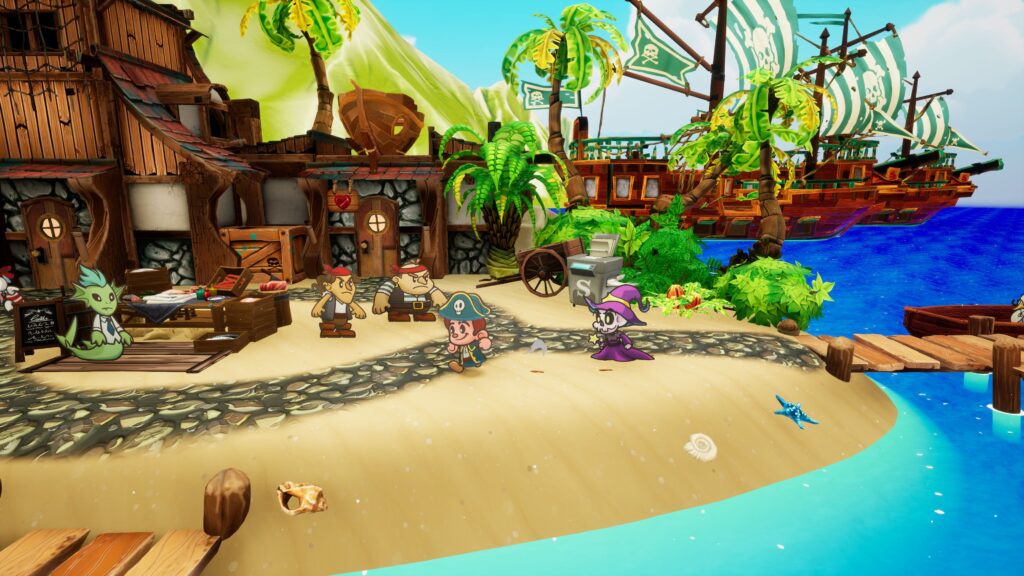
I had a surprisingly good time with Escape From Ever After. I had initially pegged it as a simplistic Paper Mario clone, but what I found was a whimsical, out-of-the-box story that twists social norms with clever humour, adorable characters, and moments that genuinely made me laugh out loud. Minor issues, such as occasional depth perception challenges or slight repetition in puzzles and combat, never detract from the overall experience.
Ultimately, I made the mistake of judging this game by its cover, pun intended. Escape From Ever After is more than a homage; it’s a fun, clever, and surprisingly sophisticated adventure that’s well worth your time.

Developer: Sleepy Castle Studio, Wing-It! Creative
Publisher: HypeTrain Digital
Platforms: PC, Nintendo Switch, Xbox, PS5
Played on Steam
Game Provided By Publisher
About the Author