As a vampire, you struggle for survival, supremacy, and your own fading humanity. Heartless Lullaby understands that Vampire the Masquerade has never been about gothic excess alone. But about erosion”of morals, of certainty, of the self. This is a setting where the night is not glamorous so much as unavoidable, pressing in on every decision you make.
The Core Plot
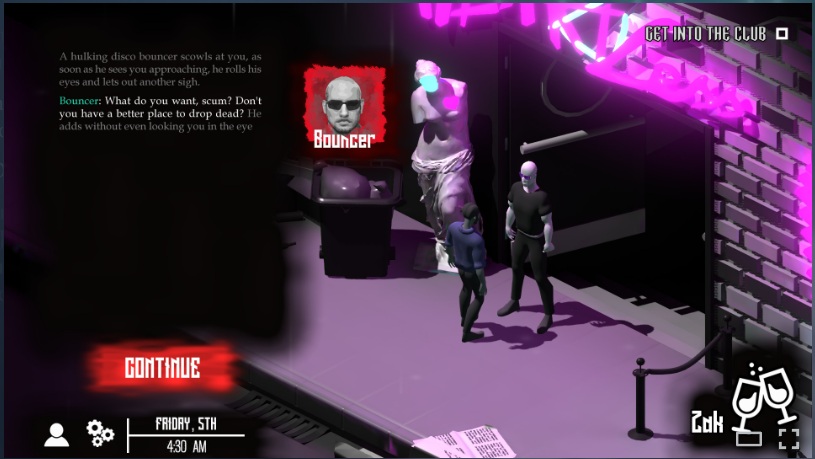
You follow two lives moving toward one another through the same long night. Zak is human”fragile, limited, and dangerously unaware of just how thin the veil really is. Diane is a Vampire, a Toreador caught between aesthetics, hunger, and loyalty in a city where old certainties are failing.
Heartless Lullaby is a cRPG which structures its narrative around its characters’ intersecting perspectives. In doing so, it keeps the story intimate even as larger forces begin to stir.
The plot unfolds against a backdrop of instability. The Camarilla”once the unquestioned vampire rulers and architects of secrecy and control”are weakened here. Their authority frayed and their rules increasingly ignored. At the same time, the Sabbat (AKA: The bad guy vampire group) press closer to the edges of the city. Not as cackling villains but as true believers whose faith in vampiric supremacy makes compromise impossible. Humanity, to them, is not something to protect or masquerade among, but a resource to be consumed.
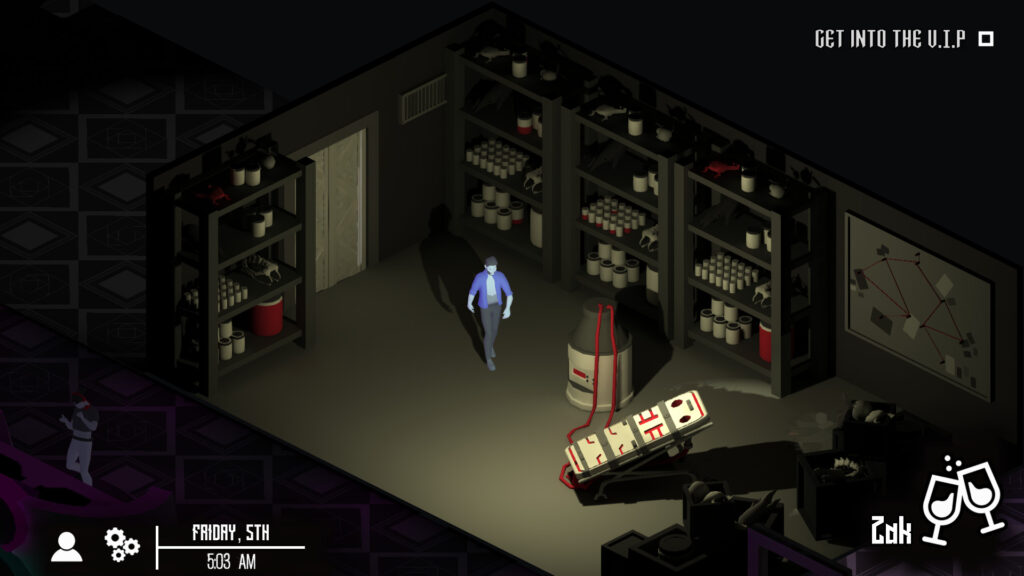
Welcome to the World of Darkness
What Heartless Lullaby does particularly well is resist the urge to rush. You are not drowned in exposition or faction lore. Instead, information arrives through conversations, consequences, and the subtle shifts in how characters speak to you as the situation deteriorates.
The tension comes not from knowing what will happen, but from understanding that whatever choice you make will entangle Zak and Diane more deeply in a conflict neither of them can fully control. Without giving anything away, the core plot is less about grand revelations and more about inevitability. You can feel the weight of history, ideology, and hunger bearing down on these two lives, and the game is confident enough to let that pressure do the work.
You are not asked to save the world”only to decide how much of yourself you are willing to lose as it closes in.
The Masques We Wear
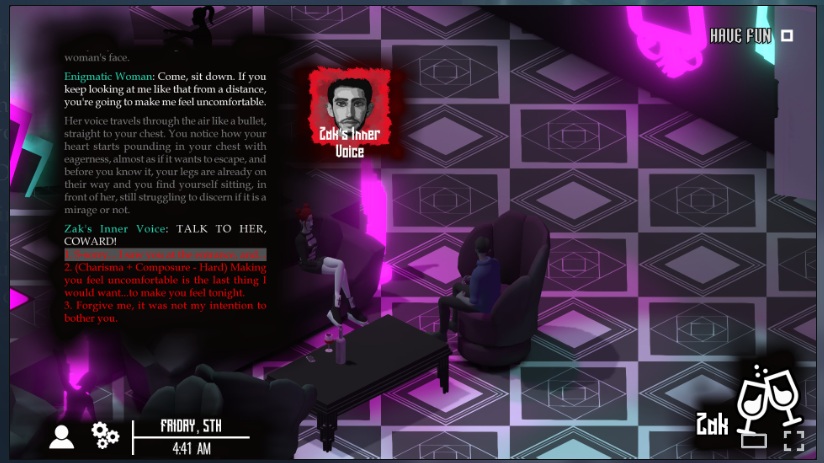
You come to know Zak and Diane not as archetypes, but as people performing roles they barely understand themselves. Zak’s mask is an ordinary one: routines, responsibilities, the quiet assumption that the world is comprehensible if you just keep your head down. He is not ignorant so much as unprepared, and the game treats that distinction seriously. Through him, you experience how the Vampire World of Darkness preys most effectively on those who believe they are safe simply by being mundane.
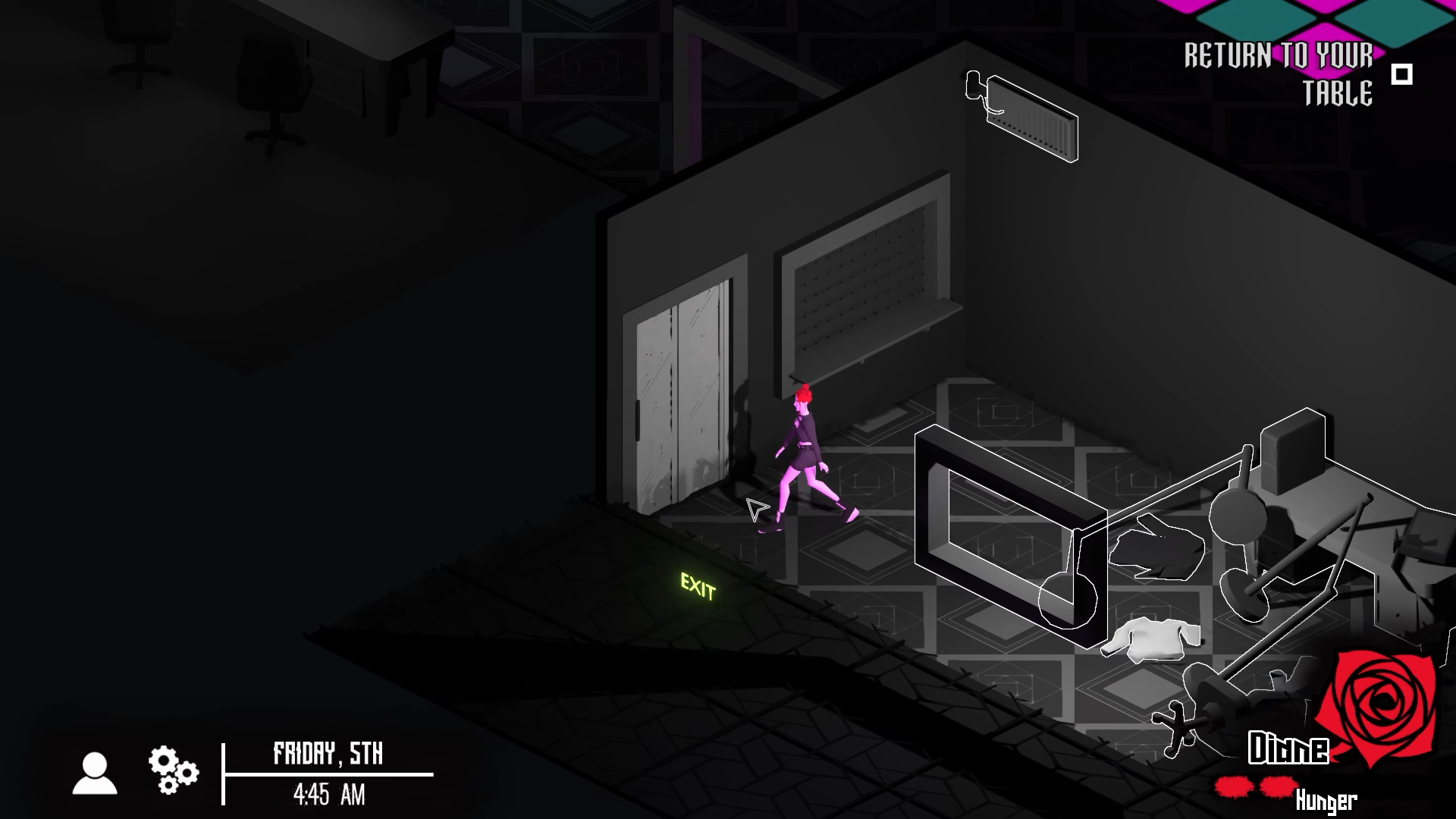
Diane’s mask is more deliberate. As a Toreador, she moves through the night with practised poise, sensitivity sharpened into both a gift and a vulnerability. She performs refinement because it is expected of her, because it offers protection, and because it helps her forget what she has become. Yet Heartless Lullaby never lets you mistake elegance for comfort. Beneath the cultivated exterior is exhaustion”an awareness that beauty fades, feelings dull, and the self must be constantly curated to avoid collapse.
What makes these portrayals compelling is how the game allows their masks to slip in small, human ways. Zak’s confidence erodes through doubt rather than shock; Diane’s composure cracks not in violence, but in moments of quiet intimacy and regret. You are not presented with dramatic unmaskings so much as gradual revelations, each one making it harder to pretend that either character can remain unchanged.
In centring its narrative on these two perspectives, Heartless Lullaby reinforces one of Vampire’s core ideas: the Masquerade is not just a rule imposed by the Camarilla, but a personal necessity. Everyone is hiding something. You included.
The Interface
You are constantly reminded that Heartless Lullaby is a demo rather than a finished product, and nowhere is this clearer than in its interface. What you are given is functional to the point of austerity: three sliders controlling different volume levels, and little else.
There are no graphics options, no accessibility settings, and no meaningful way to tailor the experience beyond adjusting the volume. This minimalism is not framed as a design statement so much as an absence. The interface does its job”launching the game and staying mostly out of your way”but it offers no polish or consideration for different hardware setups or player needs. For a narrative-driven experience, where mood and comfort matter, that lack of control is noticeable.
To be fair, the sparseness does not actively undermine the experience so long as your system aligns with the game’s defaults. But it does reinforce the sense that what you are playing is a proof of concept rather than a complete work.
The interface neither enhances immersion nor meaningfully detracts from it; it simply exists, quietly reminding you that this is only the beginning.
Mechanics
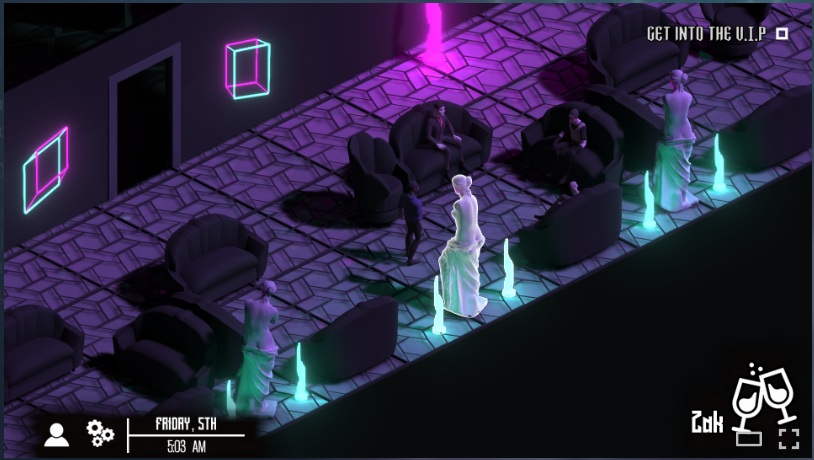
You interact with Heartless Lullaby almost entirely through choice, and the game is keen to remind you that silence is a choice as potent as speech. Conversations present you with numerous text options, each carrying an implied stance rather than an obvious outcome. Over time, you begin to sense that these decisions do not merely flavour dialogue, but actively reshape the narrative’s direction.
Notably, choosing to remain quiet can be as consequential as asserting yourself. Letting others speak unchecked gives them leverage within the city’s fragile political landscape, altering how later conversations unfold and what options are even available to you. Power here is not measured in combat effectiveness, but in who controls the flow of information and perception.
When vampire abilities come into play, the systems stay deliberately hands-off. Powers trigger automatically when required, with the game clearly telling you what is being used and resolving all dice rolls behind the scenes.
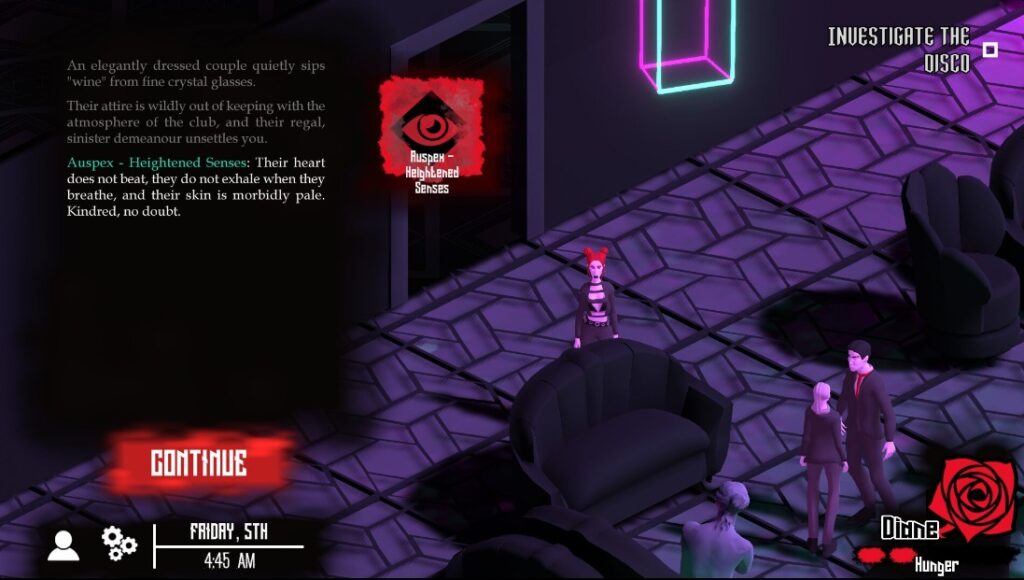
You are informed whether the action succeeds or fails, and that result ripples outward”unlocking or closing dialogue paths, and subtly reshaping how you perceive and are perceived by non-player characters.
This approach keeps the focus firmly on story and consequence rather than mechanical mastery. You are not managing stats or optimising builds; you are living with outcomes. The mechanics support the game’s central thesis that in the World of Darkness, control is often an illusion”and every choice, even the quiet ones, leaves a mark.
The Look
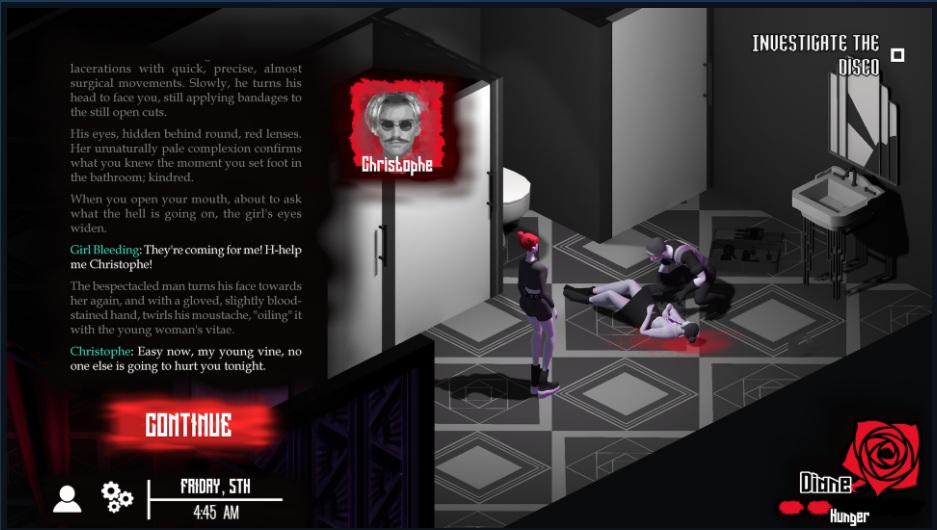
You are met with a presentation that is deliberately simple, and sometimes unavoidably rough. Heartless Lullaby uses a fixed isometric perspective, with no ability to rotate or reposition the camera.
What you see is what you get, and while this limits dramatic framing, it also reinforces the game’s grounded, observational tone”you are looking into rooms rather than staging scenes. Character models are sparse on detail, another clear signal that this is a Game Jam demo rather than a finished product. Faces and bodies communicate just enough to support the writing, but rarely more.
The emphasis is not on visual spectacle, but on presence. These characters exist to speak, to watch you, and to be watched in return.
Interaction is handled cleanly and intuitively. Objects highlight when you hover the cursor over them, and a quick press of TAB reveals everything in the room that might warrant your attention. An invitation to pause, take stock, and consider before acting. It is a small but effective tool that reinforces the game’s slower, more deliberate pacing.
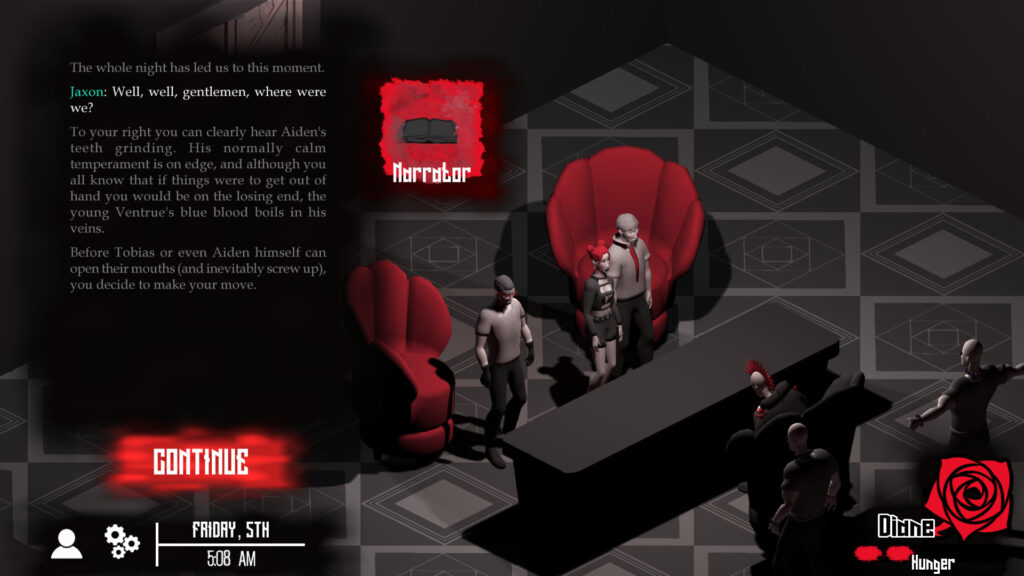
Not every interactive object can be picked up, and there is no inventory screen to manage. When you do take something, it vanishes neatly into a conceptual pocket. If it matters later, it will surface organically through dialogue options. This keeps the focus on narrative relevance rather than item management and prevents the usual clutter associated with adventure-style interfaces.
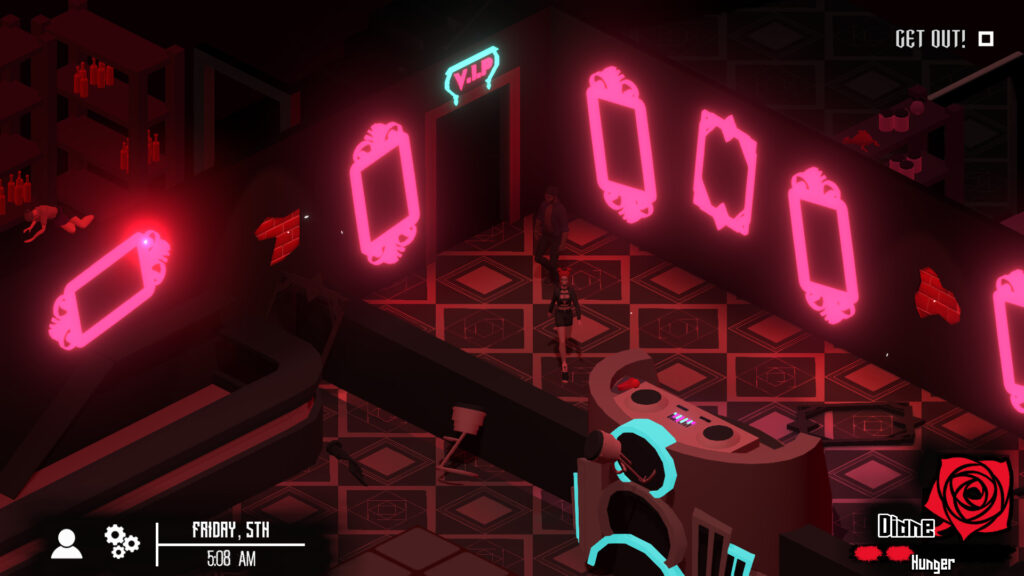
The environments themselves are starkly elegant. Rooms are uncluttered, functional, and moody, suggesting spaces shaped by use rather than decoration. With additional polish, lighting, and detail, it is easy to imagine this visual foundation supporting something far more striking. Even in its current state, you can see the shape of a compelling game waiting to be finished.
The Vampire Soundscape
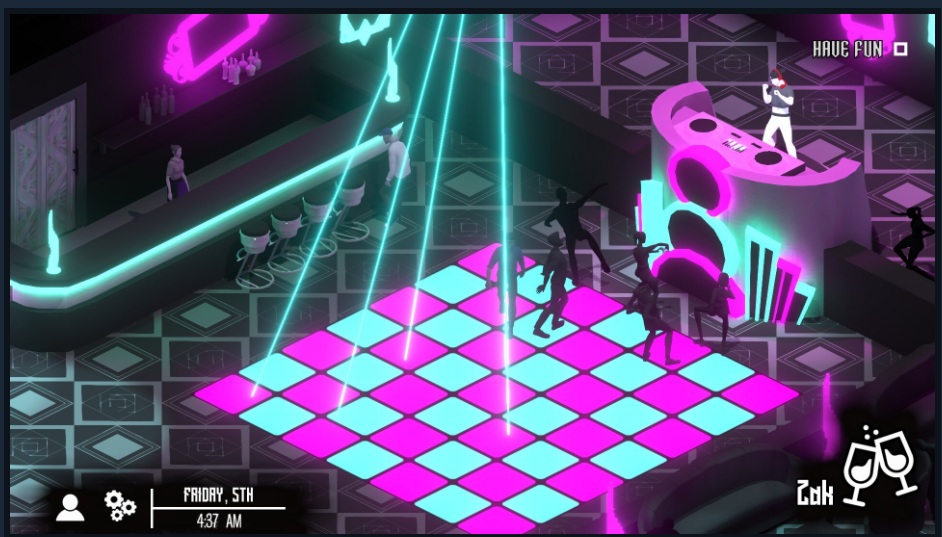
You quickly realise that sound is where Heartless Lullaby truly shines. It is, without question, the game’s strongest element, and one you will want to experience with the volume turned up. Music and ambient audio do much of the emotional heavy lifting, carrying tension, melancholy, and menace in ways the visuals sometimes cannot.
There is no voice acting at all, which initially feels like a loss. It is easy to imagine how the developers might hear these characters in their own heads, or what tone the narrator might have taken. Yet the absence works in the game’s favour. Without fixed performances, you become the voice in the dark, assigning cadence, inflection, and emotion yourself. The silence between lines becomes part of the atmosphere rather than a gap to be filled.
The soundtrack is especially effective, and nowhere more so than in the nightclub scenes. If you have ever played Bloodlines, the influence is instantly recognisable: that heavy, booming bass that seeps into your bones and makes the night feel alive, dangerous, and indulgent. It is a loving echo rather than a hollow imitation.
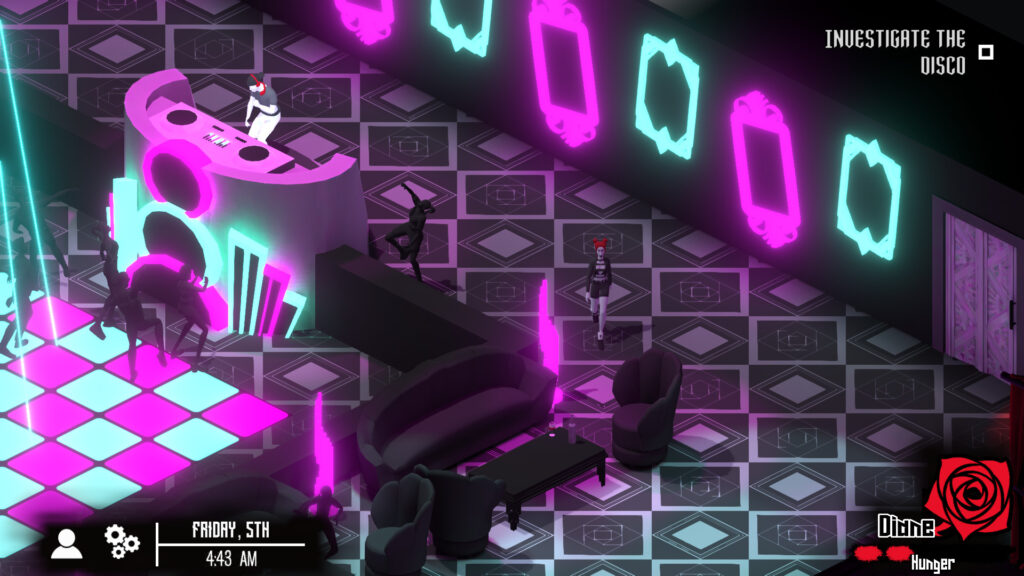
In a small but memorable touch, you can even strike up a conversation with the DJ and persuade them to change the music, leading to a brief, humorous exchange that cuts through the gloom without breaking immersion. Moments like this demonstrate a strong understanding of Vampire’s tonal balance”dark, stylish, and occasionally self-aware.
If anything elevates Heartless Lullaby beyond its demo trappings, it is this soundscape. Close your eyes for a moment, and the World of Darkness feels very real indeed.
Where to get it
You can find Vampire the Masquerade: Heatless Lullaby on Steam, where it is available directly from Entalto Studios. As it stands, the release clearly positions itself as a demo rather than a complete experience. Setting expectations appropriately while offering a strong indication of the developers’ ambitions.
Final Verdict
You come away from Vampire the Masquerade: Heartless Lullaby with the clear understanding that this is not a finished work, but a confident and atmospheric statement of intent. Its limitations are obvious”sparse visuals, a bare bones interface, and the brevity expected of a demo”but none of these obscure what it does well. Strong writing, meaningful choice, and an exceptional soundscape combine to create something that feels authentically Vampire in tone and theme.
The game does not try to overwhelm you with systems or spectacle. Instead, it asks you to listen, to read carefully, and to sit with the consequences of your actions. In doing so, it captures the quiet horror and personal tragedy that sit at the heart of the World of Darkness.
For players interested in narrative-driven games, Vampire adaptations. Or simply curious to see how a small team handles theWorld of Darkness. It is an easy and accessible download”and one well worth your time.

Platforms: Steam
Developer: Entalto
Publisher: Entalto
Played On: PC
About the Author