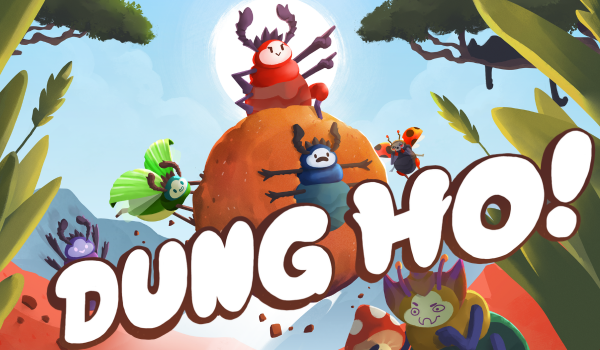
Ever felt the need to push a giant ball of dung around the savannahs of Africa? The grind of daily life makes you wish you were a beetle. Dung Ho! Might be your answer.
Short multiplayer party games have become all the rage in recent times. Games like PEAK, RV There Yet?, and Lethal Company have introduced a wide variety of experiences within this genre. Consequently, these titles helped define the space so much that the ’hardcore’ games community coined the phrase ’Friend Slop’ in a derogatory way, referring specifically to light-hearted, chaotic multiplayer games. However, the casual community turned the term into a positive, affectionate label.
Dung Ho! is the latest entry in this genre of party games. But does it stand out enough from its well-known predecessors?
Rolling with the Chaos
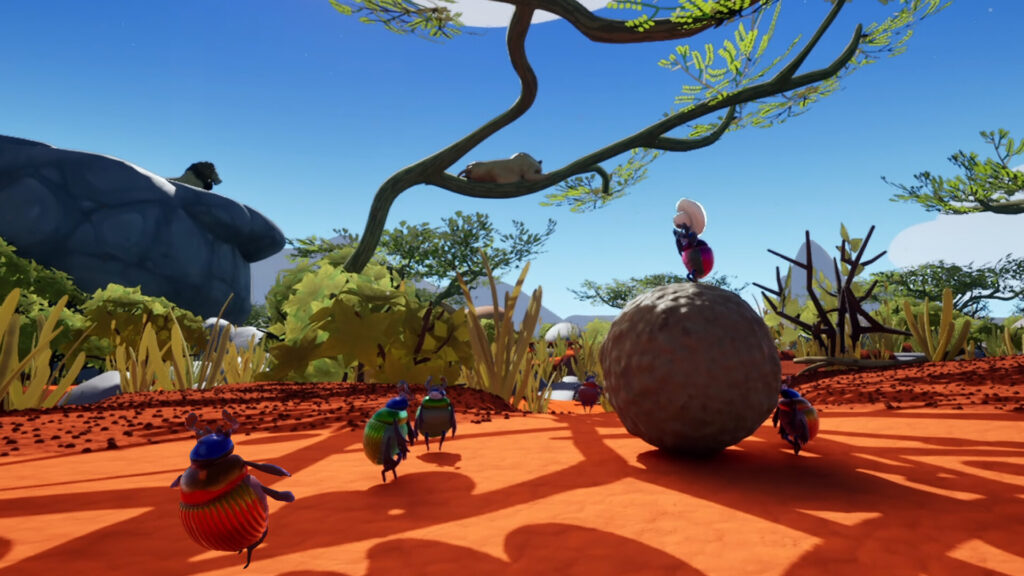
Coming from developer Lesser Weevil, a studio led by Borderlands creator Matthew Armstrong. Dung Ho! sees you and five of your friends take on the role of a dung beetle. Your goal is to navigate a ball of dung to your nest through various pitfalls, winding paths, and other such obstacles. The challenge is that your ball of dung is not invulnerable. While the levels are designed so that the dung ball never gets stuck in an unobtainable position, there are plenty of ways to damage that ball.
Controls, Physics, and First Impressions
Starting a game, you are placed in a lobby area, which brilliantly serves as the game’s tutorial. Here you can customise your beetle, test out the various powerups, and practice rolling a golf ball to get used to the physics. Each beetle has a ’boost’ that gives temporary increased speed and strength, with a cool-down timer. Holding a button will give limited flight. We also get a slap for giving the ball (or teammate) a little extra push.
Pushing the dungball was relatively simple; your beetle did stick to it rather well, and you could manoeuvre it with some practice. The trick was to remember how physics worked, so you move yourself accordingly. Want to move left? Position yourself on the right side. This did give a false sense of control, though, as I found myself wanting to hold back to slow down. Your beetle isn’t that stuck to the ball, as you will just walk away, leaving the ball to continue uncontrollably.

Teamwork or Turmoil?
This is where the meat of the game is. Not in your team’s coordination or control of the dung ball. But how adaptable you and your team are to unexpected mistakes that occur during the journey. There were plenty of times we scouted out our route, planning the perfect path. Only to have the ball end up somewhere completely different due to some unseen obstacle, a bump in the ground, or user error. These were never frustrating, though, as they often had hilarious outcomes.
Beauty, Hazards, and Unpredictability
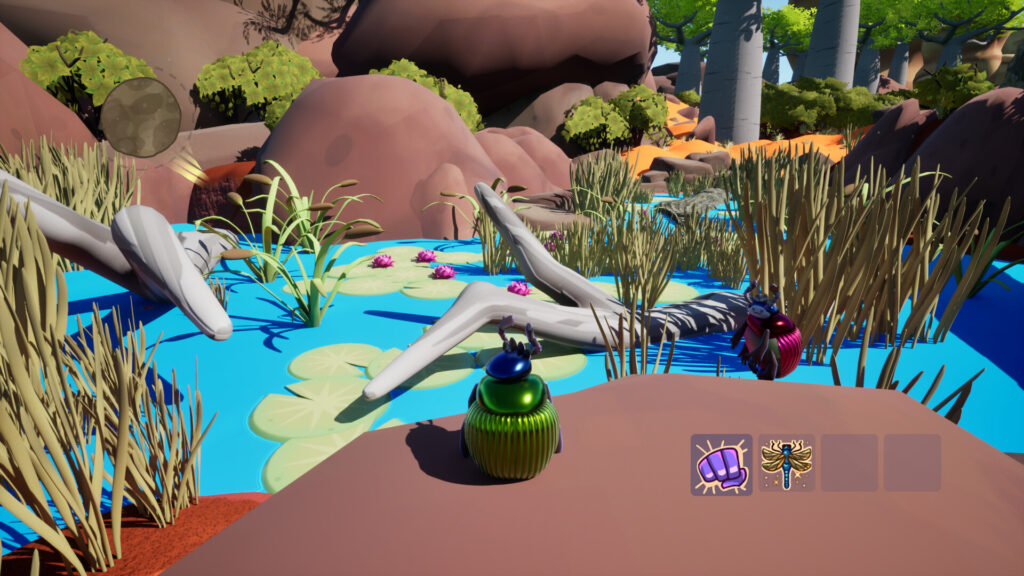
The health of the dung ball is your main concern. There are many ways the ball could get damaged along the journey. The path is the first one. The ground is composed of two textures: a smooth pathway that gives you a general idea of the route you should take. And a rougher stony ground, which will constantly chip away at its health. Water puddles and large impacts can cause massive damage.
Tools of Triumph (or Disaster)
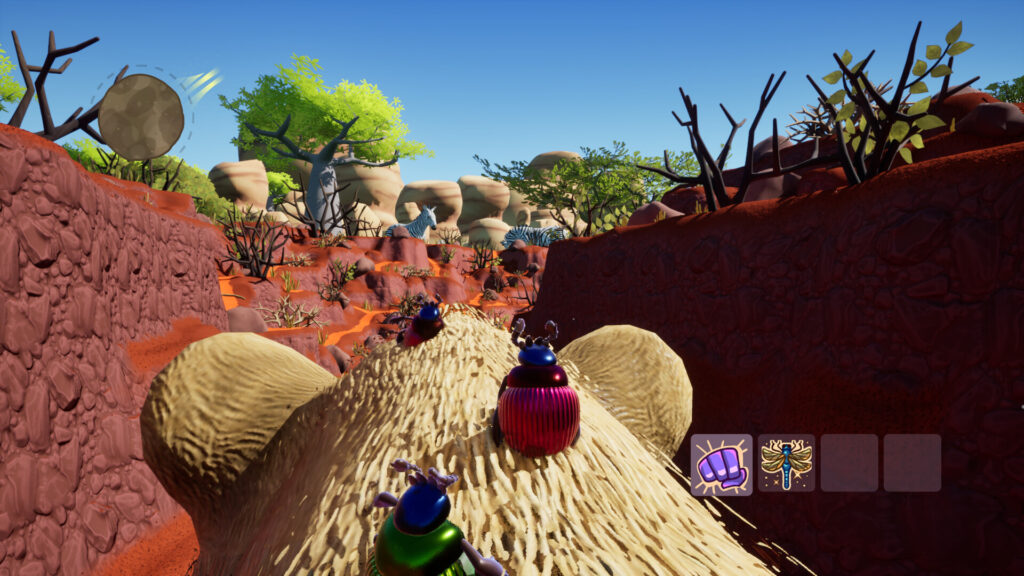
Obstacles are also a factor to consider; sticks and branches will hinder your progress. Mushrooms will act like trampolines, and cacti are like pinball bumpers, both launching the dung ball with much force and unpredictable trajectories. You aren’t immune to Dung Ho!’s physics either. Touching either the mushroom or the cacti will launch you, and bumping energetically into a team mate can trip you. Try to stop a dung ball moving too fast, and it will steamroll right over you.
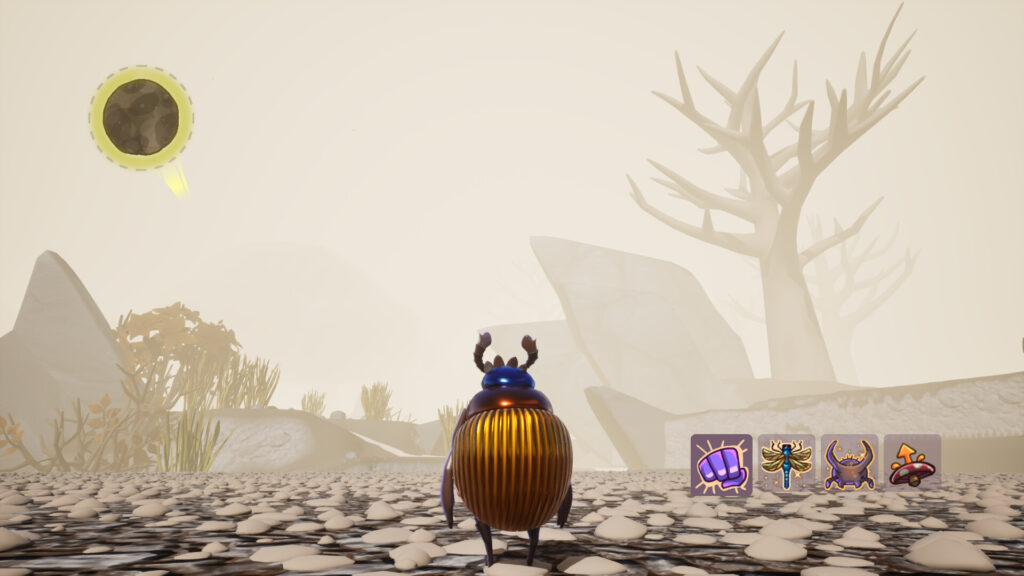
It is not all bad, though, as power-ups also litter the levels. Your beetle can hold three items, which can be thrown to give temporary beneficial effects. Feathers can make the ball lighter, sugar gives your team an unlimited boost, and bombs can remove sticks from your path, just to name a few. Additional piles of dung can also refresh your ball status, and larger ones act as checkpoints and give out a multitude of items upon reaching them. Lastly, there are bug totems which, while held in the inventory, give a permanent stat boost.
A Vibrant Micro-World
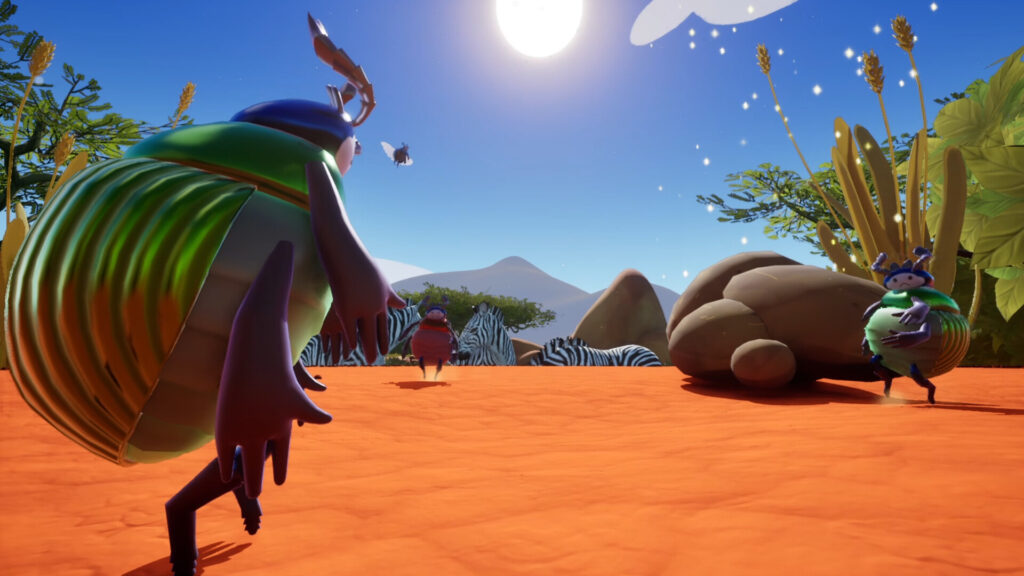
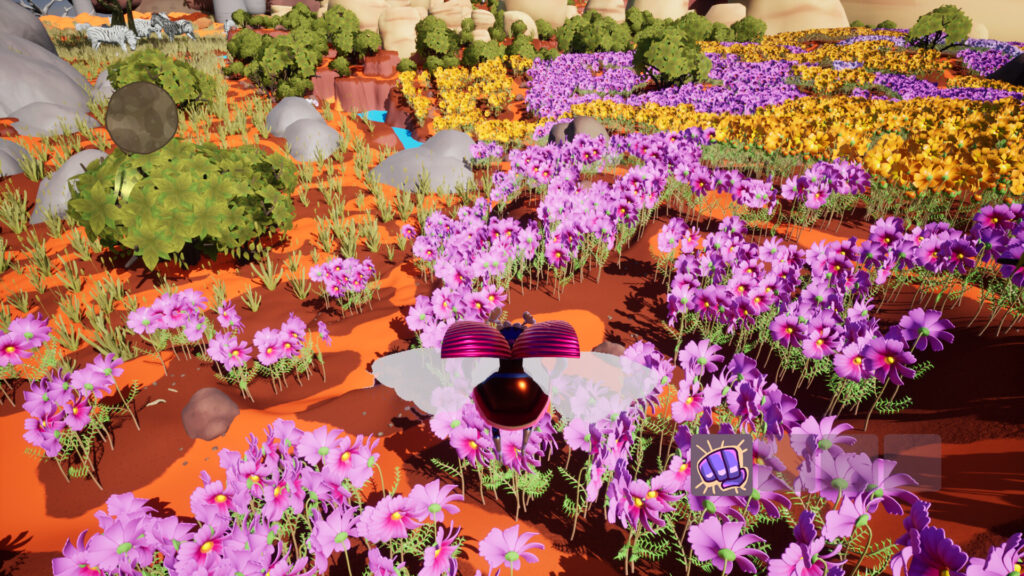
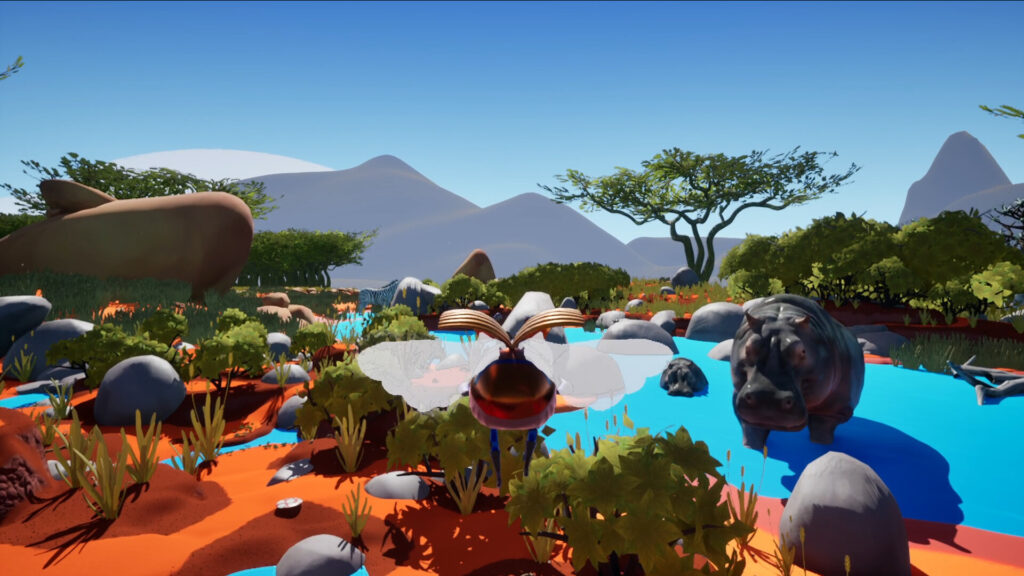
Entering a course, you are immediately knocked back by how colourful the maps and sky boxes are. We have burnt orange ground, lush green plant life, and a beautiful blue sky. It was all hyper-saturated and created a clean, high-energy environment that seemed to burst from the screen. Levels didn’t just end at the course; you could look beyond and see a massive world beyond. Gigantic animals and wildlife (remember, we are beetles) all help sell the environment.
The Sounds of Africa
The soundscape, though, is rather quiet by comparison. We do get the cartoony noises for jumps and falls, but there is little actual music in the game. A short bongo track starts to play when the ball starts moving, but aside from that, all the sounds are entirely environmental. Animal roars can be heard, along with a slight buzzing from insects. That’s about it. A hum can be heard when a powerup is nearby, but the best is the angelic choir of voices saying ’dung’ when a dungpile is nearby.
Bouncing Around
The real star of the show is the physics engine. The dung ball moves just as you expect, moving a ball twice your size should. With all the difficulty that comes with wielding an object that size. As you take more damage, the ball becomes easier to make, but imperfections begin to appear on its surface. This, of course, introduces more challenge as the ball begins to veer off as it becomes less round. The ball’s health is quite generous, though, as during my playtime, I rarely got a game over. I had to purposely destroy the ball to double-check there was a failstate to be honest.
Fun That May Fade
With the team I assembled, games would last between 30 and 90 minutes on average. While this was good for the short-term dopamine hits, the question of depth and variety began to creep up. Victory gave us more customisation options but little else. It’s difficult not to compare Dung Ho! with other party games in this space, such as Lethal Company, which tend to offer a slightly longer and more varied game-by-game experience. There was a trial-and-error aspect when it came to the power-ups, as the game did little to explain what they did or what some stat increases did (we never saw the benefit of increased balance, for example).
A Mess Worth Making?
In the end, Dung Ho! doesn’t reinvent the ’friend slop’ formula, but it absolutely understands why the genre works. It leans into the chaos, the unpredictability, and the shared laughter that comes from plans going completely off the rails. It might not stick with you for weeks, but for a few chaotic evenings of rolling, yelling, and laughing with friends, Dung Ho! knows exactly what it’s doing.

Developer: Lesser Weevil
Publisher: Lesser Weevil
Platforms: PC
Key Provided by Keymailer
About the Author